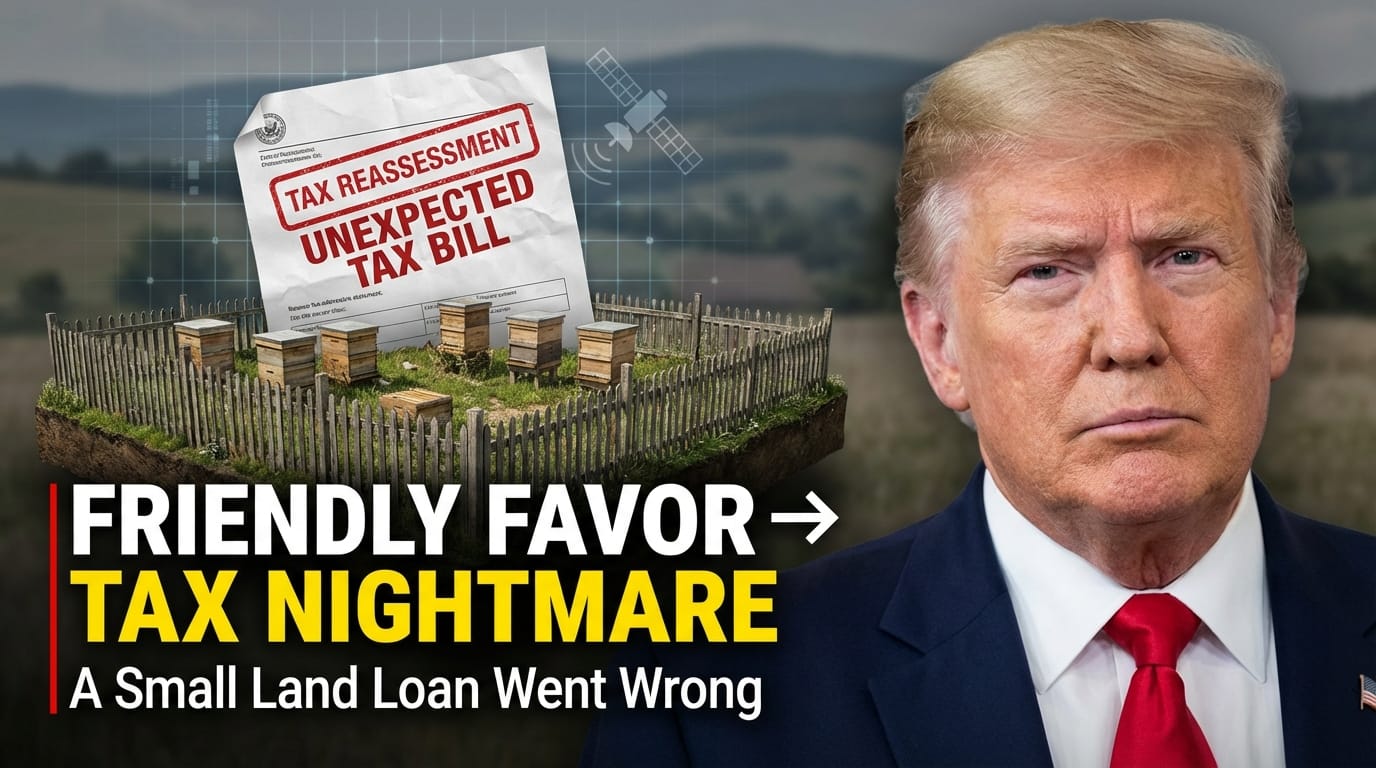
The letter looked routine. A standard white envelope, the tax office logo, formal language. Then came the figure. A five-digit tax bill addressed to a 72-year-old retiree, not for his modest home, but for a narrow strip of land he had barely thought about in years.
That land, tucked behind his vegetable garden, had once been lent to a neighbor for a few beehives. No rent. No contract. Just a handshake and the occasional jar of honey. What began as a friendly gesture ended as an unexpected fiscal shock.
Background
Bernard, not his real name, had agreed years earlier to let a younger neighbor place several hives on a corner of his property. The arrangement felt informal and harmless. Over time, however, the number of hives increased, and the use became permanent rather than temporary.
To Bernard, nothing had changed. To the tax authorities, everything had.
Reclassification
Land tax systems across Europe classify property based on use. When a plot is deemed to support an ongoing activity, particularly one linked to production or income, it can be moved into a higher tax category.
On official records, Bernard’s unused corner no longer appeared idle. It was now marked as land with a stable, income-related function. The result was a reassessment and a sharply higher tax bill.
Intentions mattered little. The classification followed observable land use, not personal arrangements.
Pollinators
The irony is hard to miss. Bees and other pollinators play a critical role in agriculture and food security. Global assessments estimate that animal pollinators support about 35 percent of crop production volume worldwide.
In Europe, pollinators are under growing pressure. The IUCN Red List indicates that roughly 10 percent of assessed wild bee species face extinction risk. At the same time, beekeeping remains widespread. Eurostat counted more than eight million beehives on EU farms in 2020, not including countless small backyard setups.
Hosting hives can be environmentally beneficial. Tax systems, however, are not designed to measure good intentions.
Monitoring
Bernard’s case was triggered not by a complaint, but by technology.
Many tax authorities now rely on aerial imagery, satellite data, and automated analysis to detect changes in land use. France, for example, has used artificial intelligence to identify undeclared swimming pools, generating millions of euros in additional revenue.
From above, a line of pale boxes near a hedge does not signal neighborly cooperation. It signals permanent use. Parcel numbers replace personal stories, and algorithms flag what looks stable and productive.
Rules
Legal experts who work with rural and residential property point to a recurring issue. The problem is not the activity itself, but the absence of documentation.
When nothing is written down, tax and property law fills the gap. That interpretation often differs from what neighbors believed they had agreed to.
Prevention
Hosting beehives or other small environmental projects does not automatically lead to higher taxes. Problems usually arise when arrangements are informal and open-ended.
Specialists recommend several basic precautions:
- Draft a simple written agreement describing the land, the activity, and its duration
- Clarify whether the activity is purely recreational or has commercial elements
- Specify who is responsible for taxes, insurance, and potential reassessments
- Include clear terms for ending the arrangement and restoring the land
Tax offices will often respond to written inquiries about planned land use. While such correspondence may feel excessive for a friendly favor, it can provide protection if questions arise later.
Balance
Cases like Bernard’s spread quickly in small communities. They can discourage cooperation or, at the other extreme, reinforce blind trust that authorities will never intervene.
There is a more practical middle ground. Shared environmental efforts can continue, but they need to acknowledge modern oversight. Satellites and databases now watch the same quiet fields where handshakes once sufficed.
Discussing taxes and exit plans may feel uncomfortable over a jar of honey. Still, doing so can preserve both neighborly relationships and the small ecological efforts that communities increasingly depend on.
FAQs
Can lending land for beehives increase taxes?
Yes, if the use is classified as permanent or productive.
Do tax offices use satellite images?
Yes, many authorities use aerial and satellite monitoring.
Is a written agreement necessary for small land uses?
It helps clarify tax and legal responsibilities.
Does hobby beekeeping count as commercial use?
It depends on scale and local tax rules.