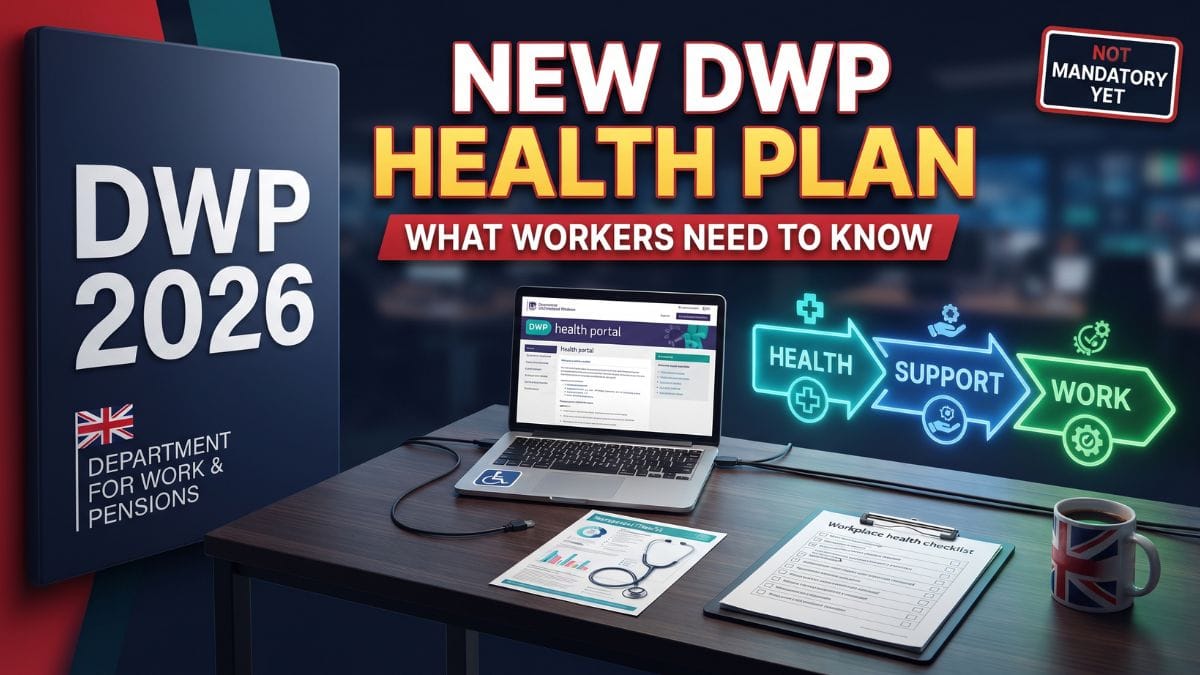
A new support system is being developed in the UK to help people with health conditions and disabilities remain in work or return to employment after periods of sickness absence.
The Department for Work and Pensions (DWP) says the next phase of its Keep Britain Working programme is focused on developing what it describes as Britain’s first Workplace Health System.
The proposals are aimed at providing support earlier, before health problems lead someone to leave employment. The government says around 300,000 people with a health condition leave work each year, while about 2.8 million people are economically inactive because of ill health or disability.
Importantly, the measures being tested are not yet new mandatory requirements for employers or workers.
Earlier Support
The programme is based on the idea that earlier workplace support may help people stay connected to employment.
The DWP’s Keep Britain Working review update says someone who has been absent from work for four to six weeks has a 96% chance of returning.
That figure falls considerably as an absence continues. After a year away from work, fewer than half return, according to the report.
For someone who has become economically inactive because of health reasons, the report puts the chance of moving into work within a year at 3.8%.
These figures are part of the government’s case for providing support before a health-related absence becomes prolonged.
Workplace Plans
One proposal being tested is a new employer-facing workplace health standard being developed with the British Standards Institution (BSI).
Under the approach being explored, employees could be offered a conversation about work and health within eight weeks of joining an organisation.
If an existing employee raises a health concern, the employer could offer a conversation within five working days.
That discussion could lead to a stay-in-work plan setting out agreed actions, responsibilities and review points.
The approach is intended to give workers and employers a structured way to discuss health-related difficulties without waiting until the person is unable to continue working.
Return Plans
The proposals also cover employees who are absent because of illness.
Employers could maintain supportive contact during an absence and develop a return-to-work plan, particularly when an absence is expected to last more than four weeks or is connected to an underlying health condition.
Such a plan could identify workplace changes, support arrangements and steps for returning to work.
However, these are currently being tested rather than introduced as compulsory rules.
The DWP report specifically states that the proposed process would not be a condition of sick pay, employment or access to support. It also says workers should not be required to disclose unnecessary personal information.
Health Support
The proposed system could also introduce access to an impartial coordinator when a health issue requires more assistance than a line manager can reasonably provide.
That person could help with case management, stay-in-work arrangements and return-to-work plans. They could also connect employees with other sources of support.
The approach is intended to address both health-related and wider circumstances that can affect someone’s ability to remain employed.
Possible areas of support include mental health and musculoskeletal conditions, as well as issues such as financial difficulties, bereavement and caring responsibilities.
Adjustments
Workplace adjustments are another part of the programme.
For disabled employees and people with health conditions, delays in obtaining suitable adjustments can make it harder to remain in employment.
The proposed Workplace Health System aims to make the process more responsive and improve access to appropriate support.
The government says the programme will also help inform the future development of schemes such as Disability Confident and Access to Work.
The report puts the current disability employment gap at 29.4%.
Scotland
The programme is being developed across England, Scotland, Wales and Northern Ireland, with different approaches being tested to reflect local circumstances.
Scotland already has an example through Working Health Services Scotland.
The service provides case-managed support for people working for small and medium-sized businesses and people who are self-employed. Its focus includes helping people manage health conditions and return to employment.
Elsewhere, the programme is testing approaches such as shared occupational health services and independent case managers who can work with businesses and employees.
Employment Funding
The wider programme is supported by a £3.5 billion employment support package, according to the DWP.
Two of the schemes within that wider package are WorkWell and Connect to Work.
WorkWell is intended to support up to 250,000 people, while Connect to Work is designed to help around 300,000 sick or disabled people move into or towards employment.
These programmes form part of the government’s broader effort to address economic inactivity linked to health conditions and disability.



Next Steps
The Workplace Health System is still at the development and testing stage.
The next phase of Keep Britain Working will continue examining the proposed workplace framework, health support and methods for gathering better information about workplace health.
Employers, support providers, disabled people, trade unions and regional organisations are involved in testing different approaches.
A phased rollout plan is expected to be developed ahead of the 2027 Spending Review. According to the DWP, that work will consider evidence about which measures are effective, how wider adoption could be encouraged and how the system could operate across different parts of the UK.
For workers with health conditions or disabilities, the immediate point is that the proposals do not currently create new mandatory obligations. Instead, the government is testing ways to encourage earlier conversations, workplace adjustments and structured support before a health problem results in someone leaving employment.