For much of the past decade, universal basic income (UBI) sat on the fringes of U.S. economic debate. It was often dismissed as impractical, ideologically driven, or incompatible with a society built around work. The prevailing assumption was that employment, while changing in form, would remain broadly available. That assumption is now under increasing strain.
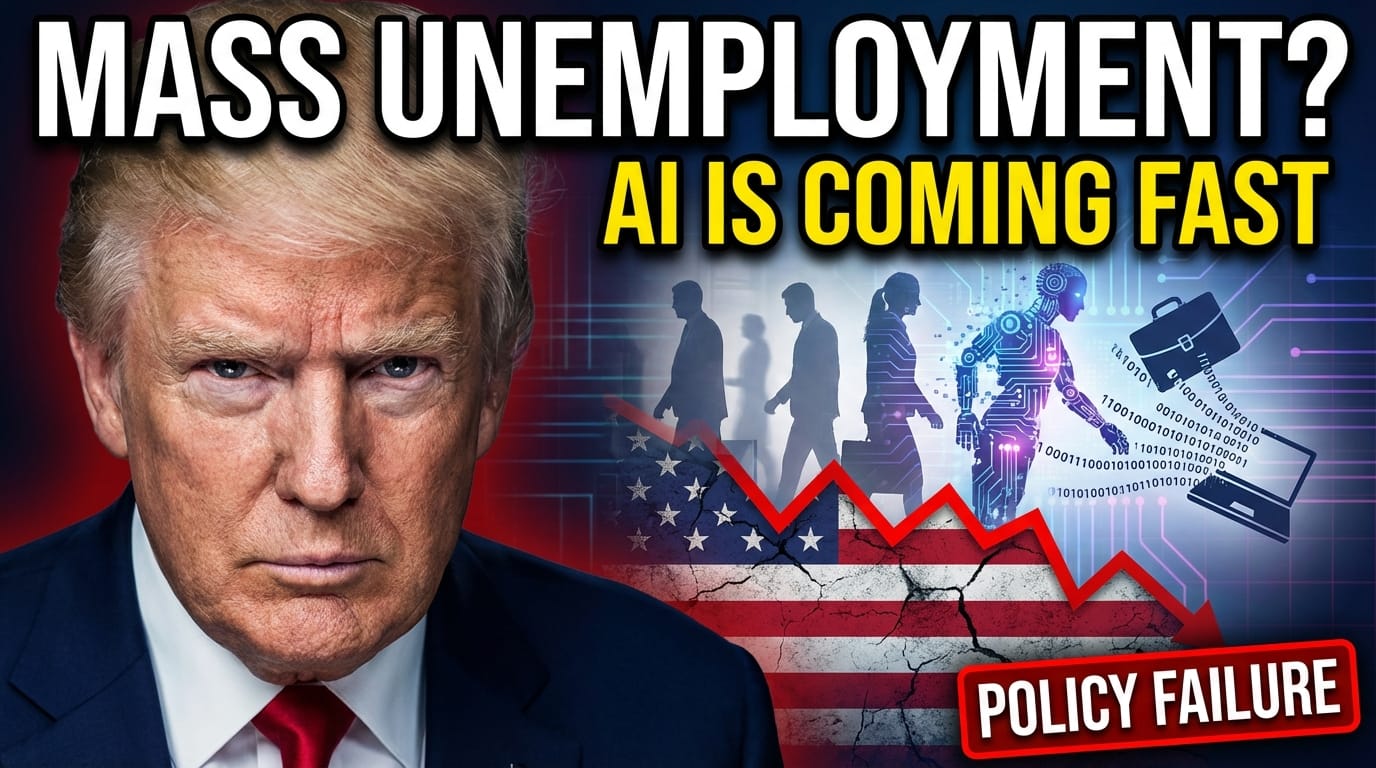
Rapid advances in artificial intelligence are forcing a reassessment of long-held beliefs about labor, productivity, and economic stability. What once appeared to be a gradual technological transition is beginning to look more like a structural disruption, one that existing institutions may be ill-equipped to manage.
Shift
Artificial intelligence is no longer confined to experimental use or narrow applications. It is being deployed at scale across industries, automating tasks that previously required human judgment, analysis, and decision-making. Unlike earlier waves of automation, which primarily replaced physical labor, AI increasingly substitutes for cognitive work.
This distinction matters. Clerical roles, customer support, scheduling, data entry, and transcription are already being reduced or eliminated. These are not hypothetical changes. They are occurring now, often quietly, through software adoption rather than factory closures.
Pace
One of the most frequently cited warnings comes from Geoffrey Hinton, a leading figure in AI research. He has argued that AI capabilities are improving at an exponential rate, with performance effectively doubling within months rather than years. At such speed, labor markets have little time to adjust.
As systems improve, automation is expected to move beyond entry-level tasks into more complex domains. Accounting, legal research, marketing content, compliance work, and parts of journalism are increasingly exposed. Even software development, long considered a resilient profession, may face significant contraction as AI systems take on larger portions of coding and testing work.
Timeline
While exact forecasts vary, many analysts outline a compressed timeline for disruption. Support and service roles are already being affected. Administrative and clerical positions may follow in the next few years. By the late 2020s, AI is expected to perform higher-level professional tasks at scale, reducing demand for large segments of white-collar labor.
If these projections hold, the challenge will not be temporary displacement but sustained underemployment. Retraining programs, historically used to manage labor transitions, may struggle to keep pace with the speed and breadth of change.
Gap
Despite the scale of the risk, the United States has no comprehensive strategy for managing large-scale job displacement driven by AI. There is no coordinated labor transition framework, no income stabilization plan, and no clear policy roadmap for a future in which full employment may no longer be achievable.
Public discussion has largely focused on innovation and competitiveness, often paired with assurances that new jobs will emerge as they have in previous technological revolutions. However, this assumption is increasingly contested, particularly if AI reduces demand across many sectors simultaneously.
Stability
In this context, universal basic income has reentered the policy conversation, not primarily as a social welfare expansion, but as a potential stabilizing mechanism. Supporters argue that a baseline income could help maintain social cohesion during a period of rapid economic change, reducing the risk of widespread financial insecurity.
From this perspective, UBI is framed less as a permanent replacement for work and more as a temporary bridge. It could provide time for institutions, markets, and individuals to adapt to a redefined relationship between labor and income.
Debate
Critics continue to raise concerns about cost, incentives, and long-term dependency. Those concerns remain unresolved. However, proponents argue that the alternative, allowing mass unemployment to emerge without safeguards, carries its own economic and political risks.
A society in which large portions of the population are unable to find work faces heightened risks of social unrest, declining trust in institutions, and political instability. These outcomes would challenge not only economic policy but democratic governance itself.
Outlook
The central question is no longer whether AI will reshape the labor market, but how quickly and how deeply. As adoption accelerates, policymakers face narrowing options. Deliberate planning now may reduce the need for crisis-driven decisions later.
The coming years are likely to test the resilience of U.S. economic and political systems. Addressing the possibility of widespread job displacement will require confronting uncomfortable realities and reconsidering assumptions that have guided policy for generations. Delay may prove more costly than action.
FAQs
Why is AI seen as a threat to jobs?
It can replace cognitive tasks across many industries.
Which jobs are most at risk first?
Support, clerical, and administrative roles face early impact.
Is universal basic income widely supported?
It remains debated but is gaining attention as a stabilizer.
Can retraining solve mass unemployment?
Many experts doubt it can keep pace with AI adoption.