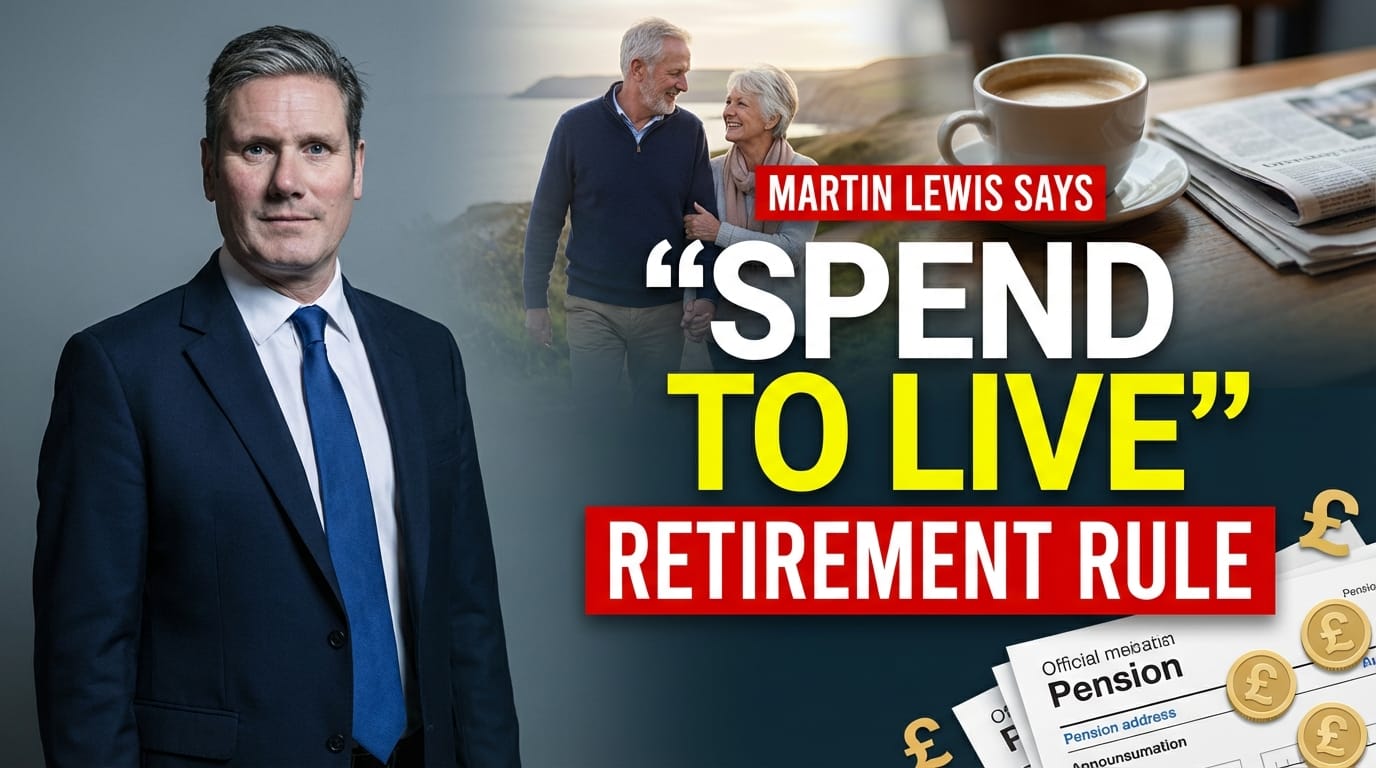
Money expert Martin Lewis has encouraged retirees to rethink how they approach spending in later life, saying money should ultimately be used to improve happiness and quality of living, not simply preserved out of guilt or fear.
Speaking on his BBC podcast, Lewis reflected on advice shared by listeners, including the importance of starting pension contributions early and being mindful about spending decisions. One contribution, in particular, resonated strongly with him.
Spending
A listener named Chris, 62, who has taken early retirement, shared his personal rule on retirement spending. He said retirees should not feel guilty about enjoying the money they have saved over decades of work.
“My policy is to enjoy now the money I’ve saved as in another 15 or 20 years, I might not be able to, or wish to enjoy the things or visit the places I want to now,” he said.
Lewis said he strongly agreed with this perspective, stressing that money is a tool rather than an end in itself.
Balance
“Money is about utility and happiness,” Lewis said. He explained that while it is essential to plan for the unexpected and have financial contingencies in place, retirees should not lose sight of why they saved in the first place.
He added that spending wisely does not mean denying yourself enjoyment. Instead, it means being efficient with essentials, avoiding waste on things that add little value, and directing money toward experiences or purchases that genuinely improve quality of life.
Lewis said this balance is what allows people to “spend the money on the things that you want to, to give you a better life”.
Planning
For people in their early 60s preparing for retirement, Lewis has previously stressed the importance of understanding when state pension payments will begin.
The current state pension age is 66, but this is set to rise from April 2026, gradually increasing to 67 by April 2028. This change could affect financial planning for those approaching retirement over the next few years.
Pension
To receive the full new state pension, most people need 35 qualifying years of National Insurance contributions. The current full state pension is £230.25 a week and is set to rise to £241.30 a week from April, following a 4.8 percent increase under the triple lock policy.
A minimum of 10 qualifying years is required to receive any state pension at all.
The government provides an online tool that allows individuals to check how much state pension they are on track to receive and whether they have gaps in their National Insurance record.
Contributions
People with gaps in their National Insurance history can usually make voluntary contributions for up to six previous tax years. However, Lewis and government guidance both warn that paying extra contributions does not automatically increase pension entitlement, making it important to check first.
Support
Those nearing or past state pension age may also be eligible for additional benefits. Pension Credit is available to people on a low income and is worth an average of £4,300 a year in extra support.
Pension Credit can also unlock access to other help, including Housing Benefit, Council Tax reductions, and free TV licences for over-75s.
Other forms of support may include Attendance Allowance for those with disabilities or health conditions, as well as Winter Fuel Payments and Cold Weather Payments.
Lewis has repeatedly urged retirees to check their entitlements, noting that many people miss out on support simply because they assume they do not qualify.
FAQs
What spending rule did Martin Lewis support?
Enjoy your savings while staying financially prepared.
Why does Lewis say money should be spent?
To improve happiness and quality of life.
When does the state pension age rise?
From April 2026, increasing to 67 by 2028.
How much is the full state pension?
£241.30 a week from April.