People approaching retirement may want to review the latest guidance from HM Revenue and Customs (HMRC) as changes to the State Pension age could affect how long they continue paying National Insurance (NI). While reaching State Pension age automatically ends NI contributions for most employees, planned increases to the qualifying age mean some people will pay NI for longer than previous generations.
HMRC recently shared updated guidance explaining how tax and National Insurance work for people who continue working while receiving their pension. Knowing these rules can help workers prepare for retirement and avoid confusion about their tax responsibilities.
Many people choose to remain in work after beginning to receive their State Pension, workplace pension, or private pension.
HMRC has confirmed that receiving a pension does not prevent someone from continuing in employment. However, pension income may still be subject to income tax depending on an individual’s total taxable income.
The guidance also explains when National Insurance contributions stop.
Working
According to HMRC, employees can continue working while receiving:
- State Pension
- Workplace pension
- Private pension
- A combination of these pensions
Receiving pension payments does not affect someone’s ability to remain employed.
Insurance
HMRC says employees automatically stop paying National Insurance once they reach State Pension age, even if they continue working.
The rules differ slightly depending on employment status.
| Employment Status | When National Insurance Stops |
|---|---|
| Employee | Automatically at State Pension age |
| Self-employed | From the following tax year after reaching State Pension age |
Although NI contributions stop, income tax may still apply to earnings and pension income where applicable.
Changes
The State Pension age is gradually increasing across the UK.
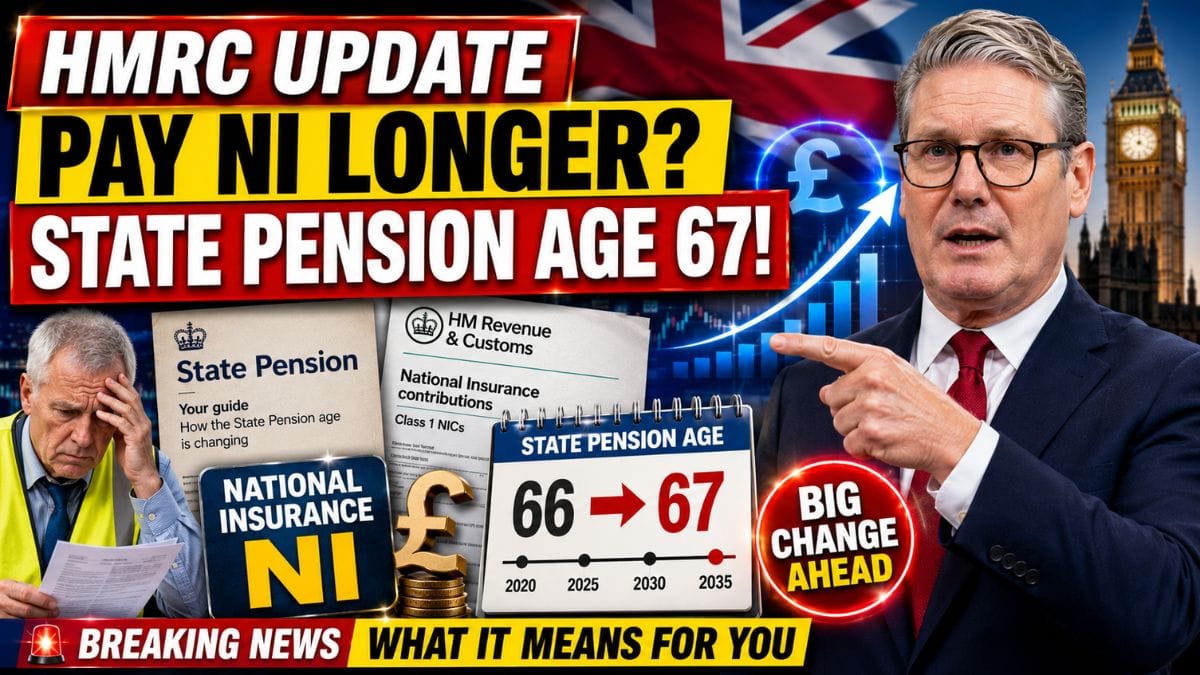
Between April 2026 and April 2028, the qualifying age will rise from 66 to 67 through phased monthly increases.
As a result, many workers will continue paying National Insurance for a longer period before becoming eligible for the automatic exemption.
For example, someone reaching State Pension age after April 2028 may pay National Insurance for approximately one additional year compared with someone who qualified before the age increase began.
Future
Further increases to the State Pension age are already scheduled.
| Period | State Pension Age |
|---|---|
| Before April 2026 | 66 |
| April 2026 – April 2028 | Gradually increases to 67 |
| April 2044 – April 2046 | Scheduled to increase to 68 |
An independent review published in 2023 recommended moving the increase to age 68 forward by three years. However, the government decided not to adopt that recommendation at the time.
Tax
Stopping National Insurance contributions does not mean pensioners stop paying tax altogether.
Income tax may still apply if total annual taxable income exceeds the Personal Allowance.
Taxable income can include:
- State Pension
- Workplace pensions
- Private pensions
- Employment income
- Rental income
- Investment income
The amount of tax owed depends on an individual’s overall income and tax circumstances.
Guidance
HMRC has directed pensioners and those nearing retirement to its online “Tax Confident in Retirement” guidance.
The resource explains how tax rules apply to:
| Topic | Information Available |
|---|---|
| Pension income | Tax treatment after retirement |
| Savings | Tax considerations |
| Investments | Income tax guidance |
| Inheritance | Related tax information |
| Self Assessment | Filing requirements where applicable |
The online guidance is intended to help people understand their tax responsibilities before and after retirement.
HMRC’s latest guidance confirms that people can continue working while receiving their pension, but changes to the State Pension age mean some workers will continue paying National Insurance for longer before the automatic exemption begins. As retirement ages continue to rise over the coming years, understanding when National Insurance ends and how pension income is taxed can help individuals make informed financial decisions.
FAQs
Can you work while receiving the State Pension?
Yes. HMRC says you can continue working while receiving your pension.
When do employees stop paying National Insurance?
Employees stop automatically when they reach State Pension age.
Do self-employed people stop paying NI immediately?
No. They stop paying from the following tax year.
Is the State Pension age increasing?
Yes. It rises from 66 to 67 between 2026 and 2028.