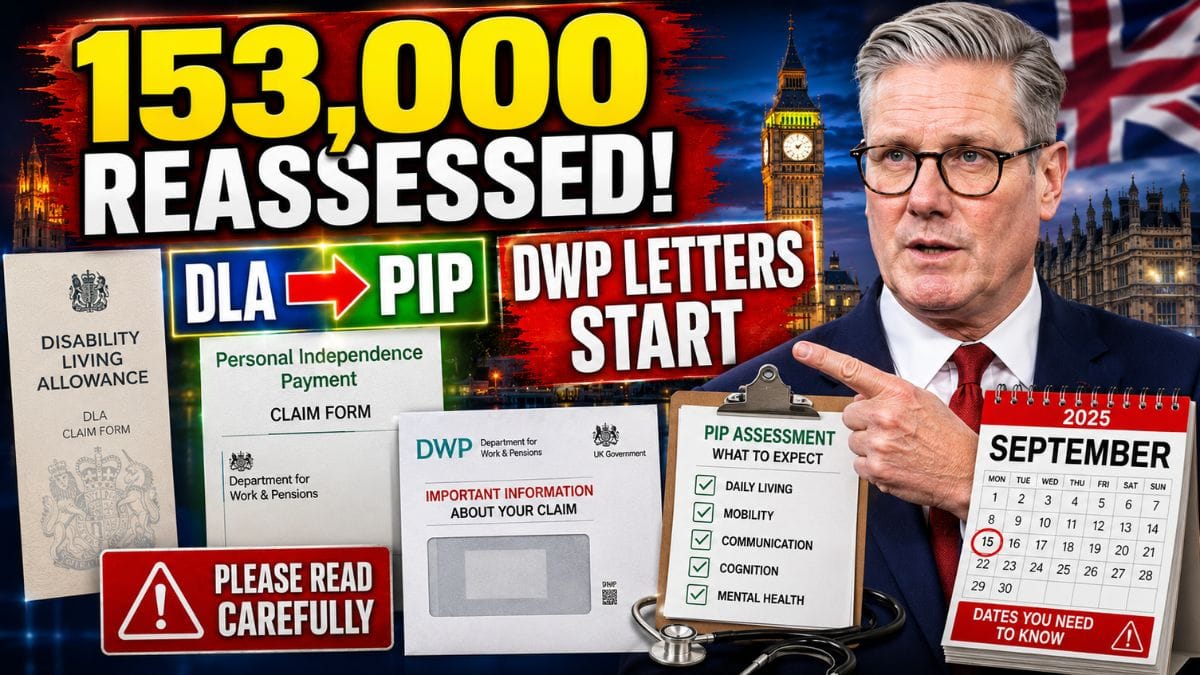
More than 150,000 adults currently receiving Disability Living Allowance (DLA) are set to undergo a new assessment process as the Department for Work and Pensions (DWP) resumes its long-delayed transfer program to Personal Independence Payment (PIP). The move marks the restart of a scheme that was paused during the COVID-19 pandemic and affects claimants who have remained on adult DLA for many years.
Many of the people affected have received lifetime DLA awards, meaning they have not previously been required to undergo regular reassessments. Under the renewed process, they will need to apply for PIP and meet the current eligibility rules to continue receiving disability benefits.
Personal Independence Payment (PIP) replaced Disability Living Allowance (DLA) for most working-age adults in 2013.
While children can still claim DLA, adults have generally been required to claim PIP instead. Since its introduction, most adult DLA recipients have transferred to PIP when their existing award came up for review.
However, approximately 153,000 adult DLA claimants have remained on the older benefit because the transfer process was suspended in 2020 during the pandemic.
The DWP has now confirmed that the transfer program will restart.
Rollout
The department plans to begin with a small number of cases before expanding the program.
According to the DWP:
| Transfer Timeline | Details |
|---|---|
| Initial rollout | September |
| First group | 3,000 randomly selected claimants |
| Remaining claimants | Around 153,000 adults |
The phased approach is intended to restart the migration process before it is rolled out more widely.
Assessments
Claimants invited to move from DLA to PIP will need to complete a new application.
The process may include:
- Completing a PIP claim form.
- Providing information about how their condition affects daily life.
- Attending a health assessment if required.
- Waiting for a decision based on current PIP rules.
Unlike many existing DLA lifetime awards, PIP assessments focus on how a person’s condition affects their daily living and mobility needs under the current assessment criteria.
Response
The DWP has stated that individuals who receive an invitation to claim PIP must respond.
Failure to make a claim after receiving the invitation could result in the claimant losing their existing DLA entitlement.
For this reason, affected claimants are encouraged to carefully read any correspondence from the department and respond within the stated deadlines.
Review
The transfer process comes as the government continues its wider review of the PIP system.
Disability Minister Sir Stephen Timms recently published an interim report that included feedback from claimants describing parts of the assessment process as:
- Dehumanising.
- Soul-destroying.
- Degrading.
The report also noted that some applicants felt they had to share highly personal information during assessments, only to believe those details were later misunderstood or overlooked.
The government’s final review and recommendations are expected later in the autumn.
Advocacy
Disability charities have urged the DWP to ensure the transfer process is handled fairly.
James Taylor, Director of Strategy at disability equality charity Scope, said disabled people should not be disadvantaged during the transition, particularly as many continue to face rising living costs.
He also encouraged existing DLA recipients to respond promptly if they receive a letter from the DWP inviting them to claim PIP.
Campaign groups have continued to call for improvements to the assessment process while the wider government review remains ongoing.
What Claimants Should Do
Adults currently receiving Disability Living Allowance should be aware that the transfer process is restarting.
If contacted by the DWP, claimants should:
| Action | Why It Matters |
|---|---|
| Read the DWP letter carefully | It explains the next steps and deadlines. |
| Submit a PIP claim if invited | Failure to claim could end DLA payments. |
| Gather supporting medical information | This may assist with the assessment process. |
| Keep copies of submitted documents | Useful if further information is requested. |
Responding promptly can help reduce the risk of interruptions to benefit payments during the transfer process.
The DWP’s decision to restart the transfer of adult DLA claimants to Personal Independence Payment affects approximately 153,000 people who have remained on the previous benefit. While the migration will begin gradually, affected claimants should pay close attention to any communication from the department. Those invited to apply for PIP are expected to complete the application process to continue receiving disability support, while the government continues its broader review of the PIP assessment system.
FAQs
Who is affected by the DLA to PIP transfer?
Around 153,000 adult DLA claimants are expected to move to PIP.
When will the transfer process restart?
The DWP plans to begin with selected cases in September.
Will claimants need a new assessment?
Many claimants may need to complete a PIP assessment.
What happens if someone does not apply for PIP?
Their existing DLA entitlement could end.