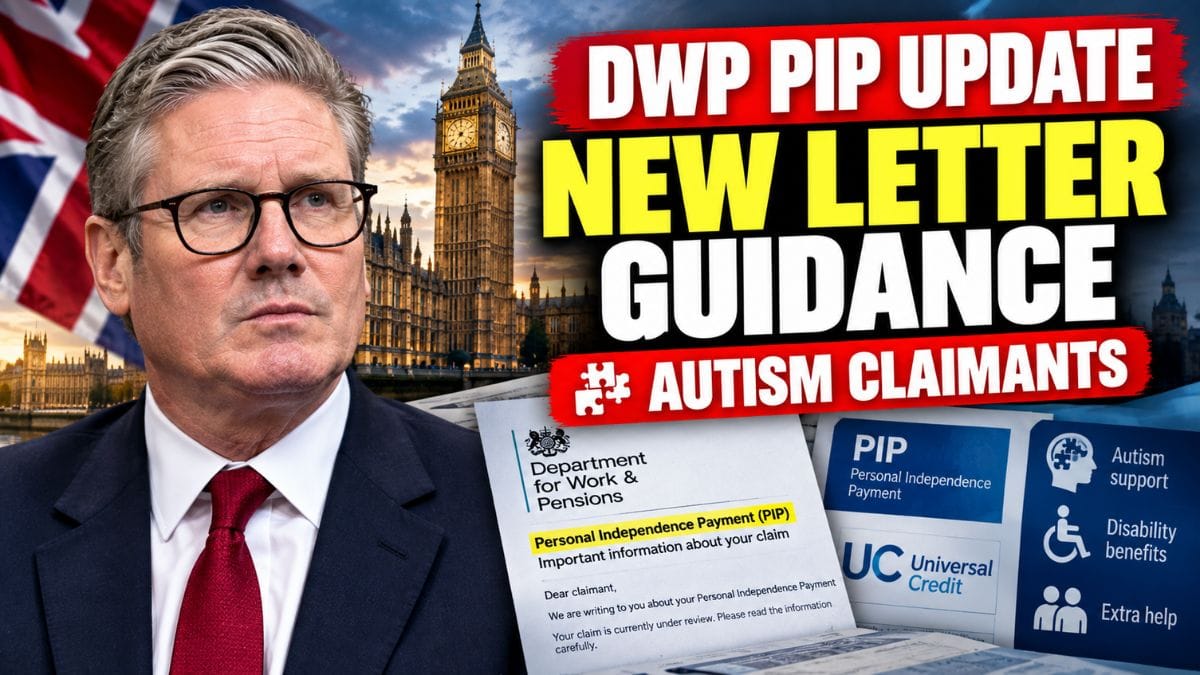
The Department for Work and Pensions (DWP) has provided an update on how it designs and tests letters and other written communications sent to benefit claimants, following questions about whether correspondence is accessible to people with autism and other neurodivergent conditions.
Letters relating to Personal Independence Payment (PIP) and Universal Credit can contain detailed information about appointments, decisions, deadlines and appeal rights. For some claimants, understanding what action is required and when it must be taken can be difficult.
The issue was raised in Parliament after Labour MP Mohammad Yasin asked whether autistic people with lived experience are routinely involved in designing, drafting and user-testing standard claimant letters and other written communications issued by the DWP.
Update
Lilian Greenwood, Parliamentary Under-Secretary at the DWP, responded on September 14 that the department works with internal and external experts when developing claimant communications.
Greenwood said the DWP has engaged with organisations representing neurodiverse customers, including People First and Mencap, to develop Easy Read products.
She also said DWP communications are designed to work with assistive technology and comply with the Web Content Accessibility Guidelines, known as WCAG 2.2.
According to the minister, the department regularly tests its communications to check that they continue to meet users’ needs.
The response provides the department’s position on how claimant letters are developed, but it does not mean that every claimant will find every letter easy to understand.
Concerns
Campaigners and disability organisations have raised concerns about the complexity of benefit-related communications for years.
The National Autistic Society previously highlighted concerns about communication between autistic people and the DWP in evidence submitted to the Work and Pensions Committee.
Its evidence pointed to difficulties understanding application processes, completing forms and accessing information in Easy Read formats. It also noted that some autistic people may not know they can request additional time to complete forms.
These concerns are relevant because benefit correspondence can contain important deadlines. Missing a deadline or misunderstanding what a claimant needs to do can affect the next stage of a claim or challenge.
The concerns are not limited to autism. People with learning disabilities, cognitive difficulties and other conditions may also require information in different formats or additional support.
Appeals
PIP and Universal Credit decisions can be challenged through established processes. In many cases, a claimant must first ask the DWP to reconsider a decision through a mandatory reconsideration before an appeal can proceed to an independent tribunal.
Benefits and Work has cited figures suggesting that 65% of claimants abandon their cases after mandatory reconsideration. Such figures are often used by campaigners when discussing barriers in the benefits appeals system.
However, the reasons why people discontinue claims or challenges can vary. Communication difficulties are one concern raised by campaigners, alongside other factors such as the complexity of the process, the time involved and the circumstances of individual claimants.
Autism
Autism can affect people in different ways, and having an autism diagnosis does not automatically mean someone qualifies for PIP.
PIP is based on how a person’s condition affects specific daily living and mobility activities rather than simply on the name of their diagnosis.
According to guidance cited from Benefits and Work, 198,000 PIP claimants had autism recorded as their primary disabling condition in 2024. The website describes autism as the second most prevalent condition among those for which a PIP award is granted, based on the DWP’s list of more than 500 conditions.
For autistic people, relevant difficulties could include activities such as preparing food, washing and bathing, dressing, communicating, interacting with other people or planning and following journeys.
The effect on the person’s ability to carry out these activities is what matters when assessing PIP eligibility.
PIP
PIP is designed to help with additional living costs associated with a long-term physical or mental health condition or disability.
A person does not generally have to be out of work to receive PIP. Savings and employment status do not by themselves determine whether someone qualifies.
PIP has two components: daily living and mobility.
The daily living component relates to difficulties with activities such as preparing food, washing, dressing, communicating and managing certain everyday tasks.
The mobility component relates to difficulties with moving around and planning or following journeys.
A claimant can receive one component or both, depending on how their condition affects them and the relevant assessment criteria.
Importantly, an autism diagnosis alone does not guarantee an award. The assessment considers the practical impact of the person’s difficulties and how frequently those difficulties occur.
Communication
The DWP has previously acknowledged that government organisations can become accustomed to internal terminology that may be unfamiliar to the public.
In a 2021 DWP Digital blog, the department said that language used inside an organisation may not make sense to people using its services.
The blog argued that government services need language that people can understand and use, particularly because government services are accessed by people with different needs.
This principle is particularly relevant to benefit letters. A claimant may understand the general purpose of a letter but still struggle to identify the action required, the relevant deadline or what happens next.
Clearer wording, accessible formats and compatibility with assistive technology can therefore be important parts of the communication process.
Accessibility
The latest DWP response indicates that accessibility is considered during the development and testing of claimant communications.
The department says it works with external organisations and uses Easy Read products for some audiences. It also says its written communications are designed to work with assistive technology and meet WCAG 2.2 accessibility standards.
Accessibility standards can address technical and presentation issues, but accessible communication also involves whether people can understand the information and identify what they need to do.
That distinction is important for benefit claimants because letters can contain legal, financial and procedural information where misunderstanding a single detail may have practical consequences.



Claiming
People with autism may be eligible for PIP where their condition creates qualifying difficulties with daily living or mobility activities.
The government advises people to consider how their condition affects them rather than relying solely on their diagnosis when describing their circumstances.
Claimants should also pay attention to correspondence from the DWP, particularly information about deadlines, assessments and decisions. If a letter is difficult to understand, seeking appropriate welfare rights or benefits advice can help clarify what action may be required.
The DWP’s latest statement shows that the department says it is taking steps to make claimant communications more accessible. At the same time, concerns raised by disability organisations demonstrate why the practical experience of people receiving these letters remains an important part of the discussion.