People receiving certain benefits from the Department for Work and Pensions could receive their money earlier than usual because of the August Bank Holiday.
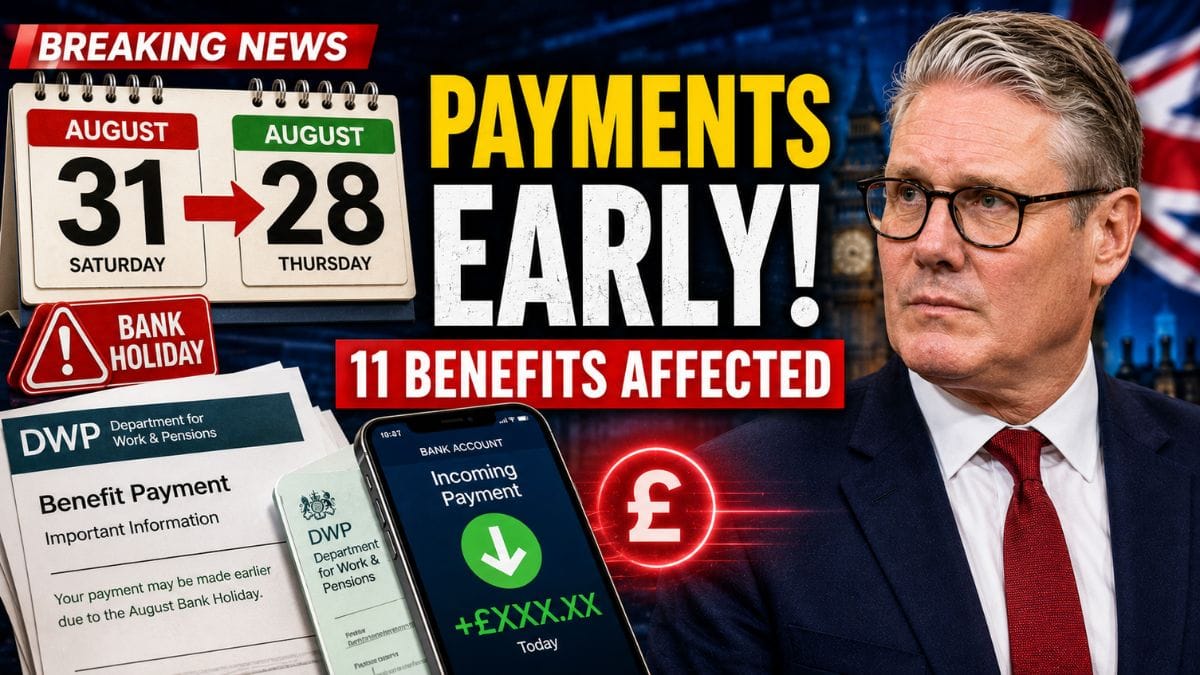
The DWP has confirmed that payments normally due on Monday, August 31, 2026, will instead be made on Friday, August 28. The change affects 11 major benefits, including Universal Credit, State Pension and Personal Independence Payment.
The early payment applies across the UK and is intended to prevent people from facing a delay because of the bank holiday. While the payment date is changing, the amount people receive is not being increased as a result of the earlier payment.
Dates
The late August Bank Holiday falls on Monday, August 31. Because government payment systems do not generally process payments on bank holidays, benefits scheduled for that day are being brought forward.
For affected recipients, the key dates are:
| Normal payment date | Revised payment date |
|---|---|
| Monday, August 31, 2026 | Friday, August 28, 2026 |
The change means eligible households should have access to their money before the long weekend rather than waiting until the next working day.
Benefits
The DWP has confirmed that 11 major benefits are included in the payment adjustment.
These are:
- Universal Credit
- State Pension
- Personal Independence Payment
- Attendance Allowance
- Carer’s Allowance
- Disability Living Allowance
- Income Support
- Jobseeker’s Allowance
- Pension Credit
- Employment and Support Allowance
- Industrial Injuries Compensation Scheme
People receiving more than one of these benefits should check their individual payment schedules, particularly if payments normally arrive on different dates.
Universal
Universal Credit is among the benefits affected by the change.
Recipients whose normal Universal Credit payment date falls on Monday, August 31, should receive their payment on Friday, August 28 instead.
An early payment does not mean an additional payment is being provided. It is the same scheduled benefit being issued earlier because of the bank holiday.
This distinction is important for household budgeting. Someone receiving money several days earlier may need to account for a longer gap before their following payment arrives.
Pensions
State Pension and Pension Credit recipients are also included.
People whose scheduled payment falls on the August Bank Holiday should therefore expect the money to arrive on the preceding working day.
For pensioners who rely heavily on their regular payment to cover household expenses, the earlier date may provide some additional flexibility over the bank holiday weekend. However, it does not change the overall amount of State Pension or Pension Credit being paid.
The same principle applies to other benefits included in the DWP announcement.
Disability
Several disability-related payments are included in the arrangements.
These include Personal Independence Payment, Attendance Allowance and Disability Living Allowance. Carer’s Allowance is also affected.
These benefits provide financial support to people with disabilities, health conditions or caring responsibilities. Where a payment is normally due on August 31, the recipient should receive it on August 28 instead.
People who receive benefits on different schedules should not assume that every payment they receive will move. The adjustment applies to payments specifically due on the bank holiday.
Scotland
The earlier payment arrangement applies throughout the UK.
This includes Scotland, even though Scotland has some bank holidays that differ from those observed elsewhere in the UK.
The DWP’s confirmation means recipients across England, Wales, Scotland and Northern Ireland whose payments are due on August 31 should be covered by the revised payment arrangements.
This provides a consistent payment timetable for the affected benefits despite differences in local bank holiday arrangements.
Budgeting
An early benefit payment can be helpful, but households should remember that it effectively moves money forward rather than creating extra income.
For example, if a person normally receives a payment every four weeks and receives one several days earlier because of a bank holiday, the next regular payment does not necessarily arrive sooner as well.
This can make budgeting important, particularly for households already managing tight monthly finances.
Anyone expecting an early payment may want to note both the revised August date and the date of their following payment. Keeping track of both can help avoid confusion over when money will next be available.
Support
The DWP says the early payments are intended to provide greater certainty around the bank holiday period and help families and older people manage their finances.
The timing also comes shortly before the new school year, when some households may face additional costs.
For anyone receiving one of the affected benefits, the main point is straightforward: if a payment is normally due on Monday, August 31, it should instead be paid on Friday, August 28.
Recipients do not need to make a new claim simply because their payment date has changed. The adjustment is an administrative change to the payment schedule rather than a new benefit or additional entitlement.
The August Bank Holiday will therefore bring an earlier payment date for people receiving 11 specified DWP benefits. Universal Credit, State Pension, PIP, Attendance Allowance, Carer’s Allowance and other listed benefits are included. Checking your usual payment date can help you determine whether the change applies to you and plan for the next payment accordingly.
FAQs
When will August 2026 benefits be paid early?
Payments due August 31 will be paid August 28.
Is Universal Credit paid early in August?
Yes, if your normal payment date is August 31.
Is State Pension paid early too?
Yes, payments due August 31 will arrive August 28.
Does the early payment mean extra money?
No. It is the same payment made earlier.



Does Scotland get the early payment?
Yes, the arrangement applies across the UK.