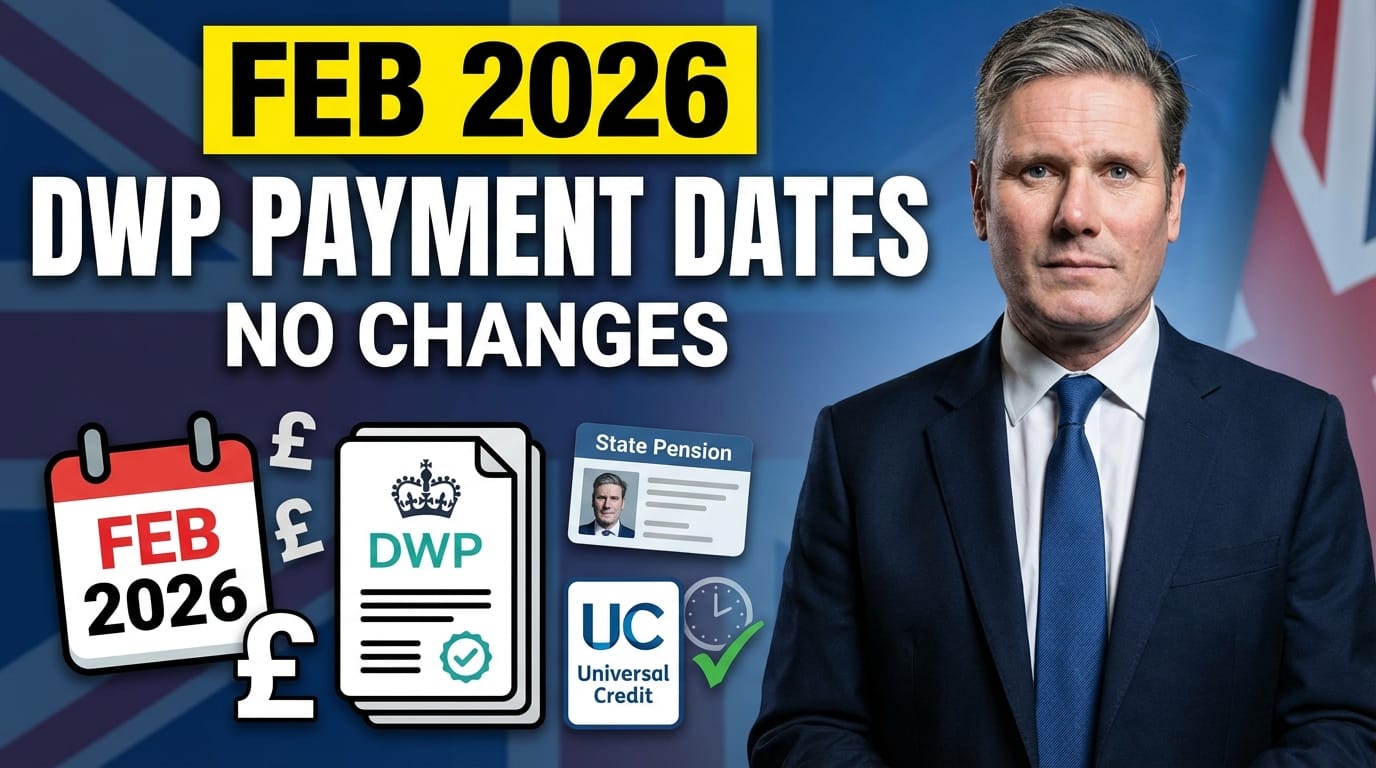
With no public holidays on the UK calendar in February 2026, recipients of government support can expect normal payment schedules for all DWP (Department for Work and Pensions) benefits. This follows recent months of disrupted payment timings caused by Christmas, Boxing Day, and New Year’s Day.
Now that the festive period is behind us, February offers a return to routine – and clarity – for the 24 million people in the UK who receive some form of DWP-administered support.
Schedule
For February 2026, no changes or early payments are expected. Payments such as Universal Credit, State Pension, Child Benefit, Disability Living Allowance, and Carer’s Allowance will be processed on their usual dates.
Unlike January, which saw many recipients receive funds early due to holidays, February is a stable month for payments. That said, for those still managing higher winter energy bills, budgeting will remain key.
Pensions
The basic State Pension follows a predictable payment pattern, based on the final two digits of your National Insurance (NI) number. Payments are made every four weeks, directly to your bank account.
Here’s how the payment days break down:
| NI Number Ending In | Payment Day |
|---|---|
| 00 to 19 | Monday |
| 20 to 39 | Tuesday |
| 40 to 59 | Wednesday |
| 60 to 79 | Thursday |
| 80 to 99 | Friday |
If you’re unsure of your NI number or payment schedule, it’s worth checking your account or contacting the DWP directly.
Benefits
The following DWP benefits will continue their standard payment cycle in February 2026:
- Universal Credit
- State Pension (Basic and New)
- Disability Living Allowance (DLA)
- Child Benefit
- Carer’s Allowance
- Employment and Support Allowance (ESA)
- Jobseeker’s Allowance (JSA)
- Personal Independence Payment (PIP)
Most of these are paid monthly or every four weeks, depending on the type of benefit and when your claim was first approved.
Increases
Although February payments will proceed as usual, benefit increases are on the horizon. Starting in April 2026, the UK government is applying a 3.8% increase to benefits linked to inflation, such as Universal Credit and PIP. Other types of payments not tied to inflation will rise by 2.3%.
This means that from April:
- Most DWP benefits will be higher
- Pensioners may see an increase depending on eligibility
- The uplift aims to ease pressures from cost-of-living concerns
Here’s a brief summary:
| Effective April 2026 | Rate Increase |
|---|---|
| Inflation-linked benefits | +3.8% |
| Other selected benefits | +2.3% |
More detailed figures will be published closer to the new financial year.
Advice
Even though February doesn’t bring disruption, many households are still facing seasonal energy expenses and catching up from an unusual January payment schedule. Here are a few tips to manage your budget effectively:
- Track your benefit schedule using your NI number
- Avoid overspending early in the month
- Prepare for longer gaps between payments when holidays approach
- Keep updated on upcoming benefit increases in April
February 2026 offers some relief in predictability for benefit and pension recipients. With no public holidays affecting payment cycles, funds should arrive on time. While energy costs remain high due to cold weather, upcoming increases in benefits from April may help provide longer-term financial support for millions of UK residents.
FAQs
Will DWP payments change in February?
No, February payments will follow the normal schedule.
How is my State Pension payment date set?
By the last two digits of your National Insurance number.
What day is pension paid for NI ending in 40?
Wednesday.
Will benefits increase in 2026?
Yes, most will rise by 3.8% in April 2026.