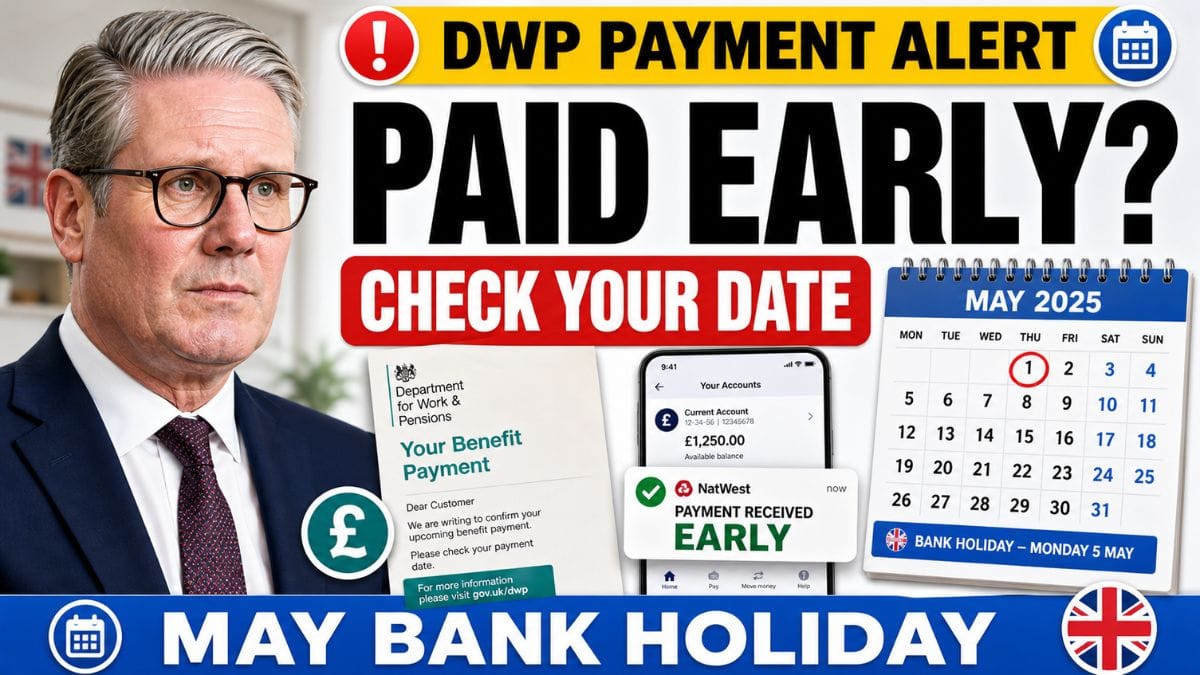
The Department for Work and Pensions (DWP) has issued updated guidance ahead of the early May bank holiday, highlighting temporary changes to benefit payment dates. These adjustments are routine during public holidays but can still affect household budgeting, particularly for those who rely on fixed payment schedules.
Knowing how and when payments are made can help claimants avoid confusion and manage their finances more effectively during these periods.
Update
For the early May bank holiday, individuals who were due to receive payments on Monday, May 4 were instead paid earlier, on Friday, May 1. This change applies automatically, meaning claimants do not need to take any action if their payment arrives as expected.
However, if a payment did not arrive on the revised date, claimants are advised to follow up promptly. The DWP has noted that its phonelines were closed on the bank holiday Monday but resumed normal service the following working day.
Benefits
Several types of benefits are affected by bank holiday schedule changes. These include:
- Universal Credit
- State Pension
- Pension Credit
- Disability Living Allowance (DLA)
- Personal Independence Payment (PIP)
With approximately 24 million people in the UK receiving some form of DWP-administered benefit, these timing adjustments can have a wide-reaching impact.
Pension
State Pension payments follow a structured schedule based on the last two digits of a claimant’s National Insurance number. Despite this structured system, bank holidays still result in earlier payments.
Like other benefits, State Pension funds are deposited directly into bank accounts. When payment dates shift, recipients may need to adjust their budgeting to ensure funds last until the next scheduled payment.
Timing
An earlier payment date may appear beneficial at first glance, but it effectively extends the gap until the next payment cycle. This can create short-term budgeting challenges, particularly for households with limited financial flexibility.
The same adjustment pattern is expected to apply to future bank holidays, including the spring bank holiday later in May. Planning ahead for these shifts can help reduce financial strain.
Contact
If a payment has not been received as expected, the DWP advises claimants to make contact without delay. Individuals can call 0800 328 5644 to report issues or seek clarification.
Before contacting the DWP, it may be helpful to check your bank account and confirm the revised payment date. In some cases, delays may be related to banking processes rather than the payment itself.
Childbenefit
Child Benefit payments are administered separately but are also affected by bank holidays. When a payment is due on a public holiday, it is typically issued earlier than usual.
Some households may receive weekly payments instead of the standard four-week cycle. This usually applies to single parents or those receiving certain additional benefits, such as Income Support.
New claimants should be aware that the first payment can take up to 12 weeks to arrive, although it is usually backdated for up to three months.
Tracking
Keeping track of payment dates is important, particularly when schedules shift. One practical method is to count four weeks forward from your last payment date, excluding any bank holiday adjustments.
If there is uncertainty, bank statements can provide confirmation. Child Benefit payments typically appear with a reference beginning with “HMRC Child Benefit” followed by an 18-character code.
If a payment appears late, checking with your bank is recommended before contacting the Child Benefit Office.
Guidance
Official guidance notes that when a bank holiday falls on a weekend, a substitute weekday is usually designated. These changes can affect both employment arrangements and benefit payments.
It is also worth noting that employers are not required to provide paid leave on bank holidays, although many do. This distinction is separate from benefit payment schedules but can still influence overall household income during holiday periods.
Planning
Bank holiday payment changes are predictable and occur several times each year. Preparing for these shifts can help maintain financial stability.
Setting aside a portion of early payments or adjusting spending patterns temporarily can reduce the risk of shortfalls before the next payment arrives. For households managing tight budgets, even small adjustments can make a meaningful difference.
While these scheduling changes are temporary, their impact can extend beyond the holiday period. Staying informed and planning ahead remains the most effective way to manage benefit income throughout the year.
FAQs
Why was my DWP payment early?
Because of the May bank holiday schedule change.
What if I did not receive my payment?
Check your bank, then contact DWP.
Do all benefits change dates?
Most DWP benefits are paid earlier.
Are Child Benefit payments affected?
Yes, they are usually paid early too.