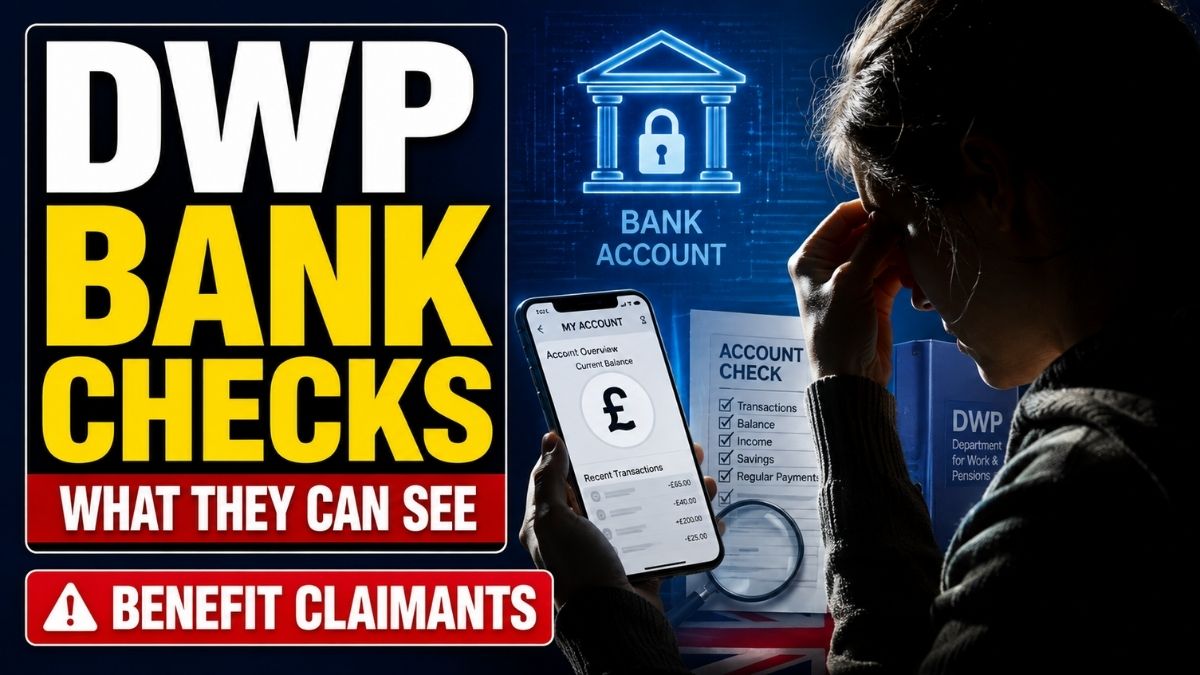
The Department for Work and Pensions (DWP) is introducing stronger measures to recover benefit debts and tackle suspected fraud. The changes include powers that could allow information about some benefit claimants’ bank accounts to be obtained from financial institutions.
The measures have attracted attention because they give the department additional ways to examine financial information and recover money in certain circumstances. The government says the aim is to make sure benefits go to people who meet the rules and that debts are recovered where money is owed.
The changes are particularly relevant to people receiving Universal Credit, Employment and Support Allowance (ESA) and Pension Credit.
Accounts
When financial information is checked, one of the main areas officials may look at is whether a claimant’s financial circumstances match the information used to assess their benefit entitlement.
This can include examining savings, income and other relevant financial information. The purpose is to establish whether a person continues to satisfy the conditions for the benefit they receive.
For means-tested benefits, financial circumstances can be particularly important. Savings or other income can affect entitlement depending on the benefit and the applicable rules.
A bank account check does not automatically mean that someone has committed fraud. Financial information can be reviewed as part of efforts to establish whether benefit payments are correct.
Savings
Savings can be relevant when someone claims benefits that have financial eligibility rules.
Universal Credit and Pension Credit, for example, take account of a claimant’s financial circumstances under their respective rules. A person’s capital and income can therefore affect how much support they are entitled to receive.
This means claimants should provide accurate information about relevant savings and financial changes. Failing to report a change can result in an overpayment, which the DWP may later seek to recover.
The specific treatment of savings depends on the benefit and the claimant’s circumstances, so people should not assume that every bank balance is treated in exactly the same way.
Income
Income is another area that can be relevant when the DWP assesses entitlement.
Officials may need to establish whether a claimant has other sources of income that should have been taken into account. Bank statements and other financial information can help provide a picture of money coming into an account.
For people receiving benefits alongside employment, pension income or other payments, reporting changes accurately is important.
The purpose of these checks is to compare financial information with the circumstances declared by the claimant and identify cases where payments may not be correct.
Benefits
The new measures are expected to focus on certain benefits, including Universal Credit, ESA and Pension Credit.
These benefits have different eligibility requirements, so the information relevant to one claimant may not be the same as that relevant to another.
The DWP’s wider fraud and error measures are intended to identify cases where benefits have been paid incorrectly and recover money that is owed.
Claimants should therefore continue to report changes in circumstances through the appropriate channels and keep records of information provided to the department.
Debts
The changes also concern people who owe money to the DWP because of benefit overpayments or other debts.
The department has urged people with outstanding benefit debt to make contact rather than allowing the debt to remain unresolved. According to the DWP, new recovery measures will provide additional options for pursuing debts from people who have the ability to repay.
The government says the measures are designed to address situations where people who are no longer receiving benefits or are not in PAYE employment have previously been difficult to reach for repayment.
Recovery
Under the new arrangements, the DWP will have additional powers to obtain information from banks and, in certain circumstances, recover money directly from accounts.
These powers have been criticised by some because of concerns about privacy and the potential impact on benefit claimants. The government, however, argues that stronger recovery measures are needed to address fraud and unpaid debts.
The department has said that it will work with people who have outstanding debts to find affordable repayment arrangements. Direct recovery is intended to provide another option in cases where people can repay but do not do so voluntarily.



Checking
For benefit claimants, the most important step is to keep financial and personal information up to date.
Changes involving income, savings, employment or household circumstances can sometimes affect benefit entitlement. Reporting relevant changes promptly can help reduce the risk of incorrect payments and subsequent debts.
The DWP has also encouraged people who already have outstanding debts to contact the department. Anyone concerned about their circumstances can seek independent benefits or debt advice before taking action.
The new bank account measures are part of a broader effort to reduce benefit fraud, error and unpaid overpayments. While the powers give the DWP more tools to check financial circumstances and recover certain debts, eligibility will still depend on the rules of the individual benefit and the claimant’s circumstances.