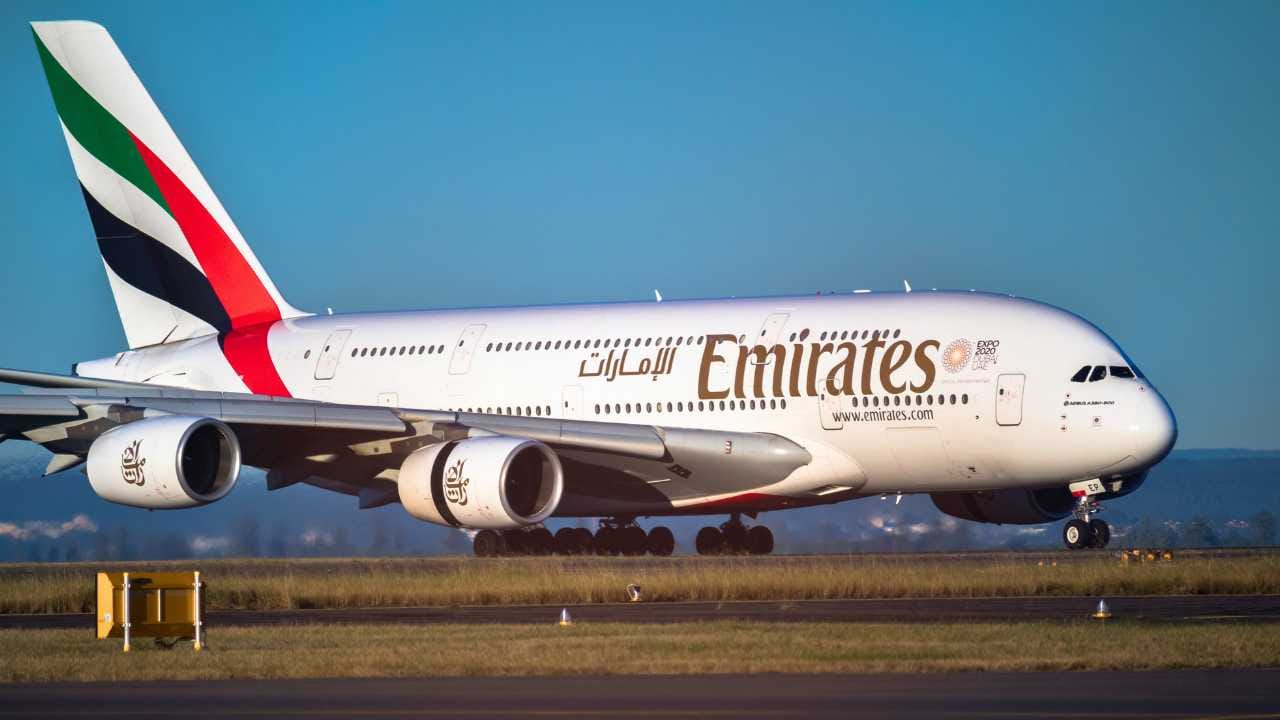
Airbus A380 operations are entering a new phase as major global airlines quietly reshape their long-haul strategies. Once considered the flagship of premium international travel, the superjumbo is now facing selective route withdrawals and network adjustments, even as passenger demand remains strong across key global corridors.
Strategic Shift
Airlines, including Emirates, Qatar Airways, and Singapore Airlines, are making calculated decisions to reduce Airbus A380 services across multiple international routes. These changes reflect a broader industry trend focused on operational efficiency and fleet optimization rather than a decline in passenger demand.
Recent updates show that several destinations are losing regular A380 services as airlines adjust schedules. According to recent aviation coverage, Emirates and Qatar Airways have already scaled back operations on select routes, signaling a shift in deployment priorities.
This is not a sudden retreat from the aircraft but a recalibration of where the A380 makes the most economic sense. Airlines are focusing on dense, high-yield routes while trimming services on marginal or seasonal destinations.
Also Read: UK Job Loss Forecast – Economic Slowdown Raises Employment Concerns
Airbus A380 Route Changes
Multiple global hubs are experiencing reduced A380 frequency. Cities such as Zurich, Auckland, and Mumbai have seen adjustments as carriers redeploy aircraft to routes with more consistent demand.
Singapore Airlines has also surprised passengers by ending A380 services on specific routes, including some that were historically associated with the aircraft. A detailed report from global travel industry coverage highlights how multiple cities across Europe and Asia are being impacted.
These changes are often driven by seasonal demand fluctuations, airport slot constraints, and the need for more flexible aircraft deployment. Smaller widebody jets like the A350 and Boeing 787 offer airlines greater route adaptability, especially in uncertain demand environments.
Cost Pressures
The Airbus A380 remains one of the most iconic aircraft in aviation history, but its operating economics present ongoing challenges. With four engines and high maintenance requirements, the aircraft is significantly more expensive to operate compared to newer twin-engine alternatives.
Fuel efficiency plays a central role in airline decision-making. While the A380 is efficient when fully loaded, it becomes less viable on routes with fluctuating demand. This has prompted airlines to prioritize aircraft that offer better cost control and flexibility.
Additionally, airport infrastructure requirements limit where the A380 can operate efficiently. Not all airports are equipped to handle its size, further narrowing its deployment options.
Passenger Experience
Despite operational challenges, the A380 continues to be a favorite among passengers. Known for its spacious cabins, quieter ride, and premium onboard amenities, it delivers a travel experience that smaller aircraft struggle to replicate.
Airlines like Emirates have invested heavily in enhancing the onboard product, including private suites, onboard lounges, and upgraded economy seating. As a result, the aircraft still commands strong demand on flagship routes such as London to Dubai and Sydney to Dubai.
However, passengers may notice fewer opportunities to fly on the A380 as airlines streamline their networks. This shift is less about eliminating the aircraft and more about ensuring it operates only where it delivers maximum value.
Also Read: UK Energy Support Update – Priority Services Register Offers Help for Six Groups
Market Outlook
The future of the Airbus A380 is increasingly tied to niche, high-demand routes. Airlines are likely to continue using the aircraft for major international hubs where passenger volumes justify its scale.
Industry analysts expect the A380 to remain in service for years to come, particularly within fleets like Emirates, which operates the largest number of these aircraft globally. However, its role will be more specialized rather than widespread.
As global travel demand stabilizes and airlines focus on profitability, the A380 will continue to evolve from a network workhorse to a flagship experience aircraft. Its presence will remain significant but increasingly selective.
The current wave of route adjustments reflects a mature aviation market adapting to new realities. For passengers and industry observers alike, the Airbus A380 remains a symbol of luxury and scale, even as its operational footprint becomes more refined.
Airbus A380 – FAQs
Why are airlines reducing A380 flights?
High costs and route optimization drive reductions.
Is the Airbus A380 being retired?
No, it is still used on select high-demand routes.
Which airlines still use the A380?
Emirates, Singapore Airlines, and others operate it.
Why do passengers like the A380?
It offers more space and a premium onboard experience.