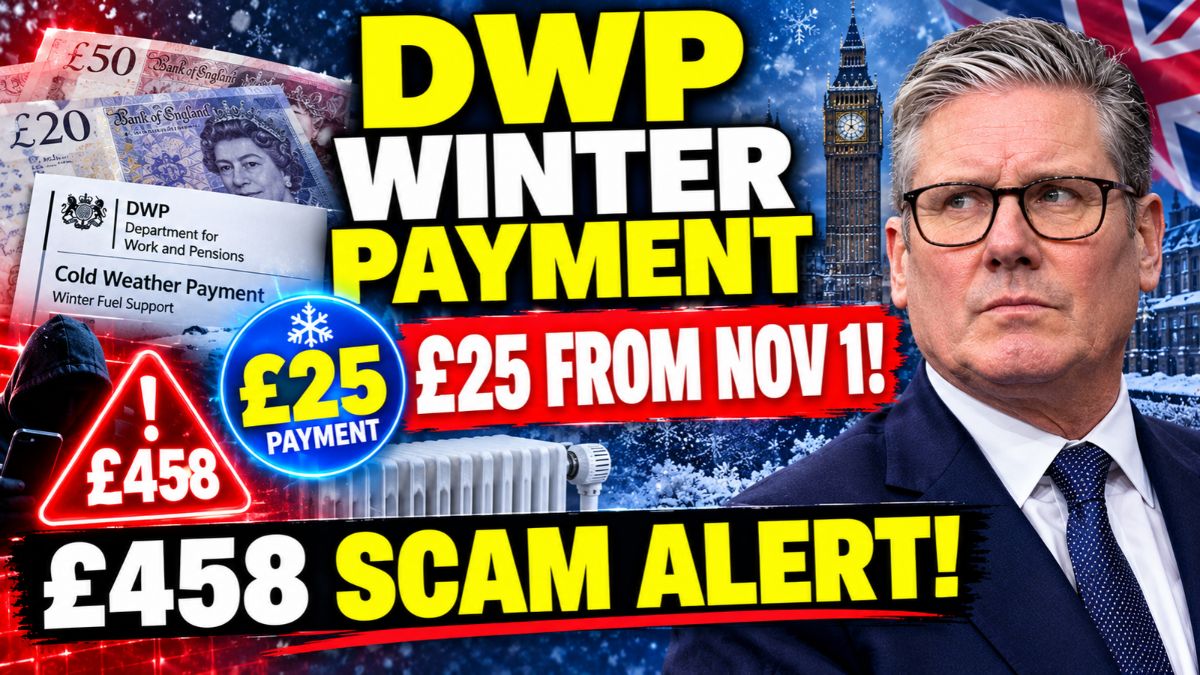
The Department for Work and Pensions (DWP) has provided an update on the payment schedule for the Winter Fuel Payment 2026, confirming that most eligible pensioners in England and Wales can expect the money to arrive during November or December. The annual payment is designed to help older people manage heating and household energy costs during the colder months.
The Winter Fuel Payment is a tax-free, one-off payment that eligible individuals receive to help with winter heating expenses. Depending on their age and personal circumstances, recipients may receive between £100 and £300.
With winter approaching and household energy costs remaining an important concern for pensioners, knowing when the payment will arrive can help households plan their budgets. The DWP has also explained the qualifying age, payment arrangements and steps people should take if the money does not reach their bank accounts on time.
According to the Government’s latest guidance, most payments are made automatically. Eligible recipients should also receive a letter explaining the amount they will receive and the bank account into which the payment will be deposited.
Payment Dates
The DWP has confirmed that most Winter Fuel Payment 2026 payments will be made during November and December 2026.
Eligible pensioners generally do not need to submit a separate application because payments are usually processed automatically using information already held by the Government.
The payment is normally deposited into the same bank account used for receiving the State Pension or other qualifying benefits.
The DWP will also send a letter to eligible recipients explaining how much they are entitled to receive and which account will be used for the payment.
However, payments may not arrive on the same date for everyone. Processing schedules and individual circumstances can affect when the money reaches a recipient’s account.
People who qualify should therefore check their bank statements during November and December and keep the payment notification letter for reference.
Eligibility
The Government has specified an age-related condition for receiving the Winter Fuel Payment in 2026.
To qualify under the age requirement, an individual must have been born on or before 27 June 1960.
This means people who reached the qualifying age by the relevant date may be eligible, provided they also satisfy the other residence and entitlement conditions.
The payment is primarily intended for older people who may need additional financial assistance to manage heating expenses during winter.
However, meeting the birth-date requirement does not automatically guarantee payment in every situation. Other eligibility conditions and personal circumstances must also be considered.
People who are uncertain about their eligibility should check the official Government guidance before assuming they will receive the payment.
Payment Amount
The amount paid under the Winter Fuel Payment scheme can range from £100 to £300.
The final amount depends on factors such as the recipient’s age and circumstances during the qualifying period.
The DWP uses information relating to an individual’s situation during the qualifying week to determine the amount payable.
| Payment detail | Information |
|---|---|
| Minimum payment | £100 |
| Maximum payment | £300 |
| Payment type | One-off annual payment |
| Tax status | Tax-free |
| Expected payment period | November or December 2026 |
| Main purpose | Help with winter heating costs |
The amount may differ between households because the Government applies different payment rates depending on the relevant circumstances.
Recipients should check the letter issued by the DWP to confirm their individual payment amount.
Qualifying Week
An important factor in determining entitlement and payment amounts is the qualifying week.
For Winter Fuel Payment 2026, the relevant period is 21 September to 27 September 2026.
The DWP considers an individual’s circumstances during this period when assessing the amount payable.
This means that personal circumstances during the qualifying week can influence the payment calculation.
For example, an individual’s age, household circumstances and eligibility for certain benefits may affect the amount they receive.
People should therefore understand that the payment is not calculated solely on the basis of their current circumstances in November or December.
The qualifying week provides a reference period for determining entitlement under the scheme’s rules.
Automatic Payments
Most eligible people will receive their Winter Fuel Payment automatically.
The DWP generally uses existing information from the State Pension and other benefit records to identify eligible recipients.
This arrangement reduces the need for older people to complete additional paperwork or submit routine applications.
Recipients should receive a letter confirming the payment amount and the bank account into which the money will be deposited.
In most cases, the payment will be sent to the account already used for the State Pension or other relevant benefits.
However, people should ensure that their bank details and personal information are up to date with the relevant authorities.
If someone has recently changed their bank account or personal circumstances, they should check whether any update is required to avoid payment delays.
Missing Payment
The DWP has also explained what eligible people should do if their Winter Fuel Payment does not arrive.
According to the Government’s guidance, anyone who has not received a payment letter or the money in their bank account by 27 January 2027 should contact the Winter Fuel Payment Centre.
This date provides an important reference point for pensioners waiting for their winter support.
Before contacting the department, recipients may wish to check their bank statements and confirm whether the payment has been deposited into the account used for their State Pension or other benefits.
They should also review any correspondence received from the DWP.
People who need to report changes in their circumstances or check payment arrangements can use the official Winter Fuel Payment service.
If the payment remains outstanding after the specified date, contacting the relevant department can help establish whether further information or action is required.
Benefit Impact
Another important feature of the Winter Fuel Payment is that receiving the money does not affect other benefits.
The payment is tax-free and is not treated as income when calculating eligibility for other benefits.
This means eligible recipients do not generally need to worry that receiving the Winter Fuel Payment will automatically reduce their State Pension or other benefit entitlements.
The support is intended to provide additional assistance with winter heating expenses rather than replace existing welfare payments.
For pensioners who depend on fixed incomes, this additional payment can help manage seasonal household costs.
However, recipients should always refer to official guidance if they have questions about how the payment applies to their individual circumstances.
Heating Costs
Winter heating can represent a significant expense for older households, particularly for people who spend more time at home or have health conditions that require warmer indoor temperatures.
The Winter Fuel Payment is intended to help eligible pensioners manage some of these additional costs.
Recipients can use the money towards electricity, gas, heating oil or other household energy expenses.
Since the payment is made as a lump sum, households can decide how best to use it according to their individual needs.
For some pensioners, it may help cover part of their winter energy bills. Others may use it to manage heating expenses alongside food, housing and other essential household costs.
Although the payment provides financial assistance, the actual support available will depend on the household’s energy consumption and the amount received.


Official Guidance
Pensioners should rely on the Government’s official information when checking eligibility, payment dates and reporting missing payments.
The following resources provide relevant information:
- GOV.UK – Winter Fuel Payment: Official information about eligibility, payment amounts and entitlement.
- GOV.UK – Report a change in circumstances: Information about reporting changes and dealing with payment issues.
- Department for Work and Pensions: Government updates and information about benefit administration.
These resources can help recipients confirm whether they qualify and understand what action to take if their payment is delayed.
The Winter Fuel Payment 2026 will provide eligible pensioners in England and Wales with a one-off payment of between £100 and £300 to help with winter heating costs. Most payments are expected to arrive automatically in November or December, with the DWP issuing letters explaining the amount and payment details.
People who have not received their payment or notification by 27 January 2027 should contact the Winter Fuel Payment Centre. Checking eligibility, keeping personal information updated and following official guidance can help pensioners avoid unnecessary uncertainty while waiting for their winter support.