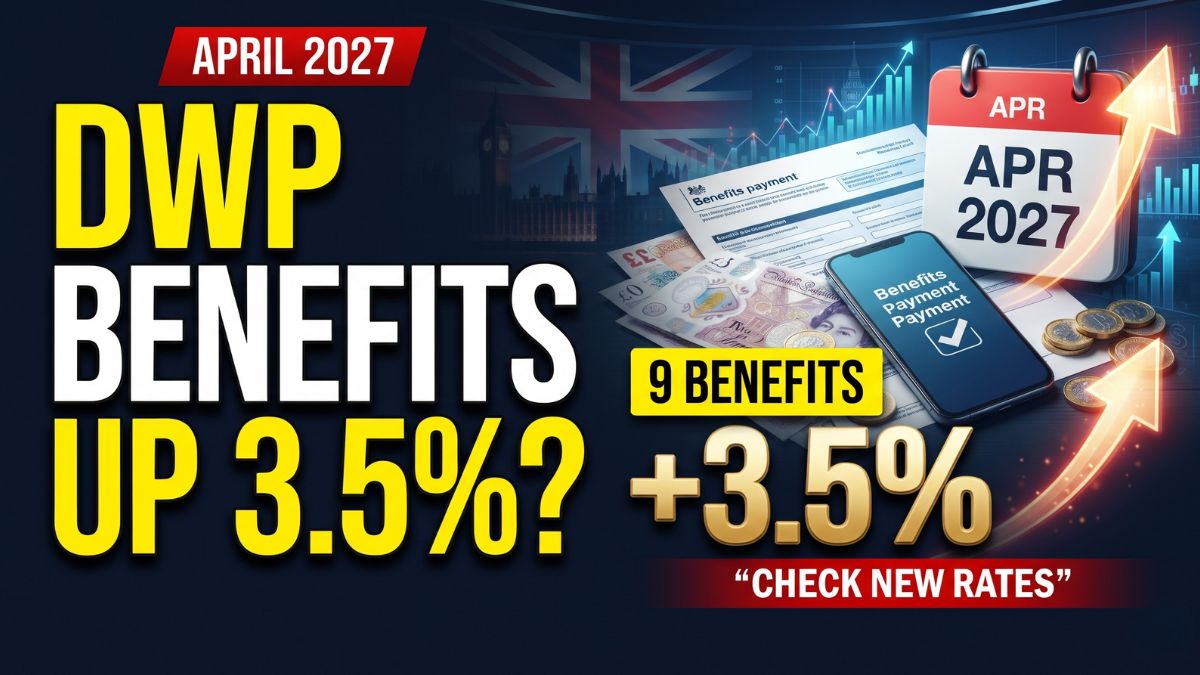
Millions of people across the UK who receive support from the Department for Work and Pensions (DWP) could see changes to their benefit payments in April 2027, as annual uprating decisions take effect. Inflation is a key factor in determining increases to many benefits, with the September inflation figure traditionally used to calculate the annual adjustment.
A potential 3.5% increase would affect several disability benefits, carer support payments and other forms of social security. However, the precise increase depends on the applicable legislation and the government’s confirmed rates for the 2027-28 financial year. Recipients should therefore distinguish between a projected increase and an officially confirmed payment rate.
The Secretary of State for Work and Pensions is required to review benefit levels annually. Some benefits are subject to statutory uprating requirements, while increases to others depend on government decisions and Parliamentary approval.
Knowing which benefits are covered can help households prepare for changes to their income and determine whether their payments are likely to be affected.
Inflation
Inflation measures how the prices of goods and services change over time. When prices rise, people receiving fixed benefits may find that their income covers less of their everyday spending.
The government uses inflation figures to inform annual increases to many benefits. September’s inflation rate is traditionally an important reference point for the following April’s uprating.
A projected increase of 3.5% would mean that a benefit worth £100 a week would rise to £103.50, provided the full increase applied to that payment rate.
However, not every benefit necessarily rises by the same percentage. Some payments follow different statutory rules, while others depend on separate government decisions. The final rates should be checked against official announcements before recipients adjust their household budgets.
The Department for Work and Pensions publishes information about benefits and government policy. The Office for National Statistics provides official inflation data used to understand changes in the cost of living.
Benefits
Nine benefits identified as subject to statutory inflation-linked uprating are relevant to the proposed April 2027 changes. These cover disability support, industrial injury payments, carer support and certain pension-related entitlements.
The following list identifies the benefits discussed in the proposed uprating, although the exact 2027-28 rates and any applicable exceptions should be confirmed through official government guidance.
| Benefit | Who it generally supports |
|---|---|
| Personal Independence Payment (PIP) | Eligible people with disabilities or long-term health conditions |
| Disability Living Allowance (DLA) | Eligible people with disabilities, subject to the rules for the relevant age group |
| Attendance Allowance | Eligible people aged 65 or over who need help because of disability or health conditions |
| Incapacity Benefit | Certain people receiving legacy support because of incapacity for work |
| Severe Disablement Allowance | Some people receiving legacy support for severe disability |
| Industrial Injuries Benefit | Eligible people affected by qualifying industrial accidents or prescribed occupational diseases |
| Carer’s Allowance | Eligible people providing substantial care to someone who receives a qualifying disability benefit |
| Additional State Pension | Eligible pensioners with entitlement under the relevant State Pension arrangements |
| Guardian’s Allowance | Eligible people bringing up a child whose parents have died, subject to the rules |
These benefits serve different purposes and have different eligibility requirements. A person receiving one payment should not assume they automatically qualify for another.
Disability
Personal Independence Payment is designed to help eligible people with the additional costs associated with a disability or long-term health condition. Eligibility is assessed according to how a person’s condition affects daily living and mobility, rather than simply the name of their diagnosis.
Disability Living Allowance remains relevant to some existing claimants, particularly children, although the arrangements differ across the UK and depend on age and circumstances. In England and Wales, eligible adults generally move to PIP under the applicable rules, while Scotland has its own disability benefit arrangements.
Attendance Allowance provides support to eligible older people who need help with personal care or supervision because of a disability or health condition.
If these benefits receive an inflation-linked increase in April 2027, the change could help recipients manage some of the additional costs associated with care, mobility, household assistance and everyday activities.
The actual amount received will depend on the benefit, the applicable rate and the person’s circumstances. People should check the relevant official guidance rather than assume a single increase applies to every disability payment.
Carers
Carer’s Allowance provides financial support to eligible people who spend a substantial amount of time caring for someone with a qualifying disability benefit.
Eligibility depends on several conditions, including the amount of care provided, the benefit received by the person being cared for and the carer’s earnings and other circumstances. Changes to the payment rate do not remove these requirements.
For carers who rely on the allowance alongside other household income, annual uprating can help offset some increases in food, transport and utility costs.
However, the effect of an increase will vary between households. Some carers may receive other benefits or have earnings that affect their overall entitlement, so the change to one payment may not reflect their entire financial position.
Industrial
Industrial Injuries Benefit supports eligible people whose health has been affected by a qualifying workplace accident or prescribed occupational disease.
The benefit system includes different forms of support, depending on the circumstances and the level of disability or injury. Incapacity Benefit and Severe Disablement Allowance are also relevant to some people receiving legacy benefits under earlier arrangements.
These legacy payments should not be confused with newer benefits that have replaced or changed parts of the social security system. Not everyone who is unable to work because of illness or disability can make a new claim for a legacy benefit.
Where statutory uprating applies, changes to payment rates can affect people who continue to receive these entitlements. Recipients should check their award letters or official benefit guidance to understand which rules apply to them.
Pensions
Additional State Pension is a component of the pension arrangements that applied under earlier State Pension systems. Some pensioners continue to receive an additional amount based on their National Insurance record and past earnings.
It is separate from the basic State Pension and the newer State Pension system. Consequently, the impact of annual uprating can vary according to the type of pension a person receives and the components included in their entitlement.
Guardian’s Allowance provides financial assistance to certain people bringing up a child whose parents have died. Eligibility is subject to specific conditions, including rules concerning the child’s circumstances and the surviving parent’s status.
Changes to these payments can matter to households with limited financial flexibility. Nevertheless, the amount payable in April 2027 should be confirmed through the official rates once they are published.
Confirmation
Although a 3.5% increase has been suggested for April 2027, recipients should not treat that figure as a confirmed increase for every benefit until the government publishes the final rates.
Annual uprating decisions can involve statutory requirements, separate policy choices and different rules for individual benefits. The timing and precise application of changes may therefore vary.
The UK government’s benefits and financial support guidance provides information about eligibility, current rates and how to claim. It is a useful starting point for anyone checking whether a payment is covered by an announced increase.
Recipients should also review official communications from the DWP or the relevant administering authority. This is particularly important for people receiving legacy benefits, pension-related payments or benefits that operate differently across the UK’s nations.



Planning
A change in benefit rates can affect household budgets, but the practical impact depends on the amount received and the costs a person faces.
For example, a 3.5% increase on a payment of £100 a week would add £3.50 a week, before considering any other changes to entitlement. The same percentage applied to a larger payment would produce a larger cash increase.
People planning for April 2027 can review their existing benefit statements, identify the payments they receive and compare the official new rates when available. Anyone receiving more than one benefit should check each payment separately because different rules may apply.
The nine benefits listed above cover a range of needs, from disability-related costs and caring responsibilities to industrial injuries and pension entitlements. While inflation-linked uprating can help maintain the purchasing power of some benefits, it does not guarantee that every household’s income will keep pace with its individual expenses.
The key point is to distinguish projected increases from confirmed rates. The proposed 3.5% figure provides a useful indication of the potential scale of change, but official announcements will determine the amounts recipients are entitled to receive from April 2027.