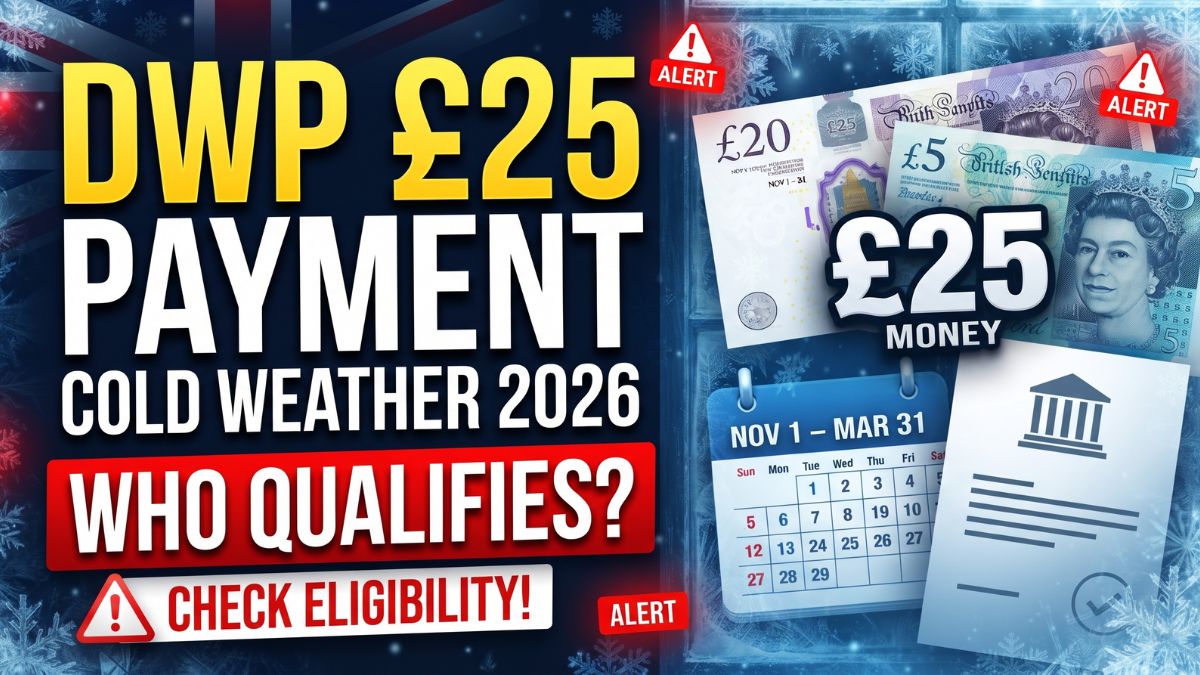
As temperatures begin to fall across the UK, eligible households could receive extra financial support to help manage winter heating costs. The Department for Work and Pensions (DWP) Cold Weather Payment scheme provides £25 for qualifying periods of very cold weather, helping certain benefit recipients manage the additional expenses associated with keeping their homes warm.
The 2026 to 2027 scheme is scheduled to run from November 1, 2026, to March 31, 2027, in eligible areas of England, Wales and Northern Ireland. Payments are triggered when the average temperature in a qualifying area is recorded as, or forecast to be, zero degrees Celsius or below for seven consecutive days.
More than 1.5 million households reportedly received Cold Weather Payments during the previous winter, highlighting the importance of the support for people on lower incomes. However, eligibility depends on the benefits a person receives, their household circumstances and the weather conditions recorded for their area.
Knowing the rules can help households determine whether they qualify, when money may arrive and what to do if an expected payment is missing.
Payments
The Cold Weather Payment scheme provides £25 for each qualifying seven-day period of very cold weather between November 1 and March 31.
Unlike some winter support programmes, the payment is linked to specific weather conditions rather than being issued to every eligible household at the start of winter.
The main payment rules for the 2026 to 2027 scheme are summarised below.
| Scheme detail | Information |
|---|---|
| Scheme period | November 1, 2026, to March 31, 2027 |
| Payment amount | £25 per qualifying period |
| Temperature threshold | Zero degrees Celsius or below |
| Duration | Seven consecutive days |
| Application | Not normally required |
| Payment method | Usually the same account as benefit payments |
| Expected payment time | Within 14 working days after a qualifying period |
For example, if an eligible household experiences two separate qualifying periods during the winter, it could receive £50. If four qualifying periods occur, the total could reach £100.
The amount is not capped at a single £25 payment for the entire winter. Instead, eligible recipients can receive a payment for each qualifying period that meets the scheme’s conditions.
However, cold weather alone does not guarantee a payment. The household must meet the benefit eligibility requirements, and the relevant area must satisfy the official temperature criteria.
Households should also distinguish Cold Weather Payments from other winter assistance programmes. Different schemes can have different eligibility rules, payment amounts and application procedures.
For official information, check the UK government’s Cold Weather Payment guidance.
Eligibility
Eligibility depends primarily on whether a person receives a qualifying benefit and meets any additional conditions that apply to that benefit.
The main qualifying benefit categories include Pension Credit, income-related Employment and Support Allowance (ESA), Universal Credit and Support for Mortgage Interest in eligible circumstances.
Receiving one of these benefits does not necessarily mean every household will qualify automatically in every situation. Some claimants must also meet additional requirements relating to children, disability, work capability or other household circumstances.
Pension Credit: People receiving Pension Credit may qualify for Cold Weather Payments during qualifying periods. Pension Credit provides additional financial support to eligible people over State Pension age who have a low income. Claimants should check that their benefit award and circumstances meet the scheme rules.
Income-related ESA: Certain recipients of income-related Employment and Support Allowance may qualify. Additional conditions can apply depending on the claimant’s circumstances and the other support they receive.
Universal Credit: Some Universal Credit claimants qualify when they meet the relevant additional conditions. These may include having a health-related limitation on work or responsibility for a young child. The exact requirements should be checked against the official guidance.
Support for Mortgage Interest: Certain people receiving Support for Mortgage Interest may also qualify, subject to the applicable conditions.
The scheme is intended to help eligible households manage the extra costs associated with prolonged cold weather. It is not a universal payment for everyone who experiences low temperatures.
People who are unsure whether their benefit qualifies should review the government’s eligibility guidance or contact the relevant benefits office.
Weather
The temperature requirement is central to how the scheme operates.
A qualifying period occurs when the average temperature in the relevant area is recorded as, or forecast to be, zero degrees Celsius or below for seven consecutive days.
This means a single freezing night is not sufficient to trigger a payment. The required conditions must apply across the full seven-day period.
The system uses designated weather information for particular areas rather than relying solely on an individual’s local thermometer or personal weather application. As a result, two households in different areas may receive different outcomes even if they experience similar temperatures.
A household might experience several cold nights but receive no payment if its designated area does not meet the official criteria. Conversely, a qualifying period may be recognised through the official weather data even if an individual household does not personally record temperatures below freezing.
The scheme is therefore based on the government’s area-specific assessment rather than individual heating bills or the temperature inside a person’s home.
Households can use the official Cold Weather Payment checker to find out whether a qualifying period has been recorded for their area.
Checking the official information is particularly useful during prolonged cold spells, when households may be trying to estimate whether additional financial support will arrive.
Applying
Most eligible people do not need to submit a separate application for a Cold Weather Payment.
The DWP generally identifies qualifying claimants through its existing benefit records and issues payments automatically when the weather conditions are met.
Payments are normally made into the same bank or building society account used for the recipient’s regular benefit payments. This means claimants generally do not need to provide new bank details specifically for the Cold Weather Payment.
After a qualifying period, the payment should normally arrive within 14 working days.
Although a separate application is not usually necessary, keeping benefit records up to date is important. Changes in household circumstances can affect eligibility, and the relevant benefits office may need to be informed.
For example, someone who has a baby or has a child under five come to live with them may need to report the change. This is particularly important when the household’s eligibility depends on the presence of a young child.
Claimants should not assume that every change will automatically be reflected in their benefit records immediately. Reporting relevant information through the appropriate official channel can help prevent avoidable delays or eligibility problems.
People who are considering applying for a qualifying benefit for the first time should also understand that Cold Weather Payments are linked to benefit entitlement. The weather scheme itself does not replace the need to qualify for the underlying benefit.
Delays
If a household believes it qualifies for a Cold Weather Payment but has not received the money, there are several practical steps it can take.
First, check whether the area’s weather conditions have officially triggered a qualifying period. Cold temperatures alone do not establish eligibility, and the official area-based criteria must be met.
Second, review the benefit award and household circumstances. A change in benefit entitlement or a failure to meet an additional eligibility condition may explain why a payment has not been issued.
Third, allow the standard payment processing period. The government guidance states that eligible households should normally receive the money within 14 working days after the qualifying period.
If the payment is still missing, contact the office responsible for the relevant benefit.
People receiving Pension Credit or State Pension-related support can contact the Pension Service. Claimants receiving Universal Credit or certain other working-age benefits can use the appropriate official benefit contact channel, including Jobcentre Plus where applicable.
When contacting an office, it can help to have the following information available:
- Your National Insurance number.
- Details of the benefit you receive.
- Your current bank account information.
- The qualifying weather period you believe should trigger a payment.
- Any relevant correspondence about your benefit entitlement.
Providing clear information can help the office establish whether the payment is due and whether further action is required.
Other Support
Cold Weather Payments are one form of winter assistance, but they are not the only support available to households facing high energy costs.
People on low incomes may also qualify for other benefits or local assistance, depending on their circumstances and where they live.
Pension Credit is particularly important for eligible older people because it can provide additional income and may open access to other forms of support. People who have not checked their entitlement recently may wish to review the eligibility rules, especially if their income or household circumstances have changed.
Households struggling with heating costs can also contact their energy supplier to ask about available payment arrangements, hardship assistance or support for customers experiencing financial difficulty.
Local councils and community organisations may offer additional help, although the availability and requirements of such support can differ by area.
It is important not to assume that receiving one type of winter assistance automatically guarantees eligibility for every other scheme. Each programme has its own rules, and some forms of support may require a separate application.
The DWP’s official guidance remains the most reliable starting point for checking Cold Weather Payment eligibility and understanding how the scheme operates.
Planning
The 2026 to 2027 Cold Weather Payment scheme is scheduled to begin on November 1, 2026, and continue until March 31, 2027. Eligible households can receive £25 for each qualifying seven-day period when the relevant area meets the official temperature threshold.
Most payments are made automatically, so a separate application is generally unnecessary. However, eligibility depends on the benefits a person receives and any additional conditions that apply to their household.
People who expect to qualify should keep their benefit information up to date, check official weather records during cold spells and allow time for payments to arrive. If an expected payment remains missing, contacting the relevant benefits office can help establish whether further action is needed.
For households facing higher winter energy bills, the payment can provide useful assistance. Checking eligibility early and understanding the scheme’s rules can help people plan for the colder months and identify other support if their financial circumstances require it.
FAQs
When does the Cold Weather Payment scheme start in 2026?
The 2026 to 2027 scheme is scheduled to run from November 1, 2026.
How much is the Cold Weather Payment?
Eligible households receive £25 for each qualifying seven-day cold period.
Do I need to apply for a Cold Weather Payment?
No. Eligible claimants generally receive payments automatically.
When will the Cold Weather Payment arrive?
Payments should normally arrive within 14 working days of a qualifying period.