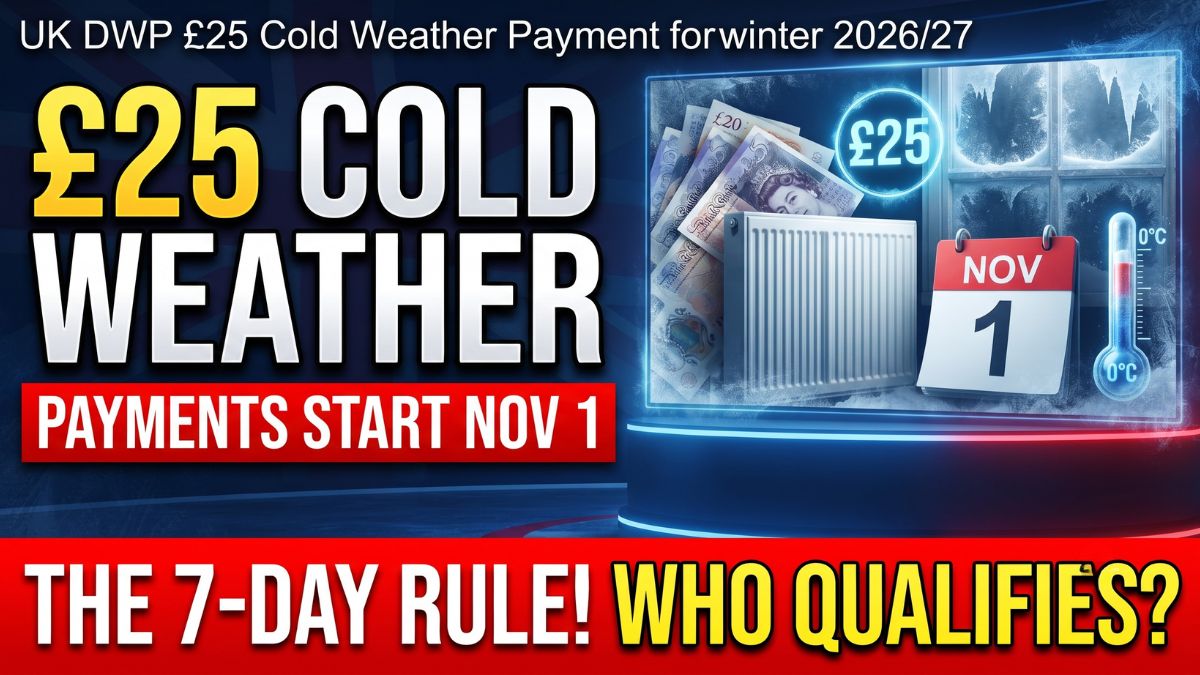
Millions of households across the UK could face higher heating costs as temperatures fall during the winter months. For people receiving certain benefits, the Department for Work and Pensions (DWP) provides financial support through its Cold Weather Payment scheme, which offers £25 for each qualifying period of very cold weather.
The 2026/27 scheme is scheduled to run from November 1, 2026, to March 31, 2027, according to the information provided. Eligible households in England, Wales and Northern Ireland may receive the payment automatically when temperatures in their area meet the required threshold for seven consecutive days.
However, colder weather alone does not guarantee that money will arrive. The scheme follows specific temperature rules, and eligibility depends on the benefits a person receives and their household circumstances. People living in Scotland are covered by a different winter heating support arrangement.
Knowing how the payment works, when the scheme opens and which households may qualify can help people plan for winter energy costs and identify other assistance that may be available.
Dates
The 2026/27 Cold Weather Payment season is scheduled to begin on November 1, 2026, and continue until March 31, 2027. Payments are not triggered simply because temperatures fall below their usual seasonal levels. The required temperature conditions must be met in the relevant area during the scheme’s operating period.
Under the reported rules, eligible households can receive £25 for each qualifying seven-day period when the average temperature in their area is recorded as, or forecast to be, 0°C or below for seven consecutive days.
Once a qualifying period has been confirmed, payments should normally arrive within 14 working days. The money is intended to help eligible households meet additional heating expenses during periods of severe cold.
For example, if an eligible household experiences two separate qualifying periods during the winter, it could receive two £25 payments, totalling £50. If further qualifying periods occur, additional payments may be made, provided the household continues to meet the relevant eligibility requirements.
The scheme does not provide a single fixed winter payment to every eligible person. Instead, the total amount depends on how many qualifying cold-weather periods occur in the household’s area.
People should check the official GOV.UK Cold Weather Payment guidance for the current scheme dates, qualifying conditions and payment information.
Eligibility
Cold Weather Payments are intended for people receiving certain means-tested benefits or Support for Mortgage Interest who also meet the scheme’s additional eligibility conditions.
Receiving a qualifying benefit does not necessarily mean that every person in a household will receive a payment. The DWP considers the specific benefit and, where applicable, circumstances such as having a young child or receiving certain disability-related benefits.
Depending on the benefit received, eligibility may include people claiming:
- Pension Credit.
- Income Support.
- Income-based Jobseeker’s Allowance.
- Income-related Employment and Support Allowance.
- Universal Credit.
- Support for Mortgage Interest, where the relevant conditions are met.
Additional conditions can apply, particularly to Universal Credit and some legacy benefits. For example, certain claimants may need to have a child under five, receive a qualifying disability or pensioner premium, or meet other requirements specified by the scheme.
People should therefore avoid assuming that receiving Universal Credit or another listed benefit automatically guarantees a payment. The precise eligibility rules depend on the claimant’s circumstances and the benefit they receive.
The DWP generally uses existing benefit records to determine eligibility. This means most qualifying households do not need to submit a separate application for each cold-weather payment.
Anyone unsure about their circumstances should review the official government guidance or contact the relevant benefit office for clarification.
Threshold
The seven-day temperature requirement is central to the Cold Weather Payment scheme.
For a payment to be triggered, the average temperature in the relevant area must be recorded as, or forecast to be, 0°C or below for seven consecutive days during the qualifying season.
This means that one freezing night, a brief cold snap or a forecast of snow will not automatically result in a payment. The scheme looks at a sustained period of cold weather rather than isolated low temperatures.
For example, an area could experience temperatures below freezing for several nights but still fail to meet the scheme’s seven-day condition. In that situation, a payment would not be triggered under the standard rule unless the required qualifying period is met.
The use of recorded or forecast temperatures also means that households do not need to monitor weather readings themselves to establish eligibility. The scheme uses designated weather information and area-specific records to determine whether the threshold has been reached.
The precise location matters because weather conditions can vary considerably across the UK. A qualifying period in one area does not necessarily mean that the same conditions have been met elsewhere.
People can check the Met Office website for weather forecasts and temperature information. However, a general weather forecast should not be treated as confirmation that a DWP payment has been triggered. The official Cold Weather Payment service is the appropriate source for checking whether a qualifying period applies to a particular postcode.
Payments
Eligible households generally do not need to apply separately for Cold Weather Payments. If the DWP’s records establish that the claimant meets the relevant requirements and the area experiences a qualifying period, the payment should be issued automatically.
According to the reported timetable, the payment should normally arrive within 14 working days after the qualifying period. Working days exclude weekends and public holidays, so the exact calendar date can vary.
The £25 payment is intended to help with additional expenses associated with cold weather, particularly heating costs. Households can decide how to use the money according to their needs, including paying energy bills or covering other essential expenses.
If a qualifying household does not receive a payment it believes is due, it should first check whether the relevant area recorded a qualifying period. The claimant should then review their benefit details and contact the appropriate benefit office if the payment still appears to be missing.
Some changes in household circumstances may also need to be reported. For example, a person may need to notify the relevant office if they have a baby or a child under five moves into their household, as this could affect eligibility under certain benefit rules.
Keeping benefit records up to date can help reduce the risk of a payment being missed because the department does not have the correct information.
Scotland
Cold Weather Payments do not operate in Scotland under the same arrangements used in England, Wales and Northern Ireland.
Instead, eligible Scottish households may receive the Winter Heating Payment. This is a separate form of support designed to help with heating costs during winter, and it does not depend on the same seven-day temperature trigger used by Cold Weather Payments.
The distinction is important because people living in Scotland should not expect the standard £25 Cold Weather Payment simply because their area experiences a prolonged period of freezing weather.
Eligibility for Scotland’s Winter Heating Payment is determined under its own rules. The payment is generally made automatically to eligible people, subject to the relevant benefit and household conditions.
Scottish residents can check the mygov.scot Winter Heating Payment guidance for information about eligibility, payment arrangements and the support available for the relevant winter.
People who move between Scotland and another part of the UK should make sure they check the rules that apply to their current circumstances rather than relying on information intended for a different part of the country.
Differences
Cold Weather Payments are separate from the Winter Fuel Payment and other forms of financial assistance intended to help households manage heating costs.
The Cold Weather Payment is triggered by qualifying temperature conditions and can be paid more than once during the winter. Its total value depends on the number of qualifying periods in the relevant area.
The Winter Fuel Payment, by contrast, is a separate scheme with its own eligibility requirements and payment arrangements. It is not triggered by a seven-day spell of freezing weather.
Other forms of support may also be available to eligible households, depending on their circumstances and where they live. These can include benefits, local assistance schemes and support with energy costs.
It is important not to assume that qualifying for one scheme automatically establishes eligibility for another. Each programme has its own rules, and the amount of support available can vary.
Households concerned about rising heating bills may benefit from reviewing their existing benefits and checking whether they qualify for additional help. The official GOV.UK website provides information about government support, while local councils and energy suppliers may be able to explain other assistance options.
Weather
The reported payment arrangements come as the UK moves further into autumn and approaches the colder winter months.
According to the supplied weather report, the Met Office expects conditions to become more autumnal, with cooler air, periods of rain, showers and strengthening winds. Atlantic weather systems may bring further unsettled conditions, particularly in western and north-western areas.
However, an autumn temperature drop does not necessarily mean the Cold Weather Payment threshold will be reached. The scheme only operates during its designated season, and the relevant area must meet the specific seven-day temperature requirement.
Weather conditions can also differ significantly between regions. A cold period in northern England, for example, may not correspond to the same temperatures in southern England or Wales.
For that reason, households should distinguish between a general forecast of colder weather and an official confirmation that a qualifying period has occurred.
People planning their winter budgets should also remember that the payment is intended as additional assistance rather than a guarantee that all heating expenses will be covered. The amount available through the scheme is fixed at £25 for each qualifying period, regardless of a household’s actual energy bill.
Planning
The upcoming winter payment season provides an opportunity for eligible households to check their benefit records and prepare for potential increases in heating expenses.
People receiving qualifying benefits should make sure the DWP or the relevant benefit office has accurate information about their circumstances. Changes involving children, disability-related benefits, household composition or other eligibility factors may affect whether they qualify.
It is also sensible to monitor official payment information during the winter rather than relying exclusively on weather reports or social media claims. The government payment checker can help establish whether a qualifying period has been recorded for the relevant area.
Households that do not qualify for Cold Weather Payments may still be entitled to other forms of assistance, depending on their income, location and circumstances. Reviewing available support before winter expenses rise may help them identify options in time.
The DWP’s £25 Cold Weather Payment scheme is scheduled to run from November 1, 2026, to March 31, 2027. Eligible households in England, Wales and Northern Ireland may receive payments automatically for qualifying seven-day periods when temperatures meet the required threshold.
However, eligibility is not universal, and colder weather alone does not guarantee a deposit. Checking the official rules, keeping benefit information current and confirming qualifying periods through government channels are the most reliable ways to understand what support may be available.
FAQs
When does the 2026/27 Cold Weather Payment scheme start?
The scheme is scheduled to run from November 1, 2026, to March 31, 2027.
How much is the Cold Weather Payment?
Eligible households can receive £25 for each qualifying seven-day period of very cold weather.
What temperature triggers a Cold Weather Payment?
The average temperature must be recorded or forecast at 0°C or below for seven consecutive days.
Do I need to apply for the £25 payment?
Most eligible people receive it automatically, provided they meet the scheme’s conditions.