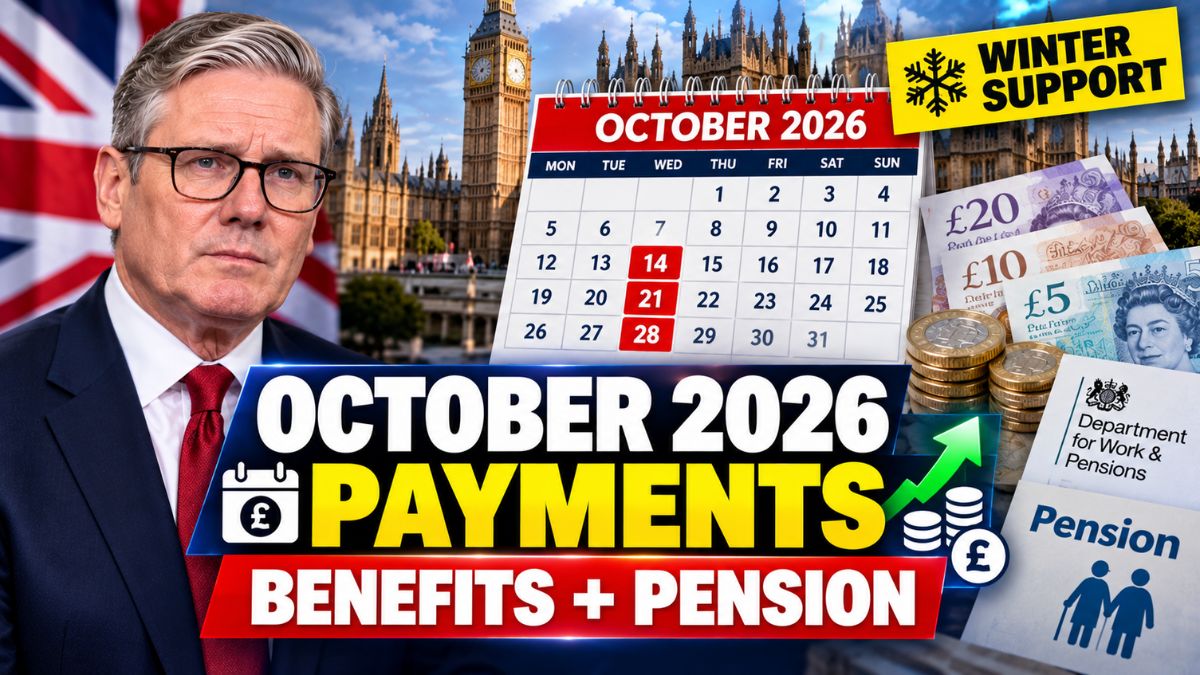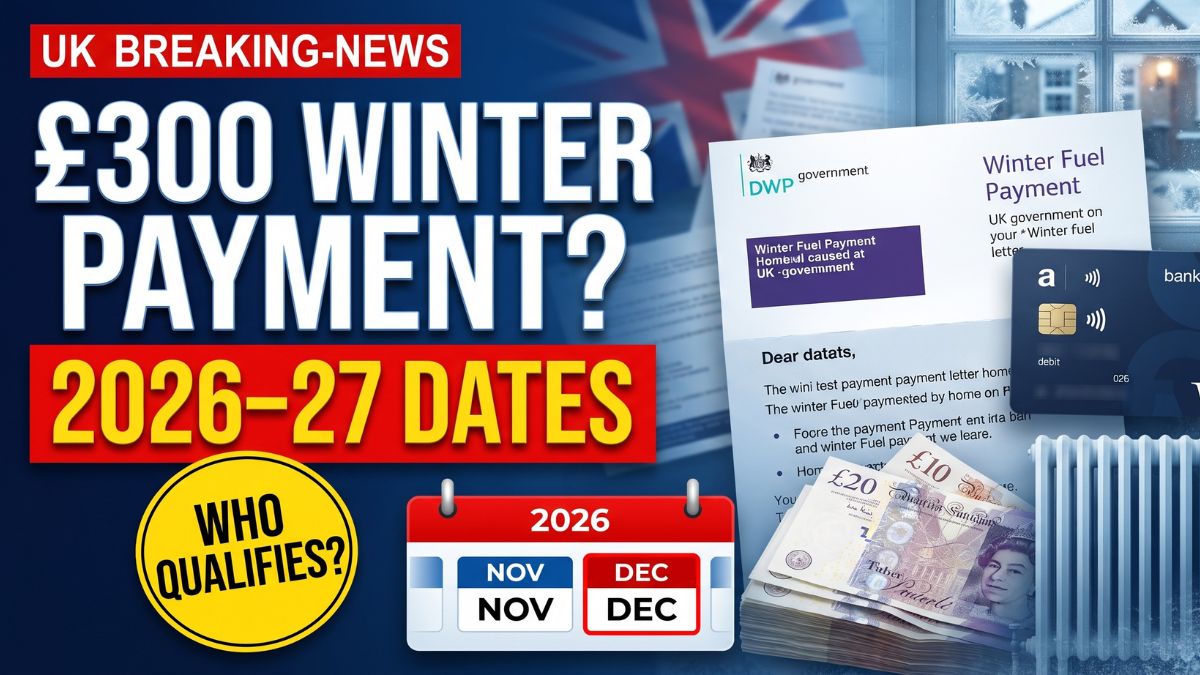
Millions of older people across England and Wales could receive a Winter Fuel Payment during the winter of 2026 to 2027, with payments generally expected to arrive in November or December 2026.
The payment is intended to help eligible pensioners with heating and energy costs during the colder months. Depending on age and household circumstances, the amount can range from £100 to £300.
However, the rules are not the same for everyone. Income is also relevant, and people with income above £35,000 may have their Winter Fuel Payment recovered by HM Revenue and Customs (HMRC). The treatment of couples and people living with another eligible person can also affect the amount.
The payment arrangements are particularly important this year because the qualifying week, age rules and income threshold determine who receives support and how much they can keep.
Dates
Most eligible people are expected to receive their Winter Fuel Payment automatically during November or December 2026.
The qualifying week for the 2026 to 2027 winter payment period is September 21 to September 27, 2026. Your circumstances during that week are used when determining eligibility and the amount payable.
The payment is generally made into the bank account where you normally receive your benefits or State Pension.
The government advises eligible people to keep their bank details up to date so that payments can be processed correctly.
The official GOV.UK Winter Fuel Payment guidance provides the latest information on eligibility, payments and qualifying circumstances.
Eligibility
For winter 2026 to 2027, people who were born on or before June 27, 1960, may qualify for the Winter Fuel Payment, provided they meet the other conditions.
Age alone does not necessarily determine how much a person receives. The amount can depend on date of birth, living arrangements and whether the person receives certain benefits.
The qualifying week is also important. A person’s circumstances during September 21 to September 27, 2026 can affect their entitlement.
Most eligible people do not need to submit a separate claim. The payment is generally made automatically when the Department for Work and Pensions (DWP) has the necessary information.
Amounts
The Winter Fuel Payment can be worth between £100 and £300 for eligible recipients.
Age is one of the factors used to determine the amount. State Pensioners born before September 28, 1946, can receive an additional £100, meaning eligible people aged 80 or over can receive a total payment of £300.
For other eligible pensioners, the standard amount may be £100 or £200 depending on their circumstances.
The following examples illustrate the amounts described in the payment rules:
| Circumstances | Potential payment |
|---|---|
| Eligible person in certain household circumstances | £100 |
| Standard eligible payment in applicable circumstances | £200 |
| Eligible person aged 80 or over | £300 |
The exact amount depends on the circumstances that apply during the qualifying week.
It is therefore important not to assume that everyone who qualifies will receive the same payment.
Income
One of the significant changes affecting Winter Fuel Payment eligibility is the income threshold.
If your individual income is more than £35,000, HMRC may recover the Winter Fuel Payment through the tax system.
The income test applies to the individual recipient. According to the information provided, a partner’s income is not counted toward your £35,000 threshold.
This means a person should not automatically assume they will lose the payment simply because their household income is above £35,000.
However, people whose own income exceeds the threshold should be aware that receiving the payment does not necessarily mean they will ultimately keep it.
HMRC can recover the amount through the relevant tax arrangements.
Couples
Living with another person who is also eligible for Winter Fuel Payment can affect the amount received.
The rules consider factors such as whether you receive certain means-tested benefits and the age of the person you live with.
For example, if neither person receives one of the specified benefits and both people were born between September 28, 1946 and June 27, 1960, the payment can be £100.
A person born between those dates may also receive £100 if they live with someone born before September 28, 1946, depending on the applicable circumstances.
This is why household arrangements matter when calculating the payment.
The payment is not simply determined by multiplying an individual entitlement by the number of eligible people in a household.
Benefits
Certain DWP benefits can affect how Winter Fuel Payment is handled.
Eligible people who receive benefits such as State Pension, Pension Credit, Universal Credit, Attendance Allowance or Personal Independence Payment generally do not need to make a separate Winter Fuel Payment claim.
Other benefits listed in the guidance include Carer’s Allowance, Disability Living Allowance, income-related Employment and Support Allowance, War Pensions Scheme awards, Industrial Injuries Disablement Benefit, Incapacity Benefit and Industrial Death Benefit.
This automatic approach is intended to reduce the need for eligible pensioners to complete a separate application.
However, receiving one of these benefits does not necessarily mean every person will qualify. The Winter Fuel Payment has its own eligibility conditions, including age and residence requirements.
Payments
For most eligible recipients, the Winter Fuel Payment will be deposited into the bank account where their usual benefits are paid.
The DWP expects most payments to be made during November or December 2026.
Recipients should therefore not necessarily expect the money on a single universal date. Payment timing can vary between individuals.
A letter is also normally used to explain the payment and the amount a person is due.
If someone is eligible but does not receive the expected payment, checking correspondence and bank statements can help establish whether the payment has already been made.
People should also be cautious about unsolicited messages asking for bank details. Official government benefits do not require recipients to provide sensitive information through unofficial links or unexpected messages.
Scotland
The rules are different in Scotland.
People living in Scotland have a separate winter heating benefit system rather than the same Winter Fuel Payment arrangements that apply in England and Wales.
This distinction matters because eligibility, payment amounts and payment dates can differ.
Northern Ireland also has separate arrangements.
Anyone living outside England or Wales should therefore check the relevant government guidance rather than assuming that the Winter Fuel Payment rules described for England and Wales apply to them.
Care
Living in a care home can also affect the amount of Winter Fuel Payment.
An eligible person living in a care home may receive £100 under the circumstances described in the rules if they were born between September 28, 1946 and June 27, 1960.
The payment rules can become more complicated where a person receives certain benefits or shares accommodation with another eligible person.
For that reason, care-home residents should check their specific circumstances rather than relying on the standard payment amount.
Claims
Most eligible people do not need to claim the Winter Fuel Payment separately if the DWP already has the information needed to establish their eligibility.
This includes many people receiving State Pension and other qualifying benefits.
Automatic payment is designed to make the process easier, particularly for older people who may already have their entitlement information recorded by government departments.
However, people who believe they qualify but do not receive a letter or payment should check their circumstances rather than assuming that they have been excluded.
The GOV.UK page on Winter Fuel Payment eligibility provides the official criteria and explains when a person may need to take action.
Contact
The payment information supplied for this winter states that people who have not received a letter or their expected payment should contact the Winter Fuel Payment Centre.
The supplied information refers to January 28, 2026 as a contact date, but that date appears inconsistent with the winter 2026 to 2027 payment period described elsewhere in the information. Recipients should therefore rely on the current official GOV.UK guidance for the applicable deadline rather than using that date without checking.
The official Winter Fuel Payment contact information can be used to find the appropriate route for questions about missing payments or claims.
It is also important to distinguish between the DWP and HMRC. The DWP administers the benefit, while HMRC is responsible for recovering payments from people whose income exceeds the applicable threshold.


Planning
The Winter Fuel Payment can provide useful support toward heating costs, but households should not assume that receiving the payment means their full winter energy costs will be covered.
Energy bills vary considerably depending on the size and condition of a property, heating system, household size and energy usage.
For eligible pensioners, the payment can nevertheless provide a contribution toward those costs at a time when heating bills can place additional pressure on household budgets.
People who qualify should check their expected amount, understand whether the income recovery rules apply to them and monitor their bank account during the expected payment period.
The key dates for the 2026 to 2027 Winter Fuel Payment are the September 21 to September 27 qualifying week and the expected November or December payment period. Eligibility can depend on age, household circumstances, qualifying benefits and individual income.
For most eligible people in England and Wales, the payment should arrive automatically. The amount can range from £100 to £300, with eligible people aged 80 or over potentially receiving £300 under the applicable rules. People whose own income exceeds £35,000 may have the payment recovered by HMRC.
The most important point is that the Winter Fuel Payment is not a single fixed amount for every pensioner. Checking the official rules against your own circumstances is the best way to understand whether you qualify and how much you could receive.