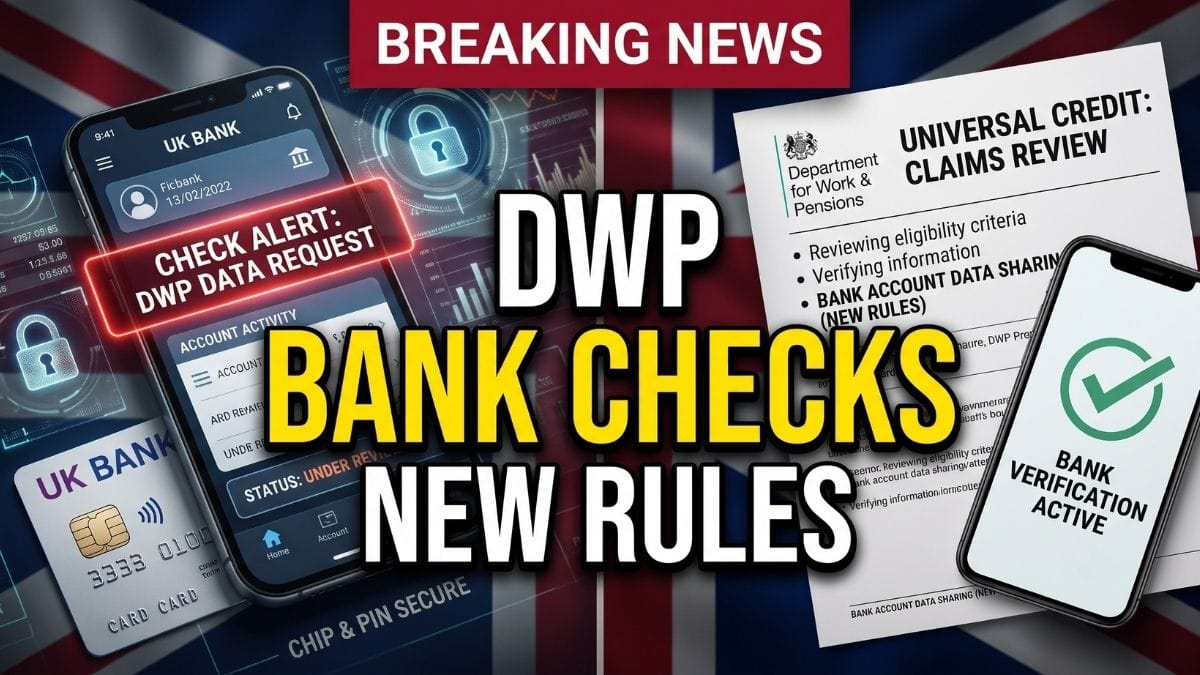
New rules are giving the Department for Work and Pensions (DWP) greater ability to identify potential discrepancies in benefit payments by working with financial institutions.
The measures are part of the government’s wider effort to reduce fraud and errors in the benefits system. They allow certain bank accounts receiving benefits to be flagged when they meet specified criteria under the Eligibility Verification Measure.
However, an account being flagged does not automatically mean a claimant has been overpaid, has committed fraud or will lose their benefits. Further checks are required before the DWP can decide whether any action is necessary.
Checks
The new system allows banks and other financial institutions to identify accounts that match criteria set under the Eligibility Verification Measure.
The measure can apply to accounts receiving certain benefits, including Universal Credit, Pension Credit and Employment and Support Allowance (ESA).
The purpose is to help the DWP identify cases where information held about a claimant may not appear consistent with their benefit entitlement.
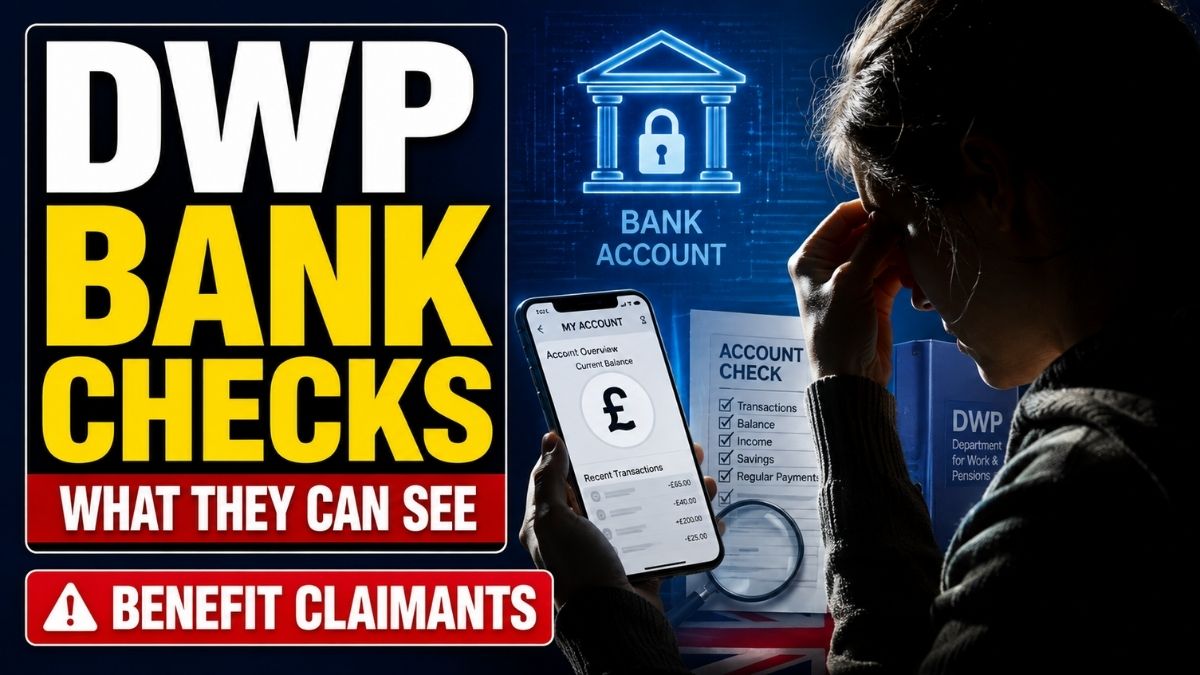
The process is different from giving the DWP unrestricted access to people’s bank accounts. Financial institutions identify accounts that meet the relevant criteria rather than handing over a detailed record of a claimant’s everyday spending.
Information
There are limits on the financial information that banks can provide under the new arrangements.
Financial institutions are prohibited from supplying transaction information that reveals what a claimant has purchased or where they have spent their money.
This means the system is not designed to give the DWP a detailed picture of someone’s shopping, bills or other day-to-day spending.
The rules also include restrictions around how information is handled. The DWP has said safeguards are in place to ensure information is used appropriately.
For claimants, this distinction is important because a flagged account should not be confused with unrestricted access to personal banking activity.
Benefits
The Eligibility Verification Measure can cover people receiving several types of benefits.
These include:
| Benefit | Included in checks |
|---|---|
| Universal Credit | Yes |
| Pension Credit | Yes |
| Employment and Support Allowance | Yes |
The aim is to identify potential incorrect payments at an earlier stage. Benefit systems rely on accurate information about claimants’ circumstances, and discrepancies can sometimes result from changes that have not been reflected in an award.
A flag is therefore a starting point for further investigation rather than a final decision.
Action
Once an account has been identified, the DWP can use its existing processes to determine whether further action is appropriate.
According to the Child Poverty Action Group, this could potentially result in a benefit decision being changed or payments being suspended if subsequent checks establish that there is a problem.
However, neither outcome follows automatically from an account being flagged.
There can be legitimate explanations for apparent inconsistencies. The DWP therefore needs to establish the circumstances before deciding whether a claimant’s benefit entitlement should change.
For claimants, this means a notification or subsequent review should not automatically be interpreted as proof that an incorrect payment has occurred.
Safeguards
The new powers form part of the Public Authorities (Fraud, Error and Recovery) Act 2025, which received Royal Assent in December.
The legislation gives public authorities additional tools to address fraud and error while establishing rules around the use of information.
The government says the measures are intended to protect public money by identifying potentially incorrect benefit payments. At the same time, restrictions on the information that financial institutions can provide are intended to limit unnecessary access to claimants’ financial activity.
The balance between preventing fraud and protecting personal information is likely to remain an important part of how the system operates.
Impact
For most benefit recipients, the key point is that a bank account being flagged is not the same as a benefit award being cancelled.
The new system is designed to identify accounts for further examination. If the DWP finds that a payment is correct, there may be no change to the claimant’s benefits. If further checks establish that circumstances have changed or an incorrect payment has been made, the department can use its existing procedures to determine the next step.
Claimants should continue to report relevant changes in circumstances through the normal channels and keep records that can help explain their benefit position if questions arise.
The new DWP bank-checking powers are therefore best understood as an additional verification tool rather than an automatic mechanism for stopping benefits. Banks can flag accounts that meet specified criteria, but they cannot provide detailed information about a person’s purchases or spending. Any decision affecting a benefit award requires further consideration by the DWP.
FAQs
Can DWP check benefit bank accounts?
Yes, certain accounts can be flagged under new rules.
Which benefits are covered?
Universal Credit, Pension Credit and ESA are covered.
Can DWP see what claimants buy?
No. Banks cannot provide detailed transaction spending information.
Does a flagged account stop benefits?
No. Further checks are needed before action is taken.