Retiring alone can require careful planning because a single household has only one Social Security benefit, one primary source of retirement savings, and no partner to share many household expenses. A part-time job can help close that gap, particularly during the first several years of retirement.
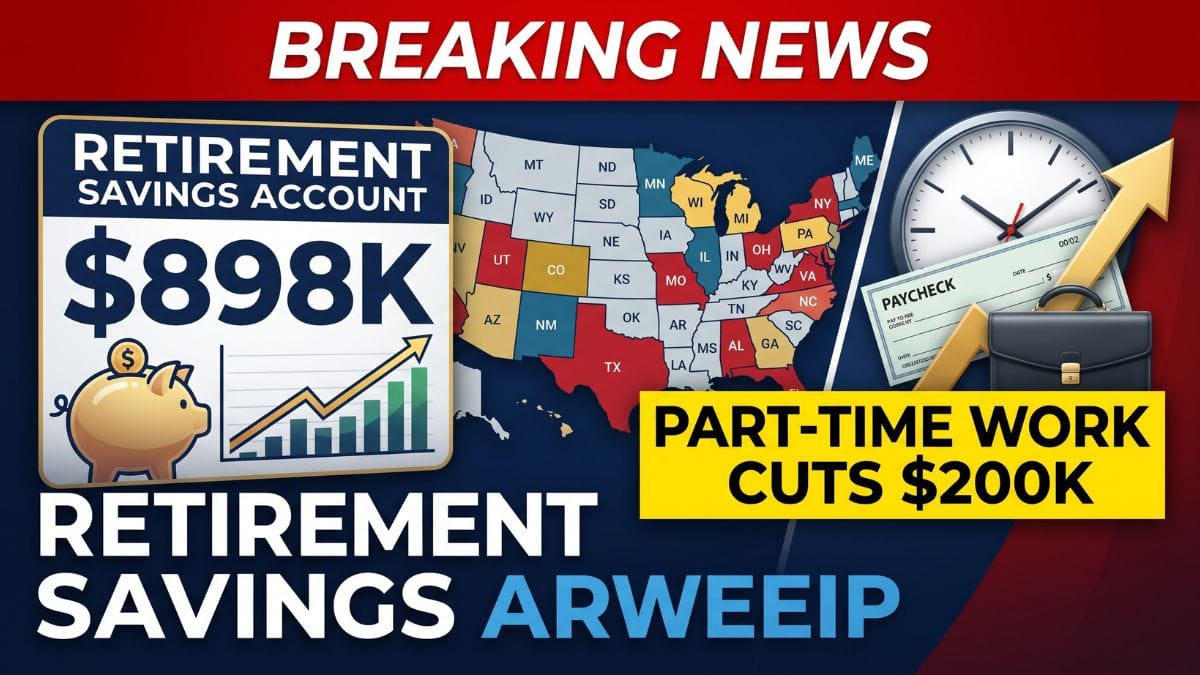
Based on the analysis provided, a single retiree needs about $898,000 in savings on average nationwide without part-time income. But earning $20,000 a year from part-time work for 10 years could reduce that target by roughly $200,000, bringing the national figure to about $698,000.
The amount varies considerably by state. Housing costs are a major reason. While groceries and some daily expenses may decline for a single person, rent, property taxes, utilities, and other fixed costs generally do not fall by half.
Income
Part-time income can have an outsized effect on retirement savings needs because it directly reduces the amount that must come from investments.
The analysis uses the 4% withdrawal rule as a general framework. Under that approach, retirees withdraw roughly 4% of their portfolio in the first year of retirement, with adjustments over time.
For example, if a retiree earns $10,000 annually from part-time work for 10 years, that represents $100,000 of additional income. Under the methodology described, the retirement savings target falls by approximately the same amount.
A typical part-time worker earns more than $10,000 annually. Median weekly pay is around $400, or approximately $20,000 per year. Working at that level for five years could reduce the savings requirement by roughly $100,000, while 10 years could lower it by about $200,000.
This can be particularly useful during the early years of retirement, when investment savings can benefit from having less money withdrawn.
Benefits
Social Security is another important part of the calculation.
A married household may have two Social Security benefits and potentially two sources of retirement savings. A single retiree generally has only one benefit supporting the household.
That does not mean every expense is twice as high for a couple. Some household costs are shared. A single person may spend less on food, transportation, and certain everyday expenses, but many larger costs remain largely unchanged.
Housing is a good example. One person may occupy a smaller home or apartment, but the rent or mortgage does not automatically become half as expensive. Utilities, property taxes, insurance, and other recurring costs can also remain substantial.
As a result, retiring alone does not necessarily mean needing half as much money as a couple.
Thresholds
The timing of part-time employment can also matter for people who claim Social Security before reaching full retirement age.
In 2026, Social Security has an earnings limit of $24,480 for people who are below full retirement age for the entire year. Benefits can be temporarily withheld when earnings exceed the applicable limit.
Once a person reaches full retirement age, the earnings limit no longer applies. Continuing to work can therefore provide additional income without causing Social Security benefits to be withheld because of earnings.
This distinction is important when estimating how much a part-time job can contribute to retirement income. The effect is not simply about wages; Social Security rules also need to be considered.
Savings
The national difference can be illustrated with several scenarios.
| Part-Time Income | Years Worked | Total Earnings | Approx. National Nest Egg |
|---|---|---|---|
| $0 | 0 | $0 | $898,000 |
| $10,000/year | 10 | $100,000 | $798,000 |
| $20,000/year | 5 | $100,000 | $798,000 |
| $20,000/year | 10 | $200,000 | $698,000 |
These figures are based on the methodology described and are intended as estimates rather than individualized retirement recommendations.
The effect can be meaningful because money that remains invested has more time to grow. A retiree who earns income during the first decade may be able to withdraw less from savings during a period when the portfolio is still being adjusted to retirement withdrawals.
States
Where you live can substantially change the amount needed for a comfortable retirement.
Without part-time income, California, Hawaii, and New Jersey are among the states where a single retiree needs more than $1 million under this analysis. Washington, D.C., also exceeds that threshold.
Part-time income changes the picture. With $10,000 earned annually for 10 years, no state requires a $1 million nest egg under the methodology used.
New Jersey remains one of the most expensive locations. A single retiree there needs about $1.02 million without part-time income. With $20,000 of annual part-time earnings for 10 years, the estimated target falls to approximately $818,000.
Hawaii and California also remain relatively expensive, reflecting their higher housing and living costs.
At the lower end, North Dakota has an estimated target of about $444,000 for a single retiree earning $20,000 annually from part-time work. Arkansas and Mississippi are also among the states with lower estimated savings requirements.
Expenses
Housing is one of the biggest factors behind these state-level differences.
A retiree living in a state with relatively inexpensive housing may be able to maintain a comfortable lifestyle with a smaller portfolio. In a high-cost state, rent, property taxes, insurance, and utilities can consume a much larger portion of retirement income.
The definition of “comfortable” also matters. These estimates are not based on a bare-bones retirement budget. They include average spending among Americans age 65 and older, including categories such as travel and dining.
That means someone who prefers a simpler lifestyle could require considerably less, while a retiree who spends heavily on travel, healthcare, housing, or other discretionary expenses could need more.
Method
The estimates use a combination of state-level cost-of-living data, the average Social Security benefit for a single person, and the 4% withdrawal rule.
For the part-time work scenarios, the analysis assumes the retiree works during the first 10 years of retirement. The total income earned during that period is then subtracted from the estimated nest egg needed in each state.
This approach provides a useful way to compare locations and income scenarios, but it is not a personalized retirement plan. Actual savings needs depend on factors such as age, health, housing arrangements, Social Security claiming decisions, taxes, investment returns, inflation, and expected longevity.
Outlook
A single retiree does not necessarily need a seven-figure portfolio to maintain a comfortable retirement, particularly when part-time income is part of the plan. The difference between working for several years and stopping work immediately can be substantial.
The national estimate falls from roughly $898,000 without part-time income to about $698,000 when a retiree earns $20,000 annually for 10 years. Lower-cost states can require considerably less, while expensive housing markets can push the target much higher.
The broader lesson is that retirement planning is not just about reaching one savings number. Where you live, how much you spend, when you claim Social Security, and whether you continue earning income can all change the calculation. For someone retiring alone, even a modest part-time paycheck can provide additional flexibility while reducing pressure on retirement savings.
FAQs
How much does a single retiree need?
The national estimate is about $898,000 without part-time income.
How does part-time work affect savings?
$20,000 annually for 10 years can reduce the target by about $200,000.
Which state needs the most savings?
New Jersey, California, and Hawaii have among the highest targets.
Which state needs the least savings?
North Dakota has an estimated target of about $444,000.