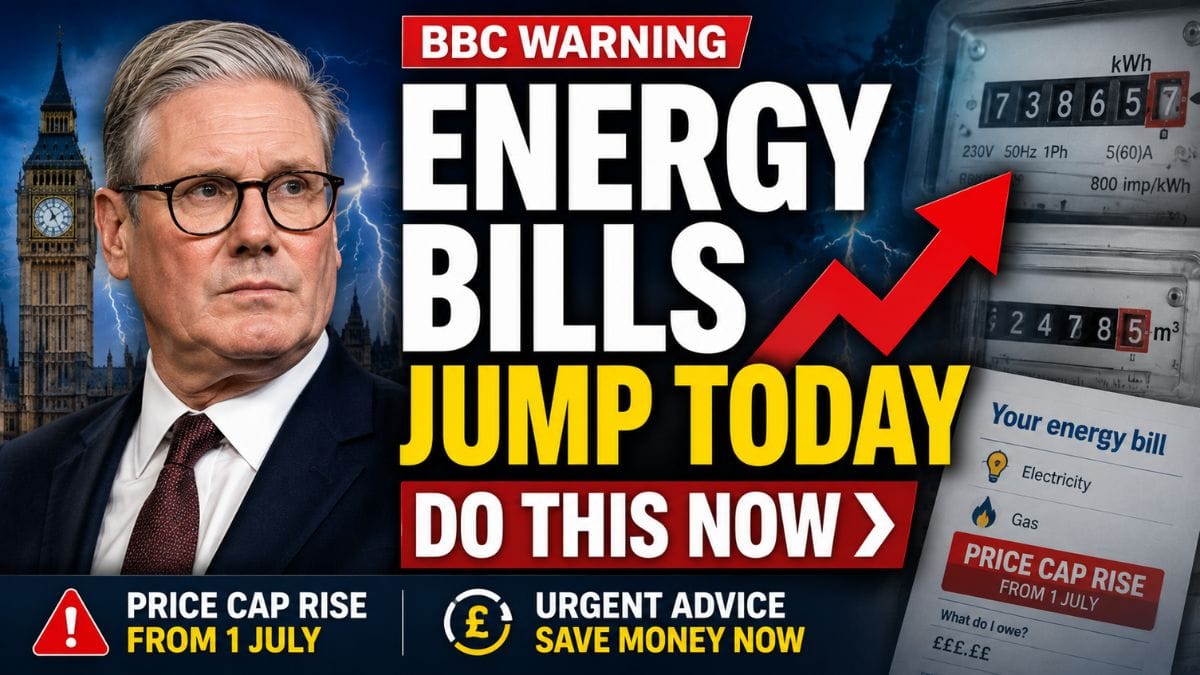
Millions of UK households supplied by Octopus Energy, British Gas, E.ON Next, OVO, EDF and Scottish Power are being urged to take immediate action as a new energy price cap comes into force. From today, the cap rises by 13 percent, meaning higher unit prices for gas and electricity on standard variable tariffs.
A BBC energy expert and consumer groups warn that failing to act could result in households paying higher rates for energy they have already used.
Warning
The warning applies most urgently to an estimated 5.3 million households on standard tariffs without smart meters. These homes need to submit a meter reading to ensure energy used before July 1 is billed at the old, lower rates rather than the new prices.
Ofgem’s price cap limits how much suppliers can charge per unit of gas and electricity for customers on default or standard variable tariffs. It does not apply to fixed deals.
Changes
From today, electricity prices for direct debit customers rise from 24.67p per kilowatt hour to 26.11p. Gas prices increase from 5.74p per kWh to 7.33p.
Based on typical usage, this pushes the average annual dual fuel bill up by £221 to £1,862. Actual bills will vary depending on how much energy a household uses.
| Energy type | Old unit rate | New unit rate |
|---|---|---|
| Electricity | 24.67p per kWh | 26.11p per kWh |
| Gas | 5.74p per kWh | 7.33p per kWh |
Standing charges, the daily fees paid regardless of usage, remain largely unchanged.
BBC
Appearing on BBC Breakfast, correspondent Peter Ruddick explained that the price cap is reviewed every three months and affects around 33 million households across England, Scotland and Wales.
He said the increase works out at roughly £18 more per month on average, with gas seeing a sharper rise due to higher wholesale prices linked to conflict in the Middle East. While summer energy use is typically lower, the impact will still be felt.
Ruddick stressed that the most important step for customers today is to take a meter reading and consider whether switching to a fixed deal could offer better value.
Advice
Price comparison site Uswitch echoed the message. Energy spokesman Ben Gallizzi said households should submit a meter reading and review fixed tariff options in the coming days.
Without a meter reading, suppliers may estimate usage and apply the new rates to energy consumed before July, leading to higher bills.
Outlook
There is some limited relief on the horizon. Current forecasts suggest the price cap could fall slightly in October, although the outlook remains uncertain. Wholesale oil and gas prices have eased following a ceasefire in the Middle East, but analysts warn the situation remains fragile.
Cornwall Insight expects the typical household bill to be around £1,849 from October. Ofgem is also updating its definition of a typical household to reflect lower average energy use, which adjusts the headline figure to £1,654, although analysts say this represents little real change.
The October price cap will take effect as households begin using more energy for heating, potentially increasing financial pressure later in the year.
Government
Energy consumers minister Martin McCluskey said the government recognises concerns about rising bills and pointed to measures such as expanded Warm Home Discount support and steps taken in the Budget to reduce energy costs.
Ofgem is due to announce the next price cap, covering October to December, on or before August 26.
For now, experts agree that submitting a meter reading and reviewing tariff options is the most effective action households can take today.
FAQs
Why should I submit a meter reading today?
To avoid paying higher July rates for energy already used.
Who is affected by the July price cap rise?
Customers on standard variable tariffs, not fixed deals.
How much has the average bill increased?
About £221 per year for a typical household.
Are standing charges increasing too?
Standing charges are largely unchanged.