A set of planned changes to cash ISAs is due to take effect from April next year, with significant implications for how savers are able to allocate money between cash and investment-based accounts. The reforms are aimed at encouraging more long-term investing, while limiting how much money can be held in cash tax shelters.
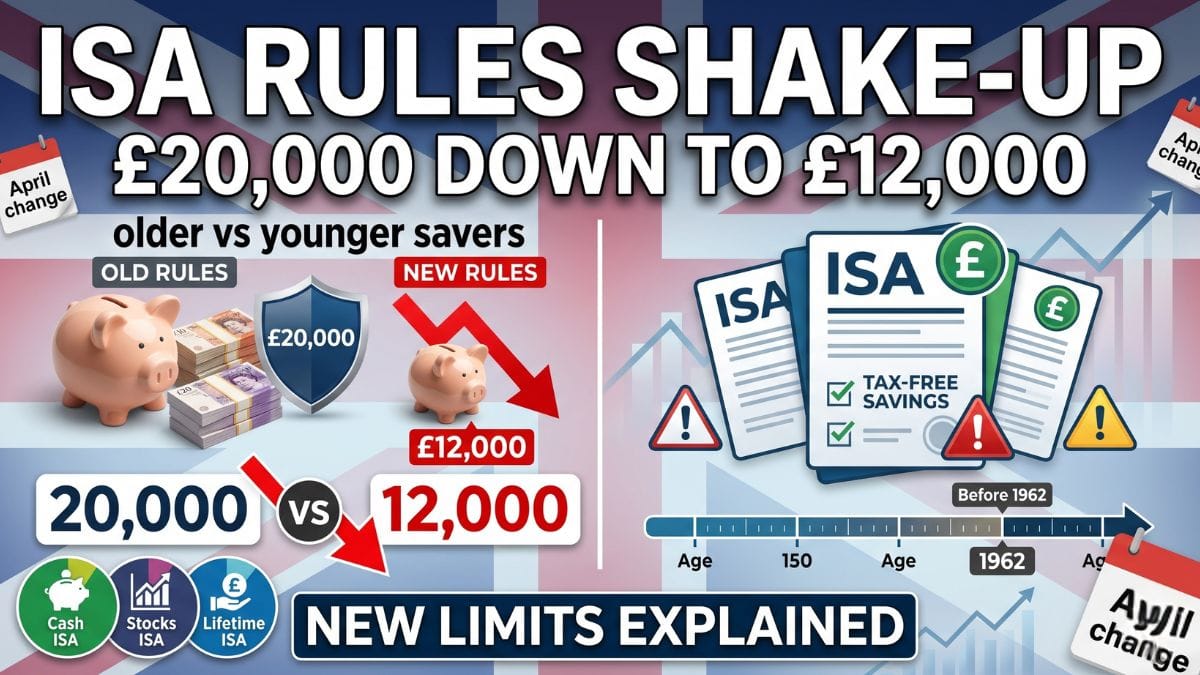
The most notable adjustment is a reduction in the annual cash ISA allowance from £20,000 to £12,000, a change previously announced in last year’s Budget. Alongside this, further restrictions are being considered that would affect how funds can be moved between different types of ISAs.
Limits
Under the proposed framework, the reduced £12,000 cash ISA allowance would apply to most savers under the age of 65. In addition, transfers from non-cash ISAs into cash ISAs would no longer be permitted for this group.
These measures are intended to encourage greater investment activity rather than allowing long-term accumulation in cash-based savings products. However, they also introduce a clear age-based distinction in how ISA rules would operate.
Age
According to guidance highlighted by MoneySavingExpert, the government is proposing a return to more generous ISA flexibility once savers reach the start of the tax year in which they turn 65.
At that point, both the £20,000 allowance and the ability to transfer from non-cash ISAs back into cash ISAs would be reinstated. This means individuals born before 1962, depending on timing, could fall under the older set of rules sooner or retain them longer.
For example, someone born in May 1963 would turn 65 in May 2028. Under the proposal, their higher allowance would return from April 2028, aligning with the start of that tax year.
The policy is designed to reflect the idea that older savers may prioritise capital protection over investment growth.
Restrictions
While the age-based relaxation applies to those over 65, additional restrictions are also being explored that would continue to affect how ISAs are used more broadly.
One proposal includes a 22 per cent charge on interest earned from cash held within non-cash ISAs. Another would place limits on how “cash-like” assets such as Money Market Funds are treated within investment ISAs.
Under these proposals, Money Market Funds could still be held within stocks and shares ISAs, but only if they do not represent the entirety of the portfolio. This is intended to prevent investors from effectively using investment ISAs as alternative cash savings accounts.
Allowances
Despite the changes, the broader ISA structure is expected to remain in place. The annual limits for other ISA categories are unchanged under current proposals:
- £20,000 for stocks and shares ISAs
- £20,000 for innovative finance ISAs
- £4,000 for Lifetime ISAs
- £20,000 overall ISA contribution limit
These limits continue to define the total tax-efficient savings space available to individuals each tax year, even as the internal rules around cash ISAs become more restrictive.
Reform
Alongside ISA adjustments, the government has also indicated it is reviewing the future of the Lifetime ISA. One option under consideration is replacing it with a new First-Time Buyer ISA, although no detailed design or timeline has been confirmed.
This forms part of a wider review of how different savings and investment incentives operate, particularly in relation to housing and long-term financial planning.
Impact
The overall direction of the proposed changes suggests a clearer separation between cash savings and investment products. Younger savers would face tighter limits on cash ISAs, while older savers could retain greater flexibility once they reach 65.
However, the introduction of additional rules around investment ISAs indicates an effort to prevent simple reclassification of cash holdings as investments to bypass the new limits.
For now, the proposals remain subject to consultation, meaning final rules could still be adjusted before implementation in April next year.
The changes mark one of the more significant structural updates to ISA rules in recent years, particularly in how age and asset type may influence tax-efficient savings options going forward.
The planned ISA reforms point to a more segmented system where access to cash ISA allowances and transfer rules depends partly on age. While those born before 1962 or reaching 65 soon may retain higher limits and greater flexibility, younger savers are set to operate under tighter cash restrictions. The final impact will depend on the outcome of ongoing consultations and how the government balances incentives for saving and investing.
FAQs
What is the new cash ISA limit?
It is proposed to be reduced to £12,000 per year.
Who is affected by the changes?
Mainly savers under 65 from the start of the new rules.
Can over-65s keep the £20,000 allowance?
Yes, under current proposals it would be restored at 65.
Can money be moved from stocks and shares ISAs to cash ISAs?
Not for most savers under the proposed rules.