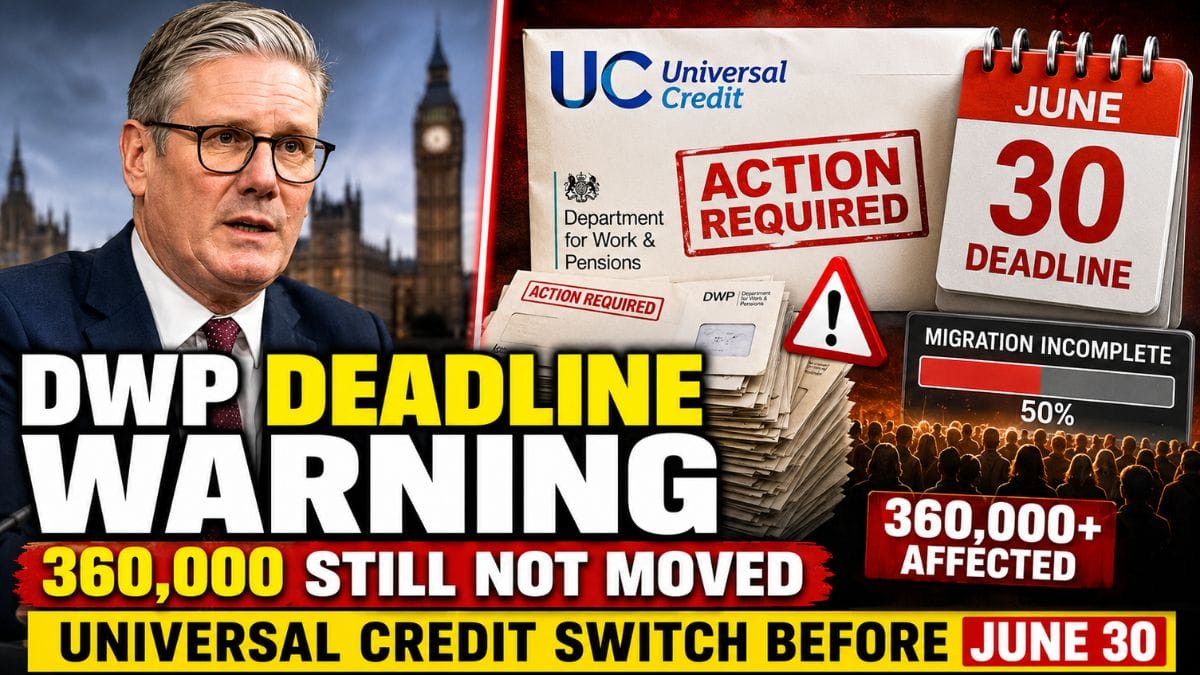
The Department for Work and Pensions (DWP) is progressing with its managed migration plan to replace legacy benefits with Universal Credit, with a key deadline set for June 30. According to the latest official figures, around 361,000 claimants have not yet completed the transition process and could see their payments affected if no action is taken before the cutoff date.
The change is part of a long-running government effort to simplify the benefits system by moving multiple older payments into a single Universal Credit structure. The process is being carried out in stages, with migration notices sent to affected households over time.
Migration
Under the managed migration scheme, claimants receiving legacy benefits are being gradually moved onto Universal Credit. This includes individuals who have been issued formal migration notices instructing them to submit a new claim within a set timeframe.
Recent data shows that more than 2.35 million people across roughly 1.82 million households have already received these notices. Of those, nearly 2 million individuals have completed their Universal Credit applications.
However, approximately 361,158 people have not yet made the transition, placing them in the group still awaiting action before the June 30 deadline.
Numbers
The scale of the transition highlights the administrative challenge involved in shifting claimants from older systems to Universal Credit. The figures released by the DWP outline the current progress:
| Category | Number of People | Households |
|---|---|---|
| Migration notices issued | 2,353,319 | 1,822,374 |
| Claims submitted | 1,992,161 | 1,580,239 |
| Still pending action | 361,158 | Not specified |
These numbers reflect only those currently in the managed migration process and do not include all Universal Credit recipients nationally.
Support
Government officials have emphasized that support services are available to help claimants complete the transition. This includes the Move to Universal Credit Helpline and assistance from Citizens Advice through the Help to Claim service, which provides guidance on applications and managing payments.
DWP Minister Sir Stephen Timms has also highlighted the availability of transitional protection. This measure is intended to ensure that claimants do not experience a reduction in entitlement at the point of migration, in cases where their new Universal Credit award would otherwise be lower than their previous benefits.
Additional support measures are in place for individuals considered more vulnerable, including some Employment and Support Allowance (ESA) recipients. These claimants may receive enhanced assistance such as tailored contact or home visits where necessary.
Safeguards
The department has also outlined specific arrangements for claimants who may require appointees to manage their benefits but have not yet made those arrangements before ESA closure deadlines. In such cases, exemptions may be applied temporarily to prevent disruption.
Officials have stressed that while certain groups may receive additional flexibility, the broader transition to Universal Credit remains ongoing and legacy benefits will not continue indefinitely.
Outlook
The managed migration process represents one of the final stages in the wider replacement of legacy welfare systems in the UK. While most claimants have already responded to migration notices, a significant minority still need to complete their applications before deadlines take effect.
Authorities continue to encourage affected individuals to engage with available support services to avoid interruptions in payments as the transition progresses.
DWP Universal Credit migration, UK benefits update, legacy benefits end date, managed migration DWP, Universal Credit transition UK, ESA migration support, DWP June deadline, benefits claimants UK.
FAQs
What is happening to legacy DWP benefits?
They are being replaced by Universal Credit under managed migration.
How many people are affected?
Around 361,000 claimants have not yet completed migration.
What is the deadline?
The current deadline is June 30.
Will payments stop immediately?
Payments may be affected if no action is taken after notices.



Is support available for claimants?
Yes, including DWP helplines and Citizens Advice support.