New welfare reforms introduced by the Department for Work and Pensions are changing how some Universal Credit claimants receive health-related support across the United Kingdom. Under the updated rules, people making new claims for the health element of Universal Credit may receive significantly lower monthly payments than current recipients.
The reforms affect individuals considered unable to work because of illness or disability. While existing claimants will continue receiving the current rate, new applicants will receive a reduced payment under the revised system.
The UK Government says the changes are designed to encourage more people into employment while reducing long-term welfare spending. However, disability organisations and advocacy groups have expressed concern about the possible financial impact on vulnerable households.
Universal Credit is a monthly payment intended to support people on lower incomes. It is available to individuals who are unemployed, unable to work, or employed on low earnings.
One part of the system includes extra financial support for people assessed as having limited capability for work and work-related activity, often referred to as LCWRA.
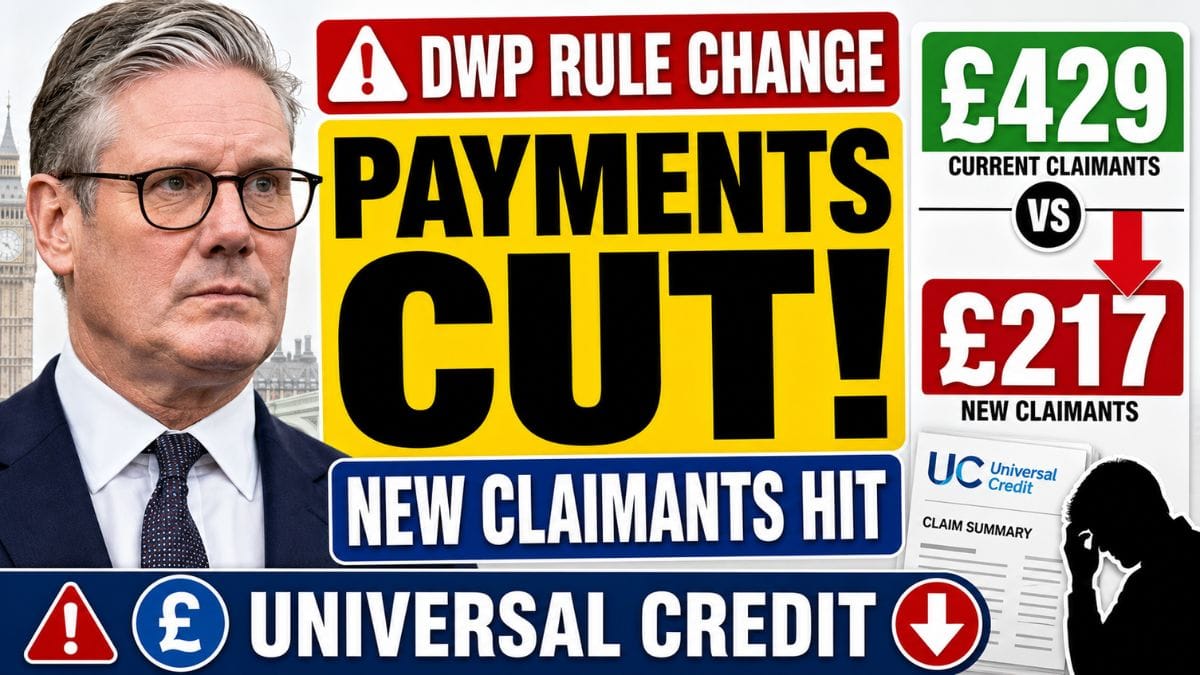
Under the new rules, future claimants approved for the health element will receive lower monthly support compared with current recipients.
| Universal Credit Health Element | Monthly Amount |
|---|---|
| Existing Claimants | £429.80 |
| New Claimants | £217.26 |
The revised payment for new claimants is approximately half the amount currently paid to existing recipients.
Protection
The Department for Work and Pensions confirmed that existing claimants already receiving the higher health element payment will not be affected by the reduction.
Several groups will continue receiving the full level of support, including:
- Existing LCWRA claimants
- Individuals with severe or permanent conditions
- People nearing the end of life
This means the reduced payment mainly applies to future applicants entering the system after the reforms take effect.
Purpose
Government ministers say the changes are intended to reform the welfare system and encourage greater workforce participation.
According to the Department for Work and Pensions, the previous structure created situations where some people could feel discouraged from seeking employment due to concerns about losing benefits.
The Government also stated that the reforms are expected to reduce projected Universal Credit spending by nearly £1 billion.
Social Security and Disability Minister Sir Stephen Timms said the changes aim to help disabled individuals and those with long-term conditions move closer to employment through additional support and policy changes.
Allowance
Alongside the reduction in the health element for new claimants, the Government increased the standard Universal Credit allowance on 6 April.
Officials estimate that nearly four million households could receive approximately £295 more over the course of the year due to the increase.
The Government argues this adjustment is intended to provide support during continuing cost-of-living pressures affecting households across the UK.
Numbers
Recent government figures show around 2.7 million people across England, Scotland, and Wales currently receive Universal Credit under the LCWRA category.
People in this category are generally exempt from:
- Job-search requirements
- Mandatory employment activities
- Work availability conditions
The growing number of claimants receiving health-related support has been a major factor in recent welfare policy discussions.
Concerns
Disability charities and campaign groups have raised concerns about the potential impact of reduced payments on vulnerable people.
Evan John, a Policy Advisor at disability charity Sense, warned that cutting support could increase financial hardship for disabled individuals, particularly younger claimants with complex medical conditions.
Critics argue the health element often helps cover essential living costs, transportation, healthcare needs, and preparation for future employment opportunities.
Concerns have also been raised about reports suggesting further changes could eventually affect disabled people aged 16 to 21.
Advocacy groups say reducing support may increase social isolation and create additional barriers for people already facing significant challenges in entering the workforce.
PIP
At the same time, ministers confirmed that previously discussed reforms to Personal Independence Payment have been paused.
Instead of immediate changes, the Government plans to conduct a wider review into how the disability benefit system operates.
The review is expected to report its findings to Work and Pensions Secretary Pat McFadden later this year.
Any future changes to Personal Independence Payment are not expected to take effect until after the review process has concluded.
Scotland
Although Universal Credit is managed by the UK Government across England, Scotland, and Wales, some disability benefits are administered separately in Scotland through devolved powers.
However, the latest Universal Credit health element reforms will still apply across all three nations because the payment system remains under UK Government control.
Impact
The updated Universal Credit rules represent one of the latest efforts to reshape the UK welfare system as ministers attempt to balance public spending with employment support policies.
Supporters of the reforms argue that increasing work participation and simplifying welfare incentives may improve long-term outcomes for some claimants.
Critics, however, caution that reducing financial assistance could place additional strain on disabled individuals and low-income households already managing rising living costs.
As the reforms continue to roll out, many claimants and advocacy organisations are expected to closely monitor how the changes affect household finances, employment outcomes, and access to support services across the country.
FAQs
What is the new UC health element payment?
New claimants may receive £217.26 monthly.
Will current claimants lose existing payments?
No, existing claimants keep the higher rate.
Who is protected from the payment cut?
Severe condition and end-of-life claimants.
Why did the DWP change the rules?
The Government says it supports employment.