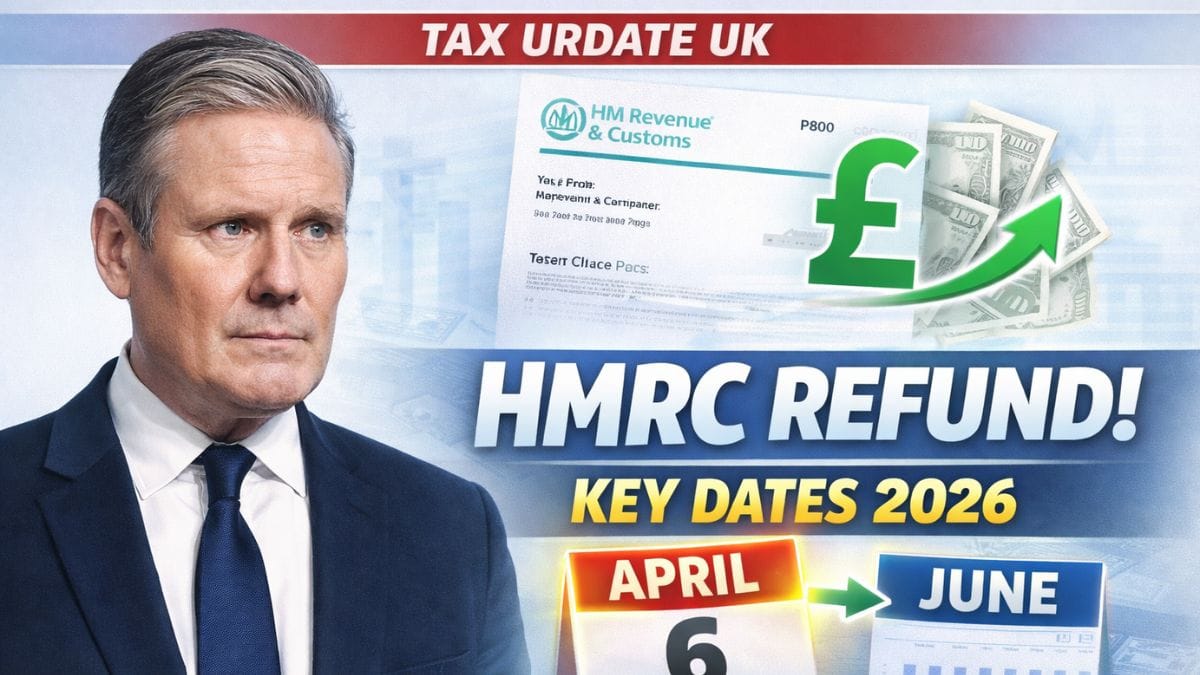
HM Revenue and Customs (HMRC) has clarified the timeline and process for issuing tax refunds following the end of the UK tax year. The update comes in response to a taxpayer query changes to tax codes and potential overpayment, an issue that affects many employees and pensioners each year.
The guidance outlines when tax codes typically reset, how overpayments are identified, and when individuals can expect refunds to be processed.
Codes
Tax codes are used by HMRC to determine how much income tax should be deducted from an individual’s earnings or pension. The most common code is 1257L, which reflects the standard personal allowance.
For the current tax year, the personal allowance is £12,570. This means individuals do not pay income tax on earnings up to that level. Income above this threshold is generally taxed at 20 percent for basic rate taxpayers.
However, tax codes may change during the year. Adjustments are often made when HMRC identifies underpaid tax or when a person starts a new job. For instance, a code such as 978XL may be issued to recover underpaid tax by reducing the tax-free allowance.
Reset
HMRC has confirmed that most in-year tax code adjustments are temporary. These changes typically apply only until the end of the tax year, which runs from April 6 to April 5.
At the start of the new tax year on April 6, tax codes are usually reset. In many cases, this means a return to the standard 1257L code, provided there are no ongoing adjustments required.
| Tax Year Milestone | Date |
|---|---|
| Tax year ends | April 5 |
| New tax year begins | April 6 |
| Tax code reset | From April 6 |
This annual reset helps ensure that temporary corrections do not continue unnecessarily into the next tax period.
Refunds
After the tax year concludes, HMRC reviews individual tax records to determine whether the correct amount of tax has been paid. If an overpayment is identified, a refund may be issued.
HMRC has indicated that it aims to begin this reconciliation process from June onwards. The timing reflects the need to collect and process data from employers and pension providers.
In most cases, refunds are handled automatically. Taxpayers are not required to submit a claim unless advised otherwise.
Process
When HMRC completes its review, it communicates the outcome through official letters. The two primary forms of notification are:
- P800 tax calculation letters
- Simple Assessment letters
These documents provide a breakdown of income, tax paid, and any balance owed or refundable.
| Letter Type | Function |
|---|---|
| P800 | Indicates overpayment or underpayment |
| Simple Assessment | Confirms tax due or payable |
These letters are generally issued between June and March following the end of the tax year. They are typically sent to individuals who are employed or receive pension income.
Claims
Although many refunds are issued automatically, some individuals may need to take further steps. If a taxpayer believes they have overpaid but has not received any communication, they can check their status using HMRC’s online tools.
Several common situations can lead to overpayment:
- Starting or leaving a job during the tax year
- Being assigned an incorrect tax code
- Overpaying tax on pension income
- Failing to claim eligible work-related expenses
In such cases, updating personal information or submitting a claim may be necessary to ensure accurate tax treatment.
Awareness
HMRC’s update highlights the importance of monitoring tax codes and understanding how they change over time. While the system is designed to correct discrepancies automatically, adjustments during the year can temporarily affect take-home pay.
Reviewing payslips and official correspondence, particularly around the end and beginning of the tax year, can help individuals identify potential issues early.
Overall, the process follows a structured timeline. Tax codes generally reset on April 6, and HMRC begins issuing refunds from June after completing its annual review. For most taxpayers, no action is required, but awareness of the process can help ensure that any overpayments are addressed in a timely manner.