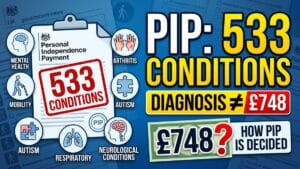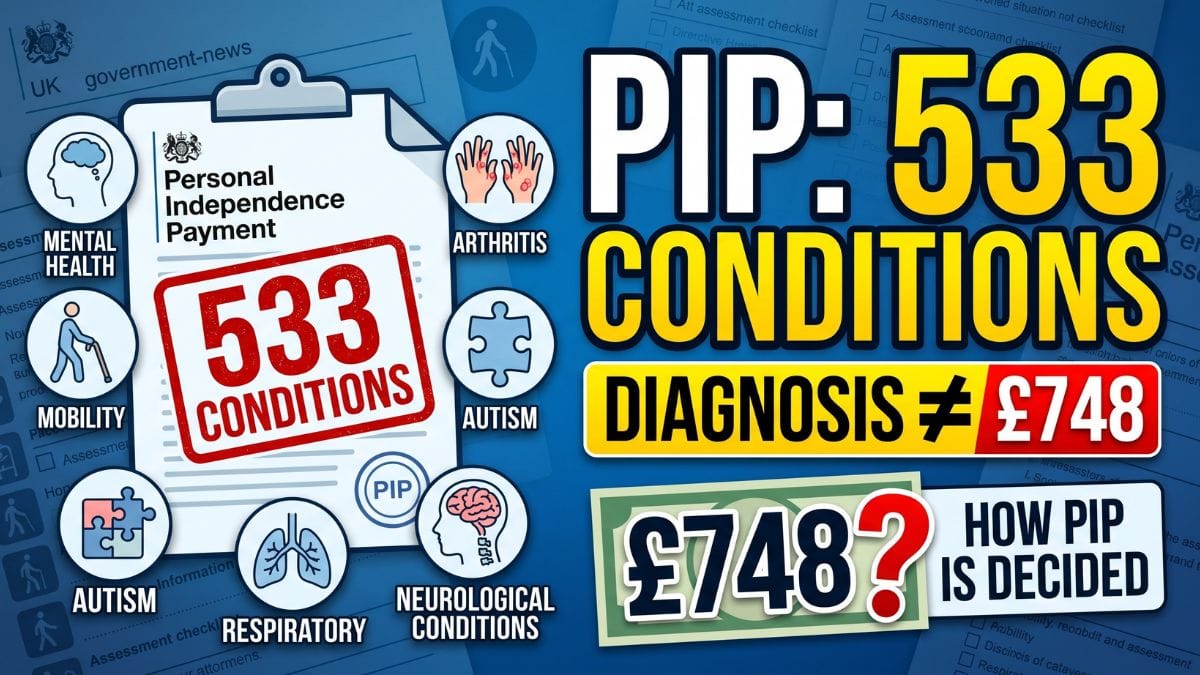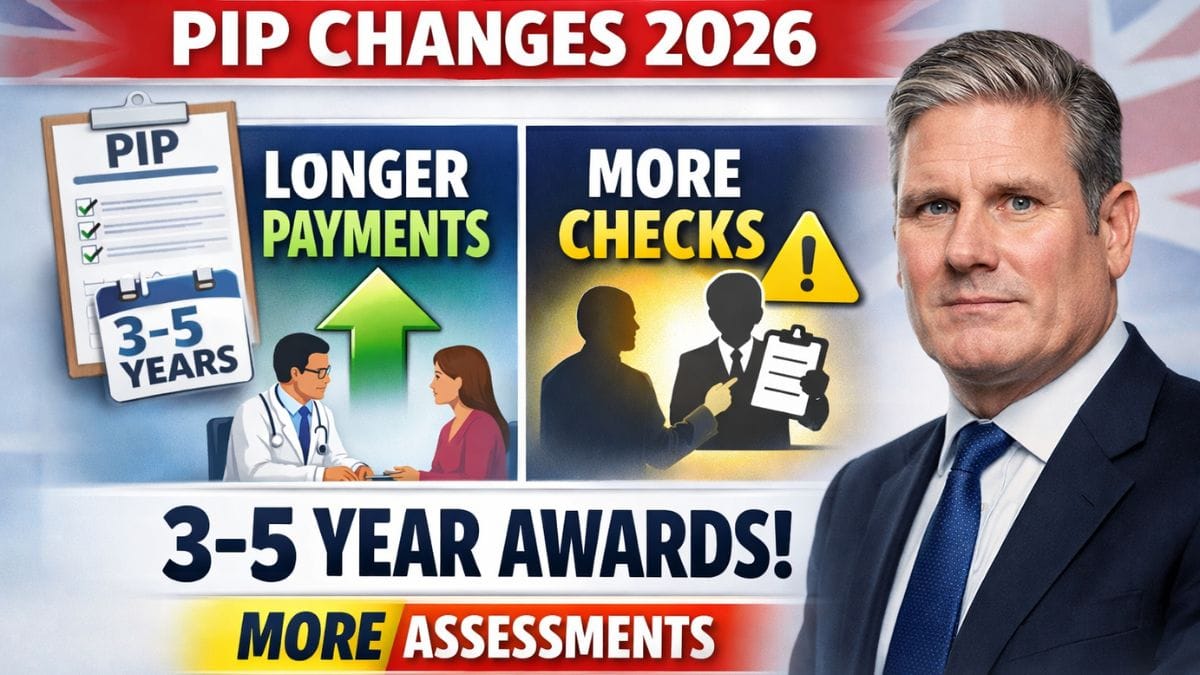
The UK Government has introduced changes to Personal Independence Payment (PIP) from April 2026, focusing on extending award durations and increasing face-to-face assessments. The reforms are part of a broader effort by the Department for Work and Pensions (DWP) to manage backlogs and improve the efficiency of the welfare system.
These updates mainly affect new PIP claimants and aim to reduce the frequency of reassessments while allowing more time for in-person evaluations.
The key change involves extending the length of PIP awards for new claimants, particularly those aged 25 and over.
| Aspect | Previous System | New Change |
|---|---|---|
| Review Period | As short as 9 months | Minimum 3 years |
| Subsequent Review | Variable | Up to 5 years |
| Assessment Type | Mostly remote | Increased face-to-face |
The policy is designed to reduce administrative pressure and streamline the assessment process.
Awards
Under the new system:
- New PIP claims for individuals aged 25 and above will receive a minimum award period of three years
- At the next review, awards may extend up to five years if eligibility continues
Previously, many claimants were reviewed within short intervals, sometimes as early as nine months. However, most reviews resulted in no change to the award, prompting the move toward longer review cycles.
Assessments
A major component of the reform is the shift toward more face-to-face assessments.
| Assessment Type | 2024 | New Target |
|---|---|---|
| PIP Face-to-Face | 6% | 30% |
| WCA Face-to-Face | 13% | 30% |
This change reverses the earlier reliance on remote assessments introduced during the COVID-19 pandemic. The aim is to provide more accurate evaluations and improve decision-making.
Purpose
The government states that these reforms are intended to:
- Reduce the backlog in Work Capability Assessments
- Allow health professionals more time for thorough evaluations
- Improve accuracy in assessing long-term conditions
- Ensure ongoing eligibility is reviewed appropriately
By extending award durations, the system can allocate more resources to cases requiring detailed assessment.
Policy
These changes are separate from the ongoing Timms Review, which is examining broader aspects of PIP, including:
- Eligibility criteria for daily living and mobility components
- Assessment processes
- Long-term outcomes for disabled individuals
The current reforms focus on operational improvements rather than structural redesign.
Integration
The PIP changes are being introduced alongside adjustments to Universal Credit. These include reducing the gap between payments for unemployment and long-term illness.
Additionally, the government plans to:
- Increase employment support programmes
- Deploy 1,000 additional work coaches
- Expand initiatives such as Connect to Work
These measures aim to support individuals in returning to employment where possible.
Impact
The reforms are expected to have both administrative and financial implications.
- Reduced frequency of reassessments for many claimants
- Increased number of in-person evaluations
- Estimated savings of £1.9 billion by 2030/31
For claimants, longer award periods may provide greater stability, while increased face-to-face assessments could lead to more detailed evaluations.
Outlook
The DWP has indicated that these changes are part of a wider effort to reform the welfare system. By balancing longer award durations with more thorough assessments, the government aims to improve both efficiency and fairness.
However, the full impact will depend on how effectively the changes are implemented and how they interact with future reforms under review.
In summary, the April 2026 PIP changes introduce longer award periods for new claimants and a significant increase in face-to-face assessments. These adjustments are intended to reduce backlogs, improve assessment quality, and create a more streamlined welfare system.
FAQs
What is the new PIP award duration?
Minimum 3 years for new claims.
Will awards be extended further?
Yes, up to 5 years after review.
Are assessments changing?
Yes, more face-to-face evaluations.
Who is affected by these changes?
New claimants aged 25 and above.