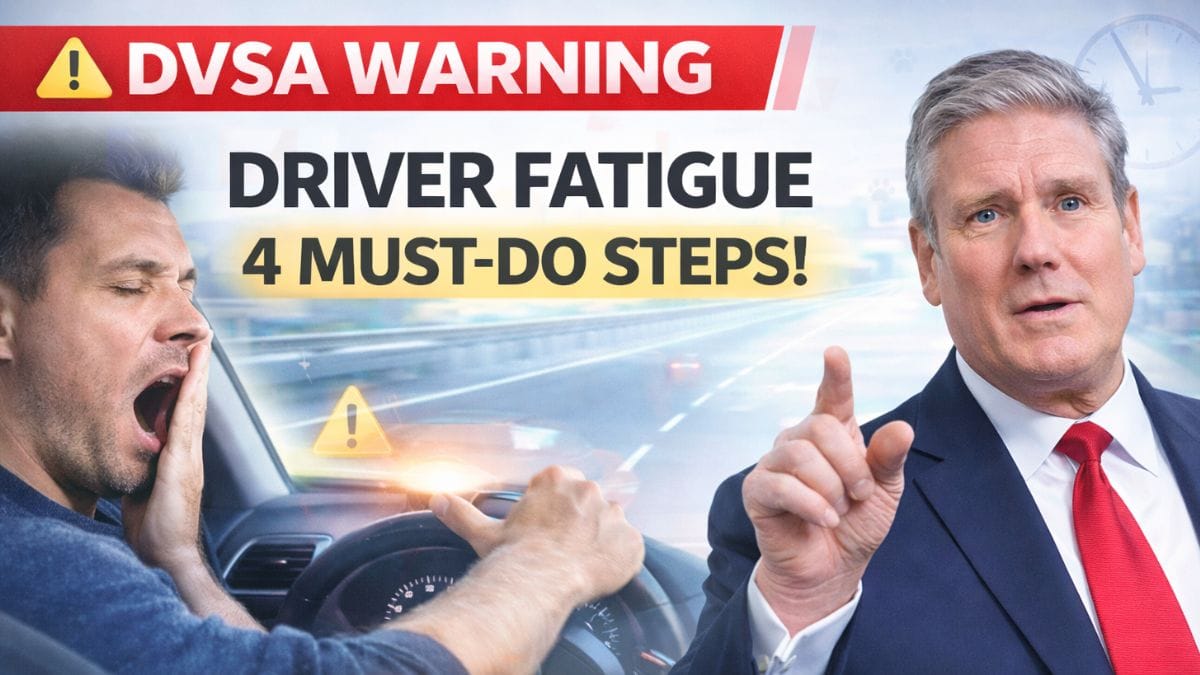
The Driver and Vehicle Standards Agency (DVSA) has issued updated guidance for UK motorists, highlighting four essential steps to reduce the risks associated with driver fatigue. The advisory comes as more մարդիկ prepare for longer journeys, particularly during periods of improved weather and increased travel activity.
Fatigue remains a persistent road safety concern, with evidence showing it can significantly impair driving ability. The DVSA’s message focuses on practical measures drivers can take before and during their journeys to reduce risk.
Guidance
The DVSA outlines four key steps that drivers should follow to improve safety:
- Do not start a journey if you feel tired
- Avoid driving between midnight and 6am
- Take regular breaks during long trips
- Stop in a safe place if you begin to feel sleepy
These recommendations are consistent with long-standing road safety advice and are designed to address one of the more underestimated dangers on the road.
Context
Driver fatigue has been identified as a contributing factor in a number of serious road incidents. According to data from the Department for Transport, fatigue-related collisions are more likely to occur on high-speed roads such as motorways and dual carriageways.
The risks are linked to reduced alertness and slower reaction times. Research indicates that tired drivers may experience impairments similar to those associated with alcohol consumption.
| Risk Factor | Effect on Driving |
|---|---|
| Fatigue | Slower reactions |
| Reduced alertness | Missed hazards |
| Poor judgement | Delayed decisions |
| Microsleep episodes | Loss of control |
These factors can increase the likelihood of severe outcomes, particularly where high speeds are involved.
Timing
The DVSA specifically advises avoiding driving between midnight and 6am. This period aligns with the body’s natural sleep cycle, often referred to as the circadian low.
During these hours, concentration levels decrease, and the likelihood of drowsiness increases. Even experienced drivers may find it difficult to maintain consistent focus.
Planning journeys outside this window, where possible, can reduce exposure to these risks.
Signs
Recognising early signs of fatigue is an important part of staying safe on the road. The DVSA highlights several common indicators that drivers should be aware of:
- Frequent yawning
- Difficulty keeping eyes open
- Drifting within a lane
- Missing road signs or turns
If any of these symptoms occur, drivers are advised to stop driving as soon as it is safe to do so.
Breaks
Taking regular breaks is a key part of managing fatigue during longer journeys. Guidance within the Highway Code recommends a break of at least 15 minutes every two hours.
Short breaks can help restore concentration temporarily. Activities such as stepping out of the vehicle, getting fresh air, or having a caffeinated drink may provide a short-term boost.
However, authorities stress that these measures are not substitutes for proper rest.
| Break Practice | Purpose |
|---|---|
| 15-minute rest | Restore focus |
| Light movement | Improve alertness |
| Hydration | Maintain concentration |
| Caffeine | Temporary alertness boost |
Drivers should plan breaks in advance, particularly on longer routes.
Importance
Despite advances in vehicle safety technology, driver condition remains a critical factor in road safety. Fatigue is not always immediately visible, but its effects can be severe.
Collisions involving tired drivers are often more serious, partly because there may be little or no attempt to brake before impact.
The DVSA’s guidance reinforces the importance of preparation, awareness, and timely action when signs of fatigue appear.
Maintaining alertness behind the wheel is essential for both personal safety and the safety of others on the road. Following these four steps can help reduce risk and support safer journeys, particularly during periods of increased travel.
FAQs
What are the DVSA’s four steps?
Avoid tired driving, take breaks, stop if sleepy.
Why is fatigue dangerous while driving?
It slows reactions and reduces awareness.
When is the riskiest time to drive?
Between midnight and 6am.
How often should drivers take breaks?
At least every two hours.