Recent political discussions in the United States have sparked interest in a potential tax rebate that could put money back into the pockets of millions of Americans.
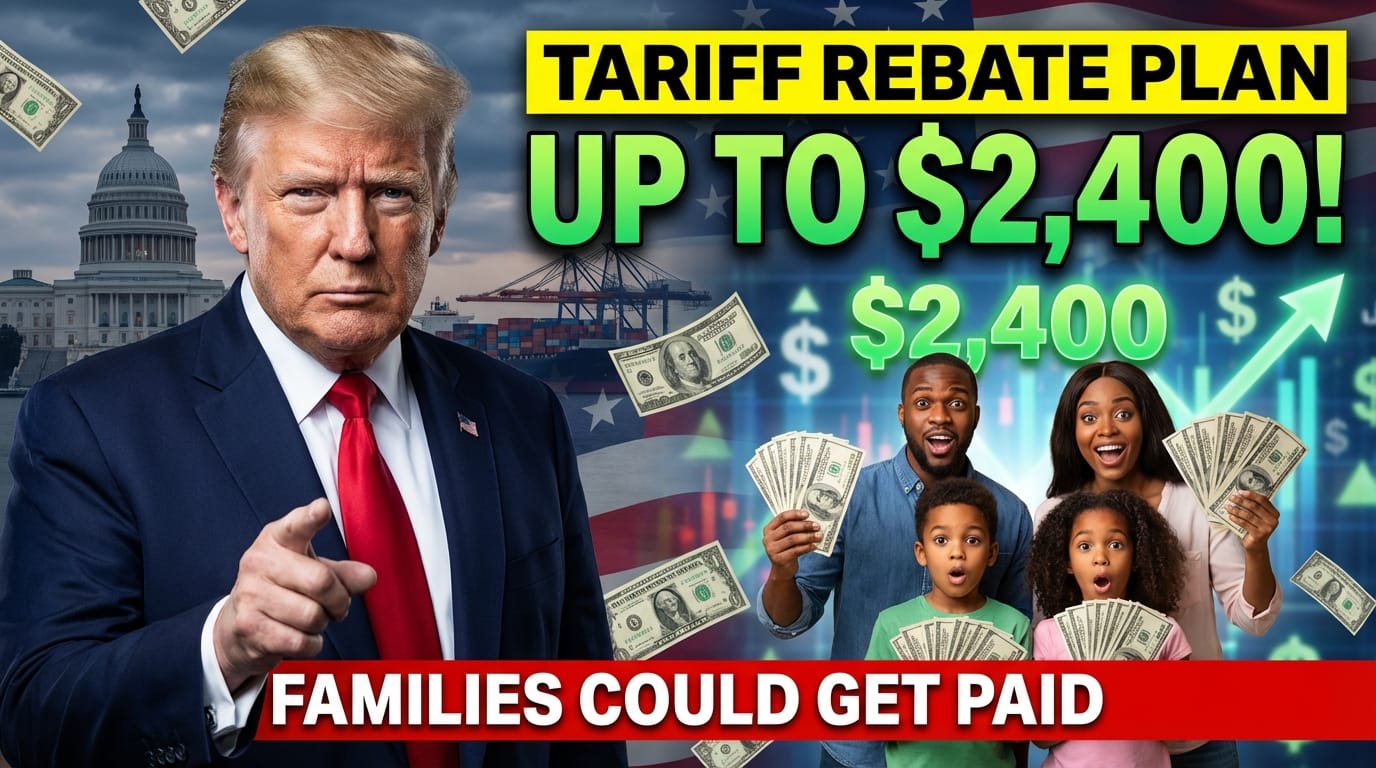
A new bill proposes payments to families affected by tariffs introduced during former President Donald Trump’s trade policies. If approved, the plan could provide up to $2,400 for some households. Let’s break down what the proposal means, who could benefit, and why it’s being discussed now.
Background
Tariffs are taxes placed on imported goods. Governments often use them to protect domestic industries or pressure other countries during trade disputes. During Donald Trump’s presidency, the United States imposed several tariffs on major trading partners such as China, Mexico, and the European Union.
While these tariffs generated large revenues for the federal government, critics argued they also increased costs for American businesses and consumers. Many companies passed the higher import costs to buyers, raising prices for everyday goods. As a result, tariffs became a controversial topic in debates about inflation and the cost of living.
According to an NBC News survey, only 33 percent of voters believe tariffs helped the economy. Meanwhile, 67 percent think they had a negative effect. This perception has fueled discussions about returning some of the tariff revenue to American households.
Proposal
Senator Martin Heinrich, a Democrat from New Mexico, introduced the Tariff Refunds for Working Families Act. The idea behind the bill is simple: if tariffs raised billions of dollars from businesses and consumers, some of that money should go back to the public.
The proposal aims to distribute tax rebates funded by tariff revenue collected by the federal government. These rebates would be sent directly to eligible individuals and families, similar to stimulus checks distributed during the COVID-19 pandemic.
Heinrich argues that the plan would help offset higher costs caused by tariffs and provide financial relief to middle-class households.
Funding
One key part of the bill is how it would be funded. The legislation proposes using approximately $166 billion collected from tariffs to pay for the rebate program.
However, the connection between tariff revenue and rebate payments is conceptual rather than mandatory. In other words, the law would link rebates to tariff income in principle, but payments could still be made even if the exact funds come from other federal sources.
At the same time, courts are currently reviewing how billions of dollars in tariff revenue might be returned to importers who paid the taxes. This legal process could influence how the government distributes the funds in the future.
Payments
The proposed rebate amounts depend on filing status and income level. The goal is to target working and middle-income households.
Below is a simplified breakdown of the potential payments.
| Filing Status | Income Limit | Rebate Amount |
|---|---|---|
| Married couples filing jointly | Under $180,000 | $1,200 |
| Head of household | Under $120,000 | $600 |
| Single filers | Under $90,000 | $600 |
| Per dependent child | — | $600 |
Because each dependent child would qualify for an additional $600 payment, larger families could receive more money.
For example:
| Household Example | Total Rebate |
|---|---|
| Single adult | $600 |
| Head of household with 1 child | $1,200 |
| Married couple with 2 children | $2,400 |
A family of four earning under $180,000 would therefore receive the maximum proposed rebate of $2,400.
Politics
The proposal arrives at a politically sensitive time. The 2026 midterm elections are approaching, and economic issues such as inflation, tariffs, and household expenses remain central topics for voters.
Supporters of the bill argue that tariffs increased costs for American consumers and that returning some of the revenue is fair. They also claim the rebates could provide relief for families still dealing with high living costs.
Critics, however, say the plan could become another politically motivated payment program. Some economists also debate whether rebates effectively offset the broader economic impact of tariffs.
The bill also includes a symbolic but notable provision: rebate checks would not include the president’s name. During the COVID-19 pandemic, stimulus checks sent to Americans included Donald Trump’s name, which sparked debate about politicizing government payments.
Trade
At the same time, the broader tariff policy remains unresolved. The Trump administration previously used Section 301 of the 1974 Trade Act to investigate and impose tariffs on certain trading partners.
More recently, investigations and trade actions involving China, Mexico, and the European Union have continued to shape U.S. trade policy. Some policymakers want to maintain higher tariffs as leverage in trade negotiations, while others push for reducing them to lower consumer costs.
This ongoing debate makes tariff revenue and its use a significant policy question.
Impact
If the Tariff Refunds for Working Families Act were approved, millions of Americans could receive rebate payments. For many households, especially those with children, the extra cash could help with rising expenses like groceries, rent, and utilities.
However, the bill still needs to pass both chambers of Congress and receive presidential approval before any payments could happen. That means the proposal remains uncertain for now.
Still, the idea reflects a broader discussion about how government revenue from trade policies should be used and whether taxpayers deserve direct benefits from it.
In the end, the debate over tariffs, inflation, and household finances continues to shape U.S. economic policy. Whether through rebates or trade reforms, lawmakers are searching for ways to balance global trade strategies with the financial realities faced by American families.
FAQs
What is the Tariff Refunds Act?
A bill proposing rebates funded by tariff revenue.
How much could families receive?
Up to $2,400 depending on income and dependents.
Who introduced the bill?
Senator Martin Heinrich of New Mexico.
Is the rebate approved yet?
No, the bill must pass Congress first.