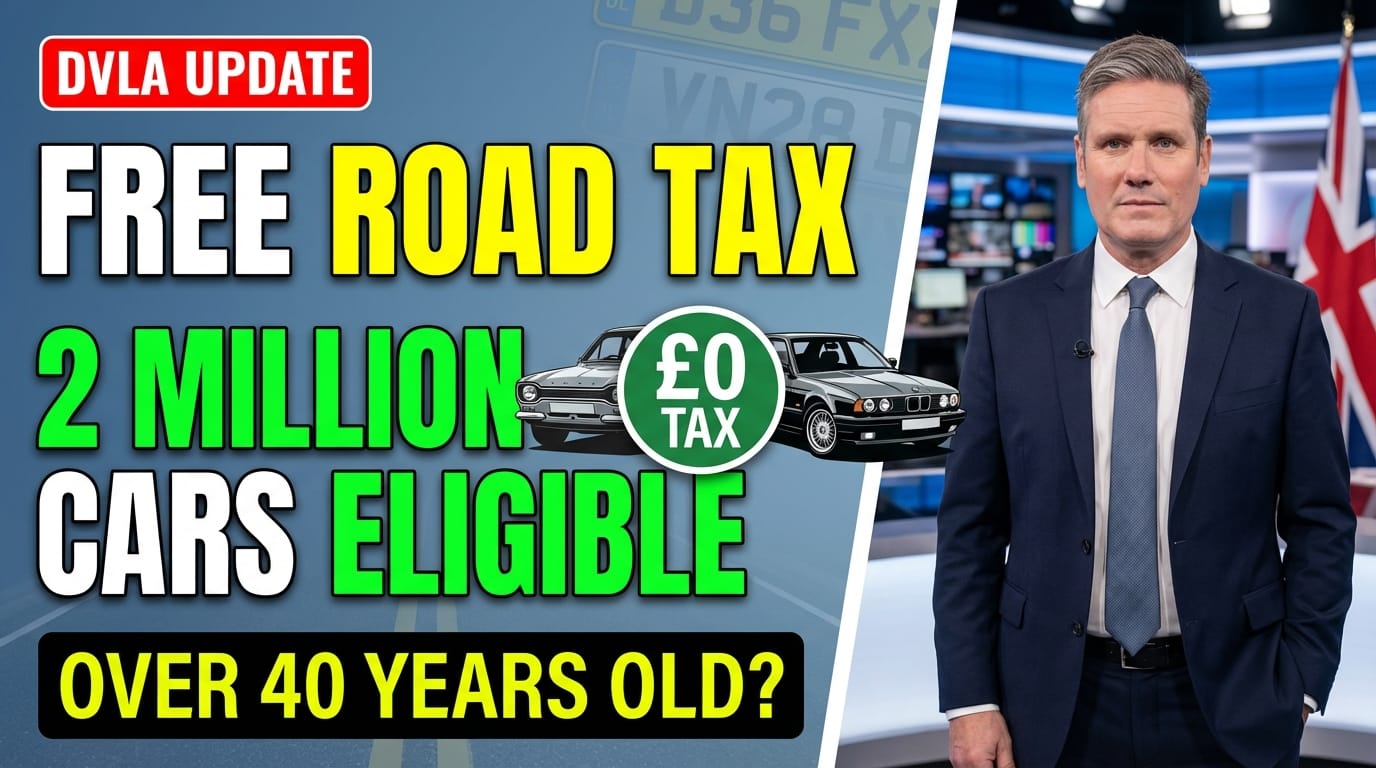
Close to two million vehicles in the UK are now eligible for free road tax, according to new figures from the DVLA and the Federation of British Historic Vehicle Clubs (FBHVC). The organisation’s 2025 National Historic Vehicle Survey (NHVS) reveals that 1,934,178 historic vehicles were registered with the DVLA last year, including cars, motorcycles, lorries and buses.
This tax exemption applies under a DVLA scheme for vehicles aged over 40 years, meaning thousands of drivers who own older models-such as classic Ford Escorts or BMW 3 Series cars-may be entitled to stop paying road tax entirely.
Eligibility
According to the DVLA, any vehicle that is more than 40 years old is eligible for a historic vehicle tax class, which grants exemption from annual vehicle tax payments. The key point is that a vehicle becomes eligible in April of the year it turns 40.
For instance, a car built before 1 January 1985 became exempt from paying road tax as of 1 April 2025. This rolling 40-year threshold continues year by year, so vehicles from 1986 will become exempt in April 2026, and so on.
If the exact manufacturing date is unknown, vehicles first registered before 8 January of the qualifying year are still eligible. However, exemptions do not apply if the vehicle is used commercially-such as for taxi services or business purposes.
Application
Even though the tax is free, owners must still apply for the exemption. You cannot simply stop taxing your vehicle without taking formal steps.
To apply for the first time, visit a Post Office that handles vehicle tax. You’ll need the following documents:
- Your log book (V5C) in your name
- A vehicle tax reminder letter (V11) if available
- MOT evidence (MOT certificate or printout from the MOT history)
- A completed V112 form if your vehicle is exempt from MOT
If you do not have a log book, download form V62, complete it, and take it to the Post Office along with a £25 fee.
In Northern Ireland, you’ll also need to bring a valid MOT certificate and your insurance certificate or cover note.
Once submitted, the Post Office sends your paperwork to the DVLA, which processes the exemption and issues an updated log book. If you’re due a refund for any recent tax paid, it should arrive within six weeks.
You are allowed to continue using your vehicle while your exemption application is being processed.
Renewal
In future years, the DVLA will send out an annual vehicle tax reminder before the tax is due to expire. Even though the vehicle is exempt, you must still go through the process of taxing it-though no payment will be required.
The DVLA warns that failing to tax an exempt vehicle remains illegal and could result in an £80 fine, so it’s important to keep up with renewals.
Impact
The FBHVC survey also sheds light on the wider significance of the UK’s historic vehicle sector:
- 690,777 historic vehicle owners are currently active
- 22.7 million adults consider these vehicles a key part of British heritage
- 4.3 million people attended historic vehicle events last year-a 100% increase since 2020
- The historic vehicle sector contributes £7.3 billion annually to the UK economy and supports 34,500 skilled jobs
David Whale, Chairman of the FBHVC, commented on the findings:
“This report underlines just how vital the historic vehicle sector is to Britain’s economy, culture and communities… but we cannot take that success for granted.”
He also stressed the importance of training future generations to maintain and preserve these vehicles, with initiatives like Youngtimer programmes and industry apprenticeships designed to support the sector’s sustainability.
With interest in historic vehicles growing, and the cost of living rising, taking advantage of road tax exemptions could offer some financial relief to classic car owners across the UK.
FAQs
Who qualifies for free DVLA road tax?
Vehicles over 40 years old used privately are eligible.
When does the 40-year exemption apply?
Each April, based on the vehicle’s manufacturing year.
Can I stop taxing my vehicle once eligible?
No – you must still apply for tax even if it’s free.
What documents are needed to apply?
V5C, MOT evidence, V112 (if exempt), and tax reminder letter.