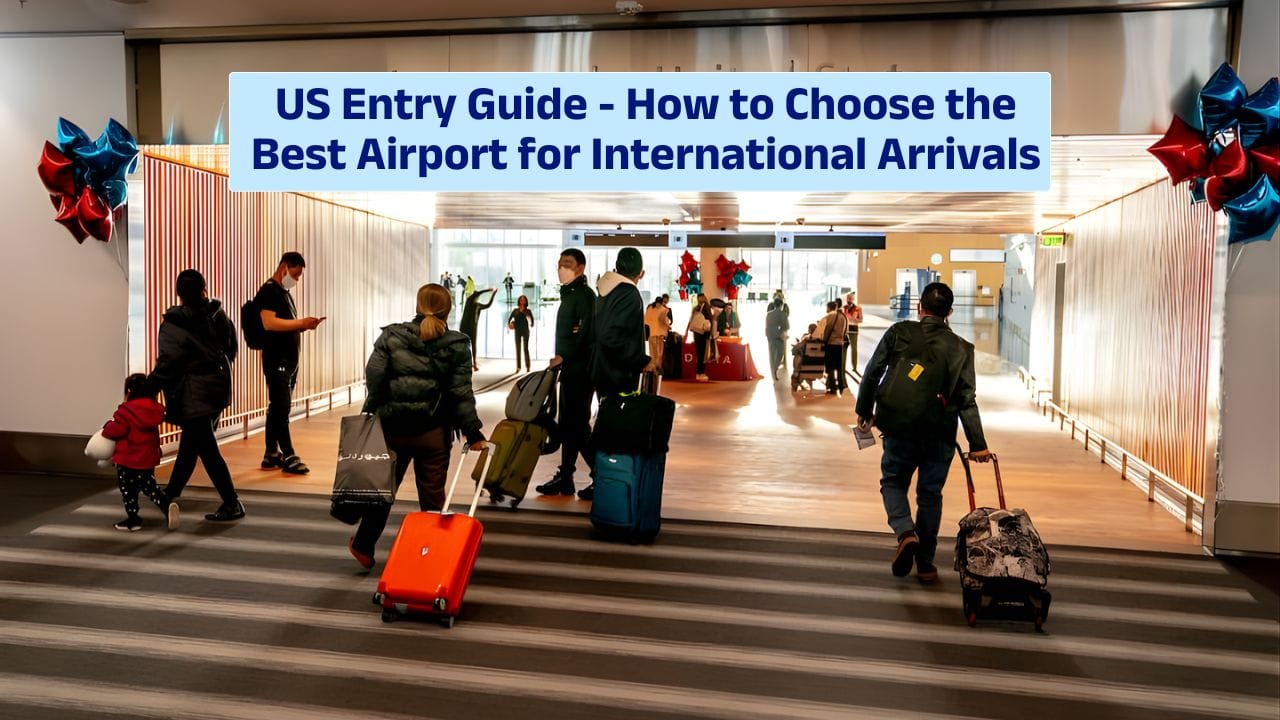
Planning a trip to the United States? Whether it’s your first visit or your tenth, choosing the right airport to enter the country can make a big difference in how smoothly your travel goes.
With over 20 major international airports across the U.S., each offering different perks, locations, and entry procedures, your choice really matters—especially if you’re coming in from overseas.
Let’s break down how to choose the best U.S. airport for your arrival, based on what you value most: speed, convenience, location, or ease of immigration.
Proximity
Where are you headed after landing? That’s the first thing to consider.
If you’re traveling to the East Coast, flying into New York JFK, Washington Dulles (IAD), or Boston Logan (BOS) makes sense. For West Coast destinations, Los Angeles (LAX) or San Francisco (SFO) are the most common choices.
If you’re heading to the Midwest, look at Chicago O’Hare (ORD) or Detroit (DTW). And for Southern states, Atlanta (ATL) or Dallas-Fort Worth (DFW) could be ideal.
Choosing the airport closest to your final destination can save you time, money, and stress—especially after a long international flight.
Immigration
Let’s be real—no one loves standing in line at immigration for hours. Some U.S. airports are more efficient than others when it comes to processing incoming travelers.
Airports with better immigration flow:
- Dallas-Fort Worth (DFW): Known for shorter wait times and multiple entry lanes.
- Houston Intercontinental (IAH): Quick processing, especially for Global Entry users.
- Boston Logan (BOS): Smaller size makes for quicker movement through customs.
Airports with longer waits:
- JFK (New York) and LAX (Los Angeles) can have long lines, especially during peak hours.
- Miami (MIA) often gets backed up due to high international traffic from Latin America.
Tip:
If you’re eligible, enroll in Global Entry or Mobile Passport Control to breeze through customs faster.
Flight Options
Some airports are hubs for international travel and offer better connectivity—meaning more direct flight options and better timing.
| Airport Code | Major International Hubs | Best For |
|---|---|---|
| JFK | New York | Direct flights to Europe, Asia |
| ATL | Atlanta (Delta hub) | Wide domestic connections |
| LAX | Los Angeles | Asia-Pacific routes |
| ORD | Chicago O’Hare | Central access to the U.S. |
| SFO | San Francisco | Tech travelers, Asia access |
| MIA | Miami | Latin American destinations |
If your airline loyalty program ties you to Delta, American, or United, you may want to stick with their hub cities.
Customs
Customs inspection varies by airport, and it can impact your entry time. Airports like San Diego (SAN) and Seattle (SEA) tend to offer smooth experiences. In contrast, larger airports like LAX, JFK, and MIA can be more challenging with luggage delays and customs hold-ups.
Smaller airports often move faster because they handle fewer international flights per day, making them hidden gems for smoother entry.
Layovers
If you’re entering the U.S. through a layover city, make sure you allow plenty of time for immigration, baggage claim, customs, and re-checking your luggage. Unlike Europe, the U.S. requires all international arrivals to clear customs at the first point of entry—even if you’re just connecting.
Ideal layover airports with good facilities:
- Minneapolis–St. Paul (MSP)
- Salt Lake City (SLC)
- Charlotte (CLT)
These airports are smaller but efficient, with shorter lines and friendly staff.
Costs
Landing fees, airport taxes, and convenience can affect your ticket price. Sometimes flying into a smaller or less busy airport might save you a few hundred bucks—especially if you’re flexible with your arrival city.
Popular cost-effective entry airports:
- Fort Lauderdale (FLL)
- Las Vegas (LAS)
- Orlando (MCO)
- Phoenix (PHX)
These aren’t always the top picks for business travelers, but they’re often cheaper and great for tourists.
Services
Do you value airport amenities? Some airports are just better for long layovers or travel delays. If you’re entering the U.S. after a long haul, things like clean rest areas, Wi-Fi, lounges, and food options can be lifesavers.
Top U.S. airports for traveler services:
- San Francisco (SFO): Wellness centers, clean spaces
- Atlanta (ATL): Efficient design and fast trains between terminals
- Seattle (SEA): Great food, easy navigation
- Denver (DEN): Comfortable seating, mountain views
| Priority | Best Airports |
|---|---|
| Short immigration | DFW, BOS, IAH |
| Good connections | ATL, ORD, JFK, LAX |
| Low costs | FLL, MCO, PHX, LAS |
| Quick customs | SEA, SAN, MSP |
| Amenities | SFO, ATL, DEN |
Picking the best U.S. airport depends on your needs—whether it’s smooth entry, low costs, or proximity to your final destination. By planning ahead, you can avoid long lines, missed connections, and travel headaches.
FAQs
Which US airport has shortest immigration lines?
Dallas-Fort Worth (DFW) and Boston Logan (BOS) have shorter waits.
Is Global Entry worth it for US travel?
Yes, it speeds up immigration and customs at most major airports.
Can I clear customs during a layover?
Yes, U.S. customs must be cleared at your first point of entry.
Which US airport is best for Asia flights?
LAX and SFO offer the most direct flights to Asian destinations.