Traveling around a new city can be overwhelming—especially if you don’t want to rent a car. That’s why public transportation matters, big time. Luckily, some U.S. cities have built systems that are not only reliable but also tourist-friendly, affordable, and easy to navigate.
Whether you’re in town for a weekend getaway or a full vacation, here are the best public transport cities in the USA for tourists.
Criteria
What makes public transportation tourist-friendly? We looked at:
- Ease of use: Simple maps, apps, and signage
- Affordability: Day passes and contactless payment options
- Accessibility: Frequent service to major tourist spots
- Coverage: Connections between airports, downtowns, and attractions
- Safety and cleanliness: Especially important for first-time visitors
So, let’s observe which U.S. cities top the list and why.
New York
Let’s start with the obvious one. New York City has the largest public transit system in the country—and it runs 24/7.
Why tourists love it:
- The subway: Over 470 stations across five boroughs
- MetroCards and OMNY: Easy tap-and-go payment
- Connects everything: From Times Square to Coney Island
- Cheap fares: Just $2.90 per ride, or get an unlimited pass
Bonus: You can even get to and from the airport (JFK or LaGuardia) using transit and save big compared to a cab.
Washington DC
If you’re planning a museum-hopping trip in the nation’s capital, you’re in luck. D.C.’s Metro system is clean, efficient, and hits almost every major attraction.
What makes it great:
- Metro + Metrobus: Covers the city and suburbs
- SmarTrip card: Works on all public transit
- Stops near the National Mall: Walk to the Smithsonian museums, monuments, and Capitol
- Very walkable: Transit plus walking gets you everywhere
Also, Union Station connects to Amtrak, buses, and Metro, making day trips a breeze.
San Francisco
The Bay Area is known for its iconic cable cars—but that’s just the beginning.
Why it’s transit-friendly:
- Muni buses and trains: Cover the entire city
- Cable cars: Fun and scenic (especially for tourists)
- BART: Connects the airport to downtown in 30 minutes
- Clipper Card: One pass for all transit systems in the region
Tip: Take the Powell-Hyde cable car route—it ends with a perfect view of Alcatraz.
Chicago
The Windy City combines old-school charm with modern transit.
Why tourists love it:
- ‘L’ train system: Runs above and below ground
- Connects two airports: O’Hare and Midway
- Ventra Card: Tap to pay on trains and buses
- Good for foodies: Easy rides to Wicker Park, Chinatown, and more
Chicago’s transit is especially useful during big events like Lollapalooza or sports games when traffic is rough.
Boston
This walkable, history-rich city has the oldest subway system in the U.S.—and it still gets the job done.
What works well:
- The T (MBTA): Covers subway, bus, and ferries
- CharlieCard: Pay-per-ride or unlimited options
- Airport access: The Silver Line takes you from Logan to downtown for free
- Tourist-friendly stops: Fenway, Harvard, Freedom Trail—all accessible by T
Boston’s small size makes it easy to observe multiple neighborhoods in a day using transit alone.
Portland
This Oregon gem keeps things green, simple, and efficient.
Why it’s great for visitors:
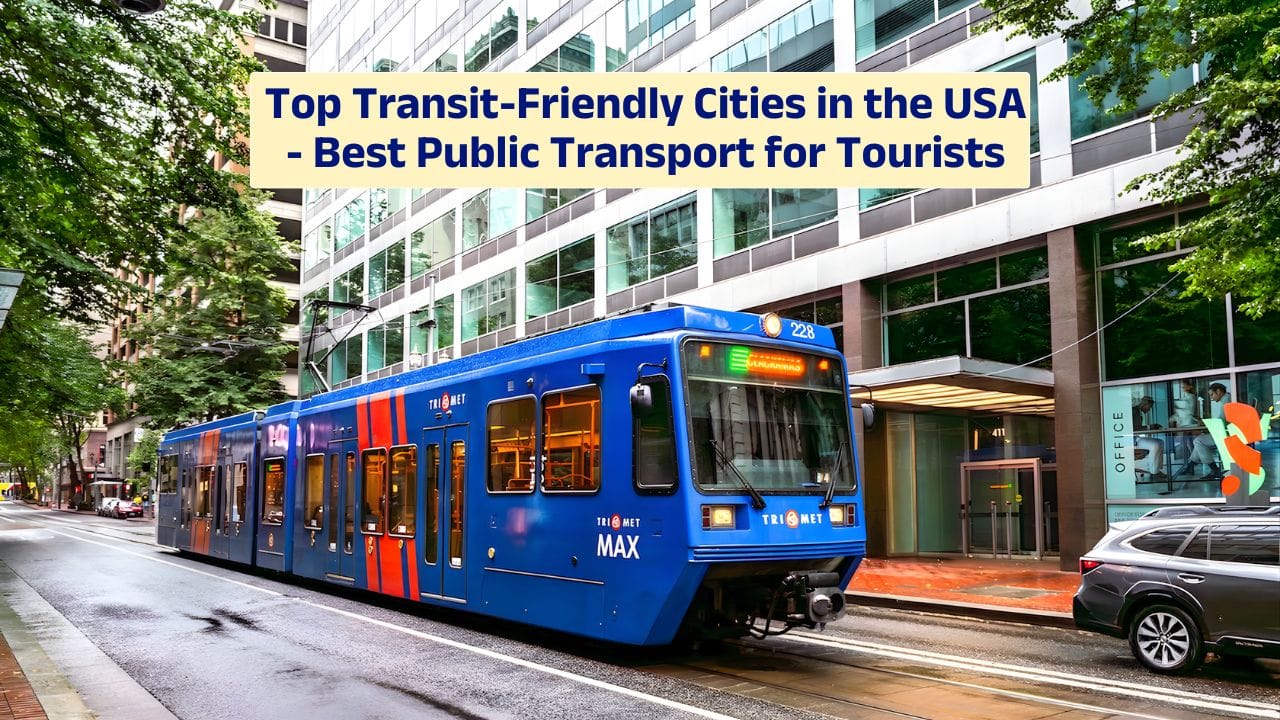
- TriMet buses, MAX light rail, and streetcars
- Low fares: $5 for a full-day pass
- Downtown is a Free Rail Zone
- Airport light rail: Less than 40 minutes to the city center
Plus, Portland’s transit integrates well with its massive bike network—ideal if you like to combine both.
Seattle
Rain or shine, Seattle’s evolving transit system is great for travelers.
Why it makes the list:
- Link Light Rail: Airport to downtown in under 40 minutes
- ORCA card: One card for all local transit
- Water taxis and ferries: Unique and scenic options
- Walkable neighborhoods: Pike Place Market, Capitol Hill, and more
Seattle is also adding more lines every year, so it’s only getting better.
Minneapolis
Not what most people expect—but it’s surprisingly easy to get around the Twin Cities without a car.
What’s cool:
- Metro Transit: Includes buses and light rail
- Airport and Mall of America: Both on the Blue Line
- Go-To Card: Simplifies fares
- Nice Ride bikes: Perfect for short scenic rides
Minneapolis also offers heated bus shelters—huge in winter.
Tips
Want to master public transit while you travel? Here’s how:
- Download transit apps: Like Transit, Citymapper, or Google Maps
- Buy day passes: Often cheaper than individual rides
- Travel off-peak: Less crowded and faster
- Carry a card: Most systems use reloadable payment cards
- Look for airport connections: Many cities offer direct rail or bus to downtown
You don’t need to rent a car to enjoy a U.S. city. In fact, in places like NYC, D.C., and San Francisco, it’s more of a hassle than a help. The cities on this list prove that public transportation in the U.S. is alive and well—and perfect for tourists who want to explore, save money, and travel smart.
FAQs
Which U.S. city has the best public transport?
New York City ranks #1 for coverage, frequency, and 24/7 access.
Is Washington DC easy to get around by Metro?
Yes, DC’s Metro connects tourists to major sites like the National Mall.
Do U.S. transit systems offer day passes?
Most cities like Chicago, SF, and Boston offer affordable unlimited day passes.
Can I use one card for all transit in a city?
Yes, cities like Seattle (ORCA) and SF (Clipper) use all-in-one cards.