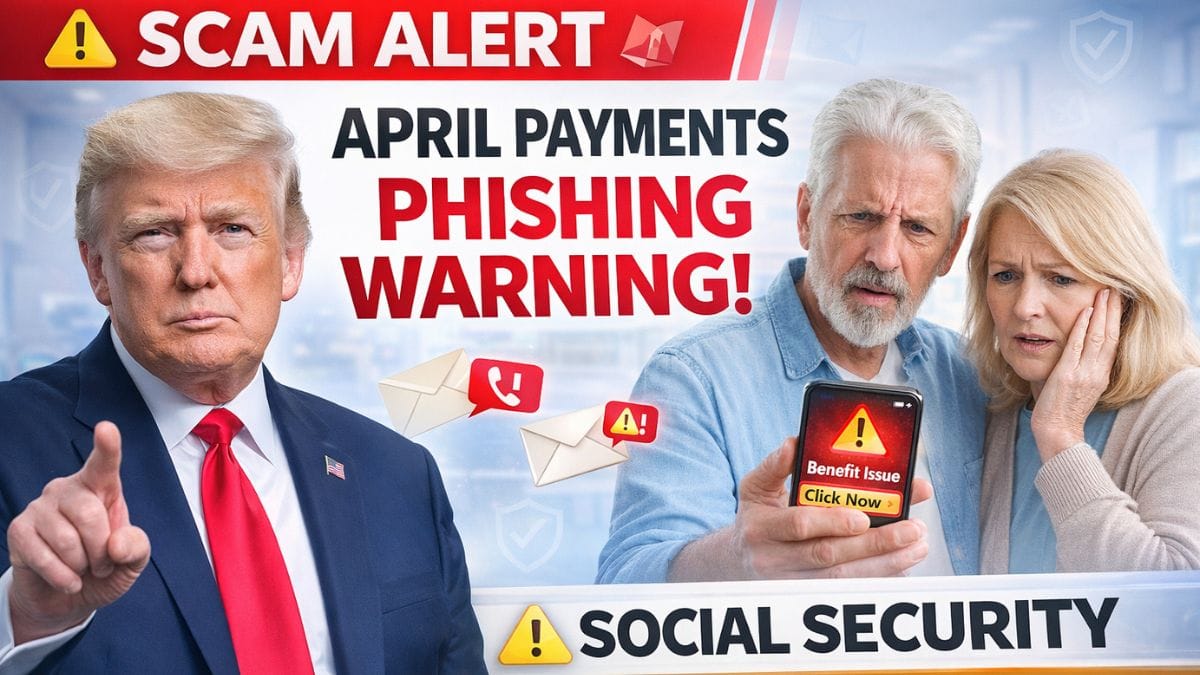
As April Social Security payments are distributed, federal agencies have issued a warning about a rise in sophisticated phishing scams targeting beneficiaries. These schemes are designed to exploit routine payment cycles, using timing and realistic messaging to increase the chances of success.
Officials report that fraudulent communications – including emails, text messages, and phone calls – are being sent to individuals under the guise of the Social Security Administration (SSA). These messages often claim there is a problem with a recipient’s benefits and request immediate action.
The advisory comes as part of a broader effort to raise awareness about financial fraud risks, particularly during periods when individuals expect government payments.
The current phishing campaign focuses on Social Security recipients who are anticipating their monthly benefits. By aligning fraudulent messages with payment schedules, scammers increase the likelihood that recipients will interpret the communication as legitimate.
These messages typically reference issues such as delayed payments, account suspension, or the need for verification. In many cases, recipients are directed to click on a link or contact a number to resolve the issue.
Federal officials emphasize that while phishing scams are not new, recent examples have become more convincing due to improved tactics and presentation.
Methods
Scammers are using a range of techniques to imitate official communication. These include copying SSA logos, using formal language, and spoofing phone numbers that appear to originate from government offices.
A typical phishing attempt may follow this sequence:
| Step | Description |
|---|---|
| 1 | A message claims there is an issue with benefits |
| 2 | The recipient is urged to act quickly |
| 3 | A link or phone number is provided |
| 4 | Personal or financial details are requested |
| 5 | Information is used for fraud or theft |
Some fraudulent websites closely resemble official government portals, making it difficult for users to distinguish between legitimate and fake pages.
In addition, certain scams request payment through unconventional methods such as gift cards or wire transfers. Authorities note that such requests are clear indicators of fraud.
Indicators
Recognizing phishing attempts is a key step in preventing financial loss. While each scam may vary slightly, several common indicators have been identified:
- Requests for immediate action or urgent responses
- Messages stating that benefits will be suspended without verification
- Requests for sensitive information, including Social Security numbers or bank details
- Links that do not match official government website addresses
- Unexpected communication from individuals claiming to represent SSA
Officials advise that any unsolicited message requesting personal information should be treated with caution.
Consequences
The impact of these scams can be significant. Individuals who provide personal or financial information may face unauthorized access to their bank accounts or misuse of their identity.
Common consequences include:
- Financial loss due to unauthorized transactions
- Identity theft and fraudulent account activity
- Long-term credit issues
- Challenges in recovering stolen funds
In some cases, stolen information may be reused or sold, increasing the risk of repeated incidents over time.
Prevention
Federal agencies recommend several practical steps to reduce exposure to phishing scams. These measures focus on verifying communication and protecting sensitive information.
Recommended actions include:
- Avoid clicking on links in unsolicited emails or messages
- Access official websites by entering the address directly into a browser
- Confirm any suspicious communication by contacting SSA through official channels
- Enable multi-factor authentication on financial and online accounts
- Regularly review bank and credit statements for unusual activity
These steps are intended to provide a basic level of protection and help individuals identify potential threats early.
Guidance
The Social Security Administration reiterates that it does not request sensitive personal or financial information through unsolicited messages. Any communication that asks for such details or pressures immediate action should be considered suspicious.
Law enforcement agencies continue to investigate phishing operations, but prevention remains a primary focus. Public awareness plays an important role, particularly during periods when fraudulent activity tends to increase.
Individuals are encouraged to remain attentive to unexpected messages and to verify information through trusted sources before taking action.
Maintaining a cautious and informed approach can reduce the likelihood of falling victim to these scams. As digital communication continues to evolve, knowing common fraud tactics is an essential part of managing personal financial security.
FAQs
What is the SSA phishing scam?
It is a fake message asking for personal details.
Does SSA contact via text or email?
SSA does not request sensitive data this way.
What should I do if I get a scam message?
Ignore it and contact SSA directly.
Are fake SSA websites common?
Yes, some look very similar to real ones.