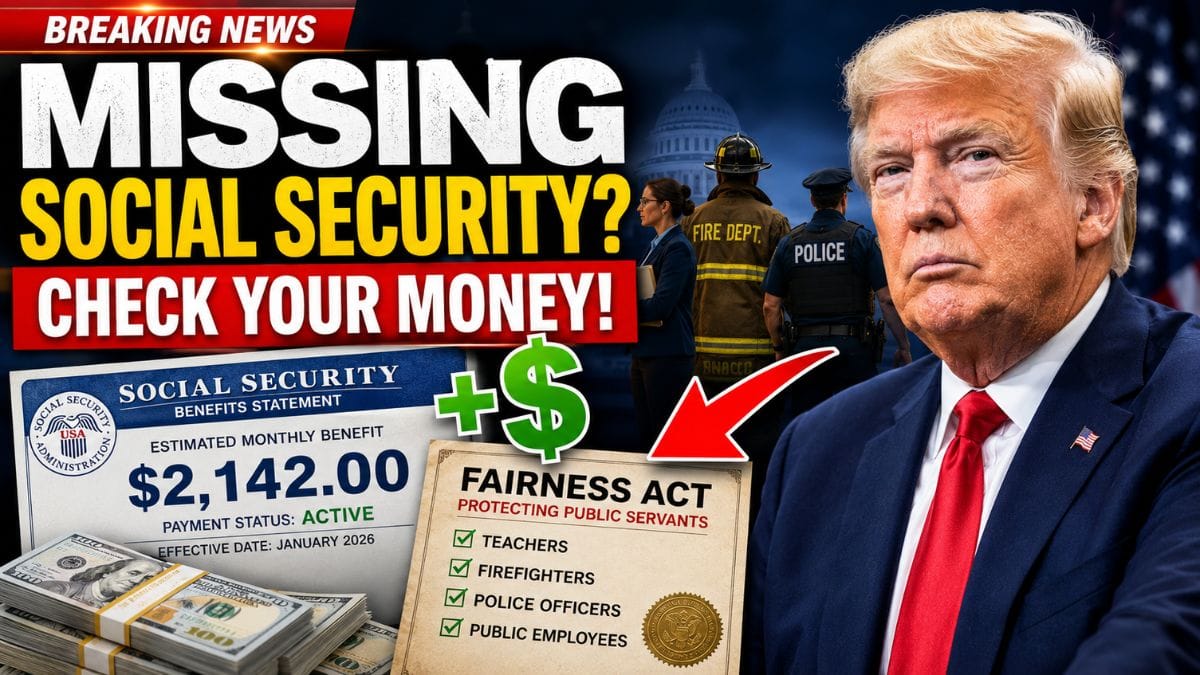
For years, certain public-sector workers saw their Social Security benefits reduced because of two federal rules that affected people with pensions from jobs that did not pay into Social Security. The Social Security Fairness Act changed that situation by eliminating those rules, potentially increasing benefits for millions of teachers, police officers, firefighters, and other public employees.
The law has already resulted in billions of dollars in payments to eligible beneficiaries. However, not everyone who may qualify necessarily received an automatic adjustment. For some people, especially those who never filed for Social Security benefits, taking action may still be necessary.
Changes
The Social Security Fairness Act was signed into law during the Biden administration and eliminated the Windfall Elimination Provision, or WEP, and Government Pension Offset, or GPO.
These provisions had affected certain workers who received pensions from federal, state, or local government employment where they did not pay Social Security taxes.
WEP could reduce a worker’s Social Security retirement benefit. GPO could reduce Social Security benefits available to spouses and surviving spouses.
The repeal changed the calculation for benefits beginning in January 2024. For eligible public workers, that could mean higher monthly payments and retroactive benefits for earlier months covered by the law.
Payments
The Social Security Administration moved to process the changes after the legislation became law.
According to the agency, nearly 3.1 million payments totaling approximately $17 billion had been issued to eligible beneficiaries by July 2025. The payments were made as part of the agency’s effort to implement the legislation and provide retroactive amounts.
The payments were not a universal Social Security bonus. Eligibility depends on a person’s work history, pension, and Social Security circumstances.
That distinction is important because simply having worked for a government employer does not automatically mean someone qualifies for additional money.
Eligibility
The people most likely to benefit are public-sector workers whose Social Security benefits were previously affected by WEP or GPO.
This can include teachers, firefighters, police officers, and other government employees. Some federal, state, and local workers were covered by pension systems that did not require them to pay Social Security taxes.
A person could also be affected through a spouse’s or former spouse’s Social Security record, particularly when GPO reduced spousal or survivor benefits.
The repeal means those reductions no longer apply to benefits covered by the new law. However, beneficiaries still need to meet the normal requirements for receiving Social Security benefits.
Missing
Not every potentially eligible person necessarily received a payment automatically.
One important situation involves people who never applied for Social Security benefits. If someone had not filed a claim, the SSA might not have had an active benefit record through which to issue an adjustment or retroactive payment.
Advocacy groups and lawmakers also raised concerns that some public employees may have received incorrect guidance about whether they should apply for benefits.
That means someone who previously assumed they were not entitled to Social Security because of a government pension may want to review their situation rather than assume they are excluded.
Applying
If you have never applied for Social Security and believe the repeal of WEP or GPO could affect you, the SSA says applications can generally be made online or by telephone.
People seeking surviving spouse benefits may contact the Social Security Administration at 1-800-772-1213.
The exact process depends on the type of benefit being claimed. Applicants should have information about their employment history, pension, marriage or survivor status, and other relevant records available when contacting the agency.
If you previously applied for benefits but believe your payments or retroactive amount are incorrect, reviewing your information through your my Social Security account can be a useful first step.
Records
Keeping your Social Security information current is important when benefits are being adjusted.
Beneficiaries should check that their mailing address and direct-deposit information are accurate. They can also review their benefit information through their online Social Security account.
If something appears inconsistent, contacting the SSA directly is preferable to relying on third-party claims about eligibility or payment amounts.
The amount someone may receive can vary substantially because the calculation depends on individual circumstances. There is no single payment amount that applies to every person affected by the law.
Planning
The Social Security Fairness Act is an important change for public employees who were previously affected by WEP or GPO. For some beneficiaries, the repeal can result in higher monthly Social Security payments as well as retroactive benefits.
But the key issue for anyone who believes they may qualify is whether the SSA has a record of their claim and whether their benefits have been correctly adjusted. Public workers who were previously told that their government pension prevented them from receiving Social Security may have particular reason to review their eligibility.
Checking your Social Security record, contacting the agency, and keeping your personal information updated are practical steps. Because benefit rules can interact with pensions, taxes, Medicare, and other retirement income, people with more complicated financial situations may also benefit from independent professional advice.
FAQs
Who benefits from the Fairness Act?
Eligible public workers affected by WEP or GPO may benefit.
What did the law eliminate?
It eliminated the Windfall Elimination Provision and Government Pension Offset.
Can teachers receive higher Social Security?
Some eligible teachers may receive higher benefits under the law.
What if I never applied for Social Security?
You may need to file an application to establish benefit eligibility.



How can I check my Social Security benefits?
Review your my Social Security account or contact the SSA directly.