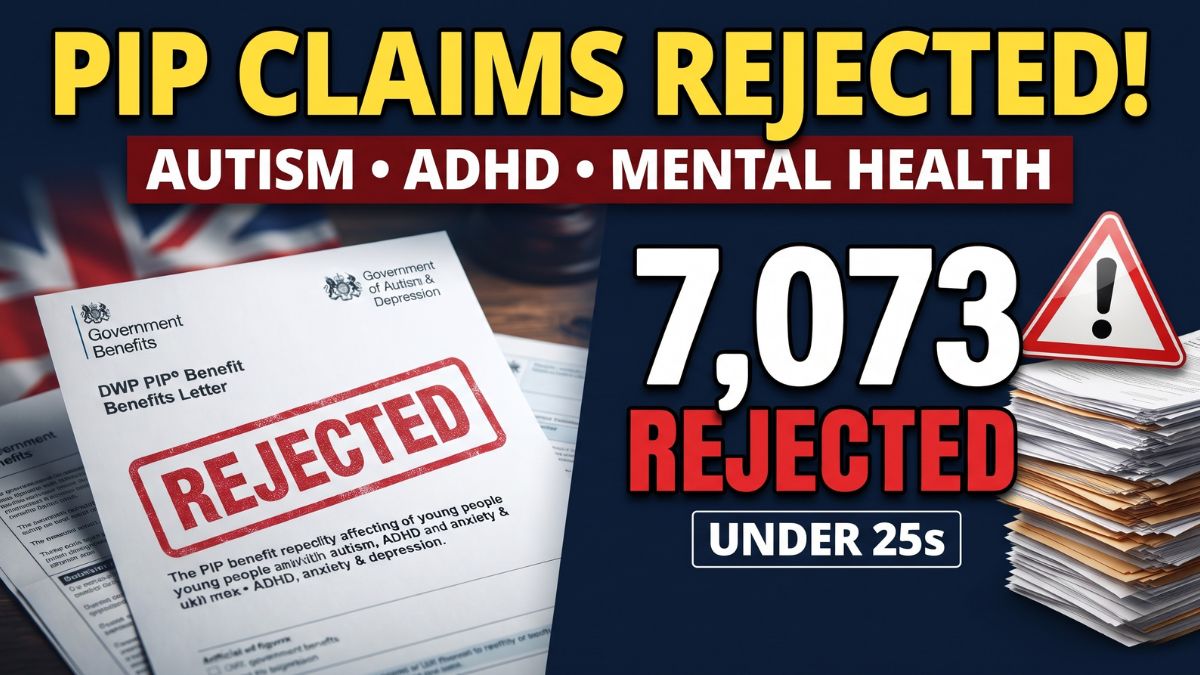
New figures from the Department for Work and Pensions show that 3.9 million people across England and Wales were receiving Personal Independence Payment by the end of October 2025. That represents a one percent increase since July.
According to DWP data, 37 percent of claimants were awarded the maximum rate of support. PIP provides financial help for people whose health conditions or disabilities affect their daily living or mobility.
Payments currently range from £29.20 to £187.45 per week. Because PIP is paid every four weeks, this translates to between £116.80 and £749.80 per payment period.
Numbers
The latest claimant breakdown is as follows:
| Location | Claimants |
|---|---|
| England and Wales | 3,874,922 |
| Scotland (transferring to ADP) | 1,886 |
| Living Abroad | 2,258 |
| Unknown | 3,496 |
| Total | 3,882,571 |
By the end of October, PIP was delivering financial support to 4,373,941 individuals overall.
For new claims made between July and October 2025:
- 77 percent were awarded short-term support (0 to 2 years)
- 16 percent were longer-term awards (over 2 years)
- 6 percent were ongoing
Conditions
The five most commonly recorded disabling conditions among claimants are:
- Psychiatric disorders (39 percent)
- Musculoskeletal disease, general (19 percent)
- Neurological disease (13 percent)
- Musculoskeletal disease, regional (12 percent)
- Respiratory disease (4 percent)
However, eligibility is not determined by diagnosis alone. The DWP assesses how a condition affects an individual’s ability to carry out daily activities and mobility tasks safely, reliably and within a reasonable time.
Categories
The DWP records claims under 20 main disability categories. These serve as umbrella terms covering more than 530 specific conditions.
The main categories include:
- Haematological disease
- Infectious disease
- Malignant disease
- Metabolic disease
- Psychiatric disorders
- Neurological disease
- Visual disease
- Hearing disorders
- Cardiovascular disease
- Gastrointestinal disease
- Liver and biliary tract diseases
- Skin disease
- Musculoskeletal disease, general
- Musculoskeletal disease, regional
- Autoimmune disease
- Genitourinary disease
- Endocrine disease
- Respiratory disease
- Multisystem and extremes of age
- Diseases of the immune system
- Unknown or missing
These categories reflect how the DWP classifies claims rather than determining automatic eligibility.
Eligibility
To qualify for PIP, you must:
- Have had difficulties with daily living or mobility for at least three months
- Expect those difficulties to continue for at least nine months
You generally must have lived in the UK for at least two of the previous three years and be in the country when applying.
You may consider applying if your condition affects activities such as:
- Preparing or eating food
- Managing medication
- Washing or dressing
- Communicating with others
- Reading information
- Managing money
- Planning or following journeys
- Moving around
There are separate rules for those who are terminally ill.
Rates
PIP consists of two components: daily living and mobility. Claimants may receive one or both, depending on how severely their condition affects them.
Current weekly rates are:
| Component | Standard | Enhanced |
|---|---|---|
| Daily Living | £73.90 (rising to £76.70 in April) | £110.40 (rising to £114.60 in April) |
| Mobility | £29.20 (rising to £30.30 in April) | £77.05 (rising to £80.00 in April) |
The maximum combined weekly rate is £187.45, equivalent to £749.80 every four weeks.
Assessment
Most applicants will undergo an assessment conducted by an independent healthcare professional. Assessments may take place face-to-face, by telephone, via video call or through paper-based review.
The DWP considers:
- Whether tasks can be done safely
- How long tasks take
- How frequently difficulties occur
- Whether help or equipment is required
Payments begin from the date the claim is submitted, although PIP cannot be backdated beyond that point.
Claim
To make a new claim, you must contact the DWP directly. Before applying, you will need:
- Contact details
- Date of birth
- National Insurance number
- Bank account details
- GP or healthcare professional details
- Information about time spent abroad or in hospital or care homes
PIP is usually paid every four weeks directly into a bank, building society or credit union account. Those who are terminally ill may receive weekly payments instead.
As eligibility depends on how a condition affects daily life rather than the diagnosis itself, each claim is assessed individually.
FAQs
What is the maximum PIP payment?
£187.45 per week or £749.80 every four weeks.
How many people receive PIP?
About 3.9 million in England and Wales.
Does diagnosis guarantee eligibility?
No, impact on daily life is assessed.
How often is PIP paid?
Usually every four weeks.