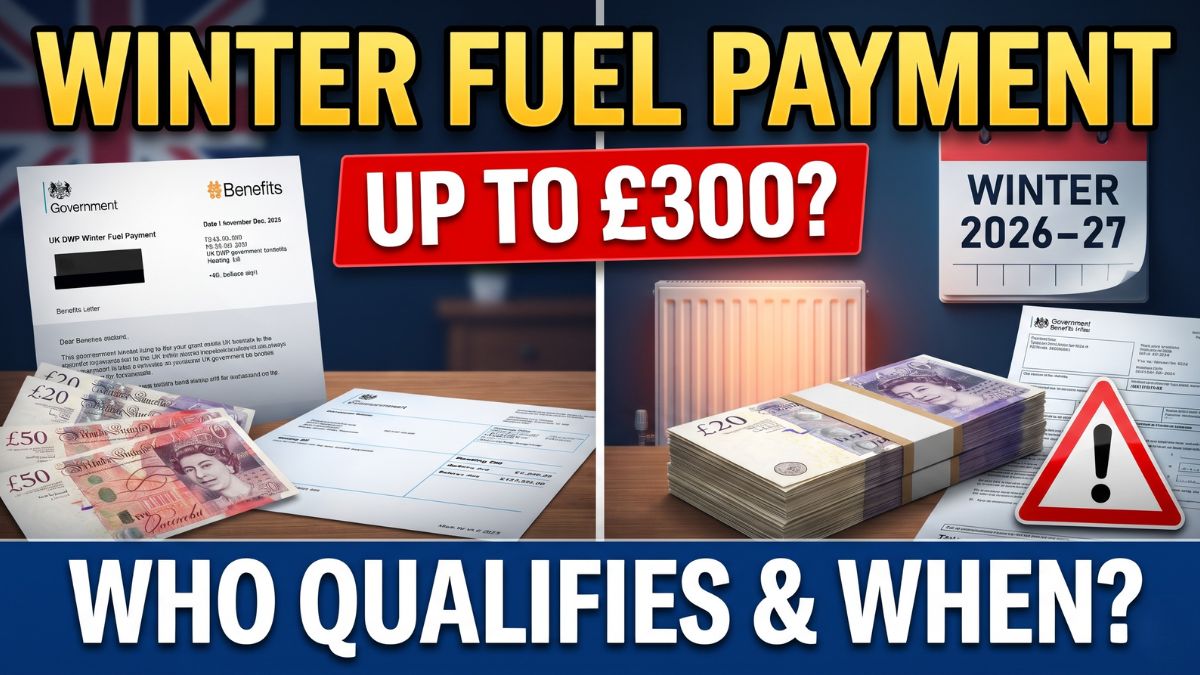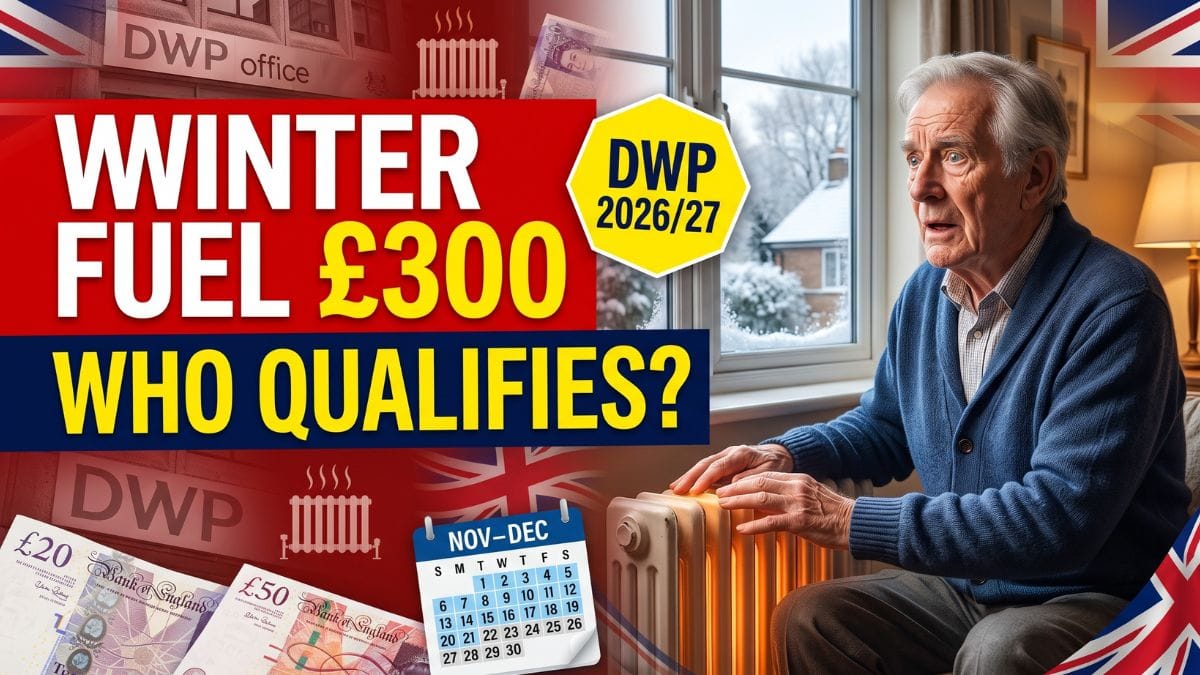
Millions of pensioners across England, Wales and Northern Ireland are due to receive help with winter heating costs through the 2026/27 Winter Fuel Payment. The Department for Work and Pensions (DWP) says eligible pensioners will generally receive between £100 and £300, with most payments made automatically.
The payment amount depends on your date of birth, living arrangements and whether you receive certain benefits. DWP correspondence is expected to arrive in October and November, while most payments are due in November or December.
Eligibility
You can usually receive a Winter Fuel Payment for winter 2026/27 if you were born on or before June 27, 1960 and normally live in England, Wales or Northern Ireland.
There are circumstances in which you may not qualify. These include living outside the relevant parts of the UK, requiring permission to enter the UK where your immigration conditions restrict access to public funds, or being in prison for the entire qualifying week.
The qualifying week for the 2026/27 payment is September 21 to 27, 2026. Your circumstances during this period can affect both eligibility and the amount you receive.
You may also be excluded if you were in hospital receiving free treatment for the whole qualifying week and the corresponding period in the previous year.
Amounts
The amount is linked to your date of birth and household circumstances. For many eligible pensioners, the payment will be either £200 or £300, although people living with another eligible person can receive different amounts.
| Circumstances | Winter Fuel Payment |
|---|---|
| Live alone, born Sept. 28, 1946 to June 27, 1960 | £200 |
| Live alone, born before Sept. 28, 1946 | £300 |
| Both household members born Sept. 28, 1946 to June 27, 1960 | £100 each household arrangement |
| Both born before Sept. 28, 1946 | £150 each household arrangement |
| Eligible person living in a care home, born Sept. 28, 1946 to June 27, 1960 | £100 |
| Eligible person living in a care home, born before Sept. 28, 1946 | £150 |
The exact payment can depend on whether you or the person you live with receives Pension Credit, Universal Credit or income-related Employment and Support Allowance (ESA).
Households
Living with another eligible pensioner can change the amount paid. The rules are designed to account for people sharing a household rather than automatically paying the full amount to every eligible person.
For example, where two eligible people live together, their birth dates and benefit status can determine whether the household receives £100, £150 or £200.
If you and your partner jointly claim certain benefits, one of you will normally receive the payment on behalf of the household. The amount can be £200 when both partners were born between September 28, 1946 and June 27, 1960.
If one or both partners were born before September 28, 1946, the joint payment can be £300.
People receiving qualifying benefits but not making a joint claim can generally receive £200 or £300, depending on their date of birth.
Carehomes
Pensioners living in a care home can still qualify for Winter Fuel Payment in some circumstances.
However, you will not qualify if you receive Pension Credit, Universal Credit or income-related ESA and have lived in a care home for the entire period since June 28, 2026 or earlier.
For those who remain eligible, the payment can be £100 or £150 depending on their date of birth.
Income
Higher-income pensioners should also be aware that the Winter Fuel Payment can be recovered through the tax system.
If your annual income is more than £35,000, HM Revenue and Customs (HMRC) will recover the payment. This can be done by adjusting your tax code or through your Self Assessment tax return.
This means receiving the payment does not necessarily mean you will keep the full amount if your income exceeds the applicable threshold.
Payments
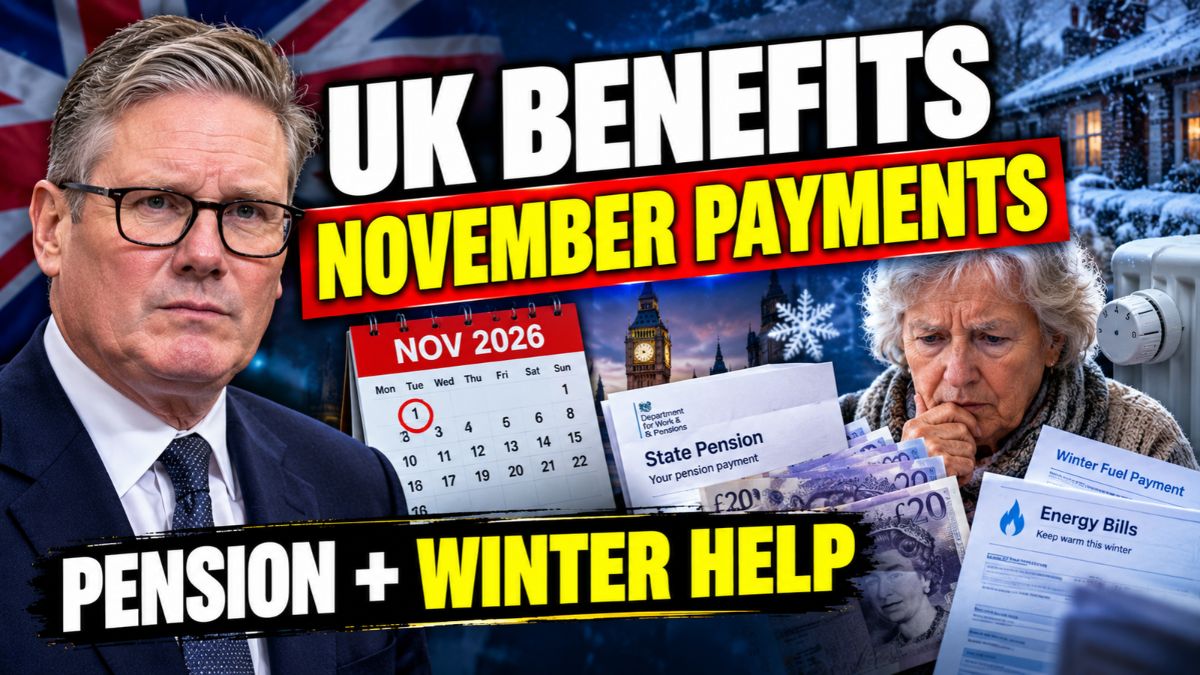
Most eligible pensioners do not need to apply. DWP says payments will generally be made automatically during November and December.
Letters are expected to be sent during October and November. The correspondence should explain how much you are due and which bank account will receive the money.
In most cases, the payment will go to the same account used for your State Pension or other benefits.
If you believe you qualify but do not receive a letter, DWP advises checking whether you need to make a claim rather than responding to an unsolicited message.
Scams
DWP has warned pensioners to be cautious about messages asking them to apply for Winter Fuel Payment through a link.
A text message asking you to click a link or provide personal information should not be treated as an official DWP communication simply because it mentions the Winter Fuel Payment.
If you need to make a claim or check your circumstances, use the official GOV.UK guidance rather than a link contained in an unexpected text or email.
Optout
Eligible pensioners who do not want to receive the 2026/27 Winter Fuel Payment can opt out.
The online opt-out form must be completed before 11:59pm on September 20, 2026. Alternatively, you can call the relevant helpline before 6pm on September 18, 2026.
You will need to provide your National Insurance number when using the online form or telephone service.


Deadlines
For most eligible pensioners, no action is required because the payment will be made automatically. The key dates are nevertheless worth noting.
| Date | What happens |
|---|---|
| Sept. 18, 2026 | Telephone opt-out deadline |
| Sept. 20, 2026 | Online opt-out deadline |
| Sept. 21-27, 2026 | Qualifying week |
| October-November 2026 | DWP letters expected |
| November-December 2026 | Most payments expected |
| Jan. 27, 2027 | Contact DWP if payment has not arrived |
If you have not received a letter or payment by January 27, 2027 and believe you are eligible, DWP says you should contact the Winter Fuel Payment Centre.
The 2026/27 Winter Fuel Payment is intended to help eligible pensioners manage heating expenses during the colder months. While most payments will be automatic, understanding the qualifying dates, household rules and income threshold can help you check whether the amount you receive is correct and whether any action is required.