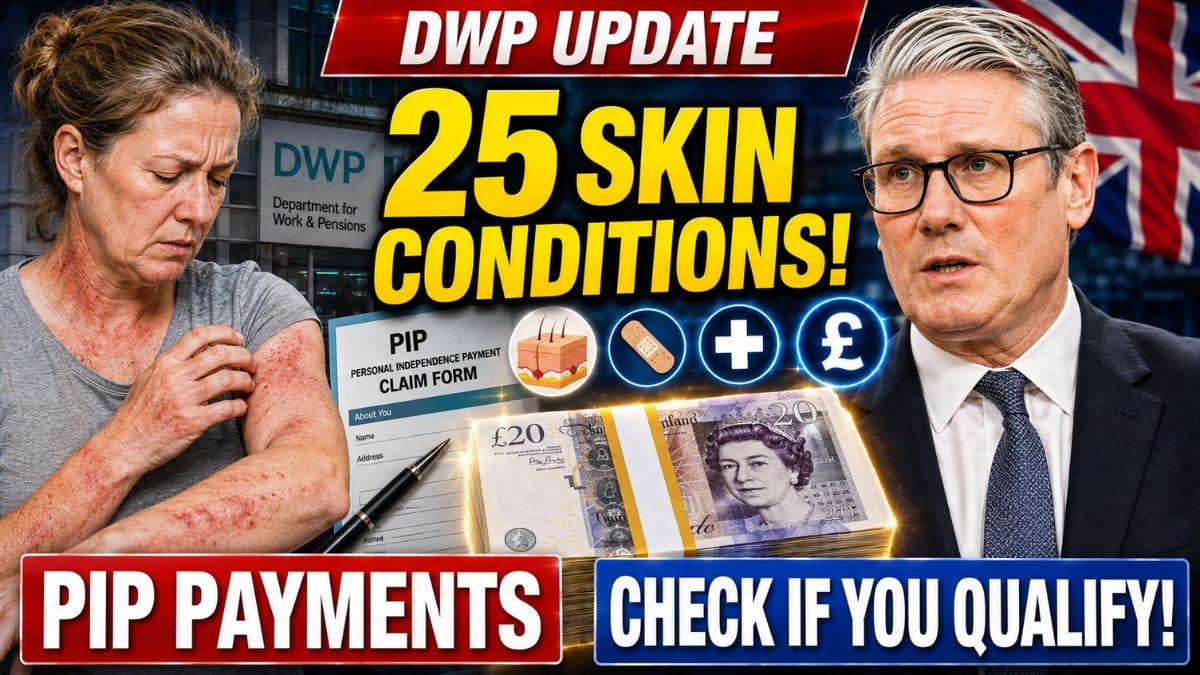
People living with certain long-term skin conditions may be eligible for Personal Independence Payment (PIP), according to the Department for Work and Pensions (DWP). The department has confirmed 25 skin conditions that appear in its latest PIP statistics, although eligibility is based on how a condition affects a person’s daily life rather than the diagnosis alone.
Government figures show there were 27,391 PIP claims linked to skin conditions as of April 2026. Across all health conditions, more than four million people were receiving PIP during the same period.
Personal Independence Payment (PIP) is a benefit designed to help people with the additional costs of living with a long-term disability, health condition, or terminal illness.
The payment is available to eligible people whether they are working or not. Awards are based on how a condition affects everyday activities and mobility, rather than the medical condition itself.
Although the DWP has identified 25 skin conditions within its latest data, the list is not a guarantee of entitlement.
Payment Rates
PIP consists of two separate components.
The daily living component helps with the extra costs of everyday activities, while the mobility component supports those who have difficulty getting around.
| PIP Component | Weekly Rate |
|---|---|
| Daily Living – Standard | £76.55 |
| Daily Living – Enhanced | Up to £114.80 |
| Mobility – Standard | £30.20 |
| Mobility – Enhanced | £80.10 |
Claimants may receive one or both components depending on how their condition affects them. The amount awarded depends on the outcome of the DWP assessment.
Eligibility
The DWP assesses how a health condition affects a person’s ability to carry out everyday tasks.
To qualify for PIP, claimants generally need to have experienced difficulties for at least three months and expect those difficulties to continue for at least nine more months. The condition must affect daily living or mobility on more than half of the days during a 12-month period.
The assessment focuses on practical challenges rather than the diagnosis itself.
Skin Conditions
The DWP’s latest statistics include the following skin conditions linked to PIP claims as of April 2026:
| Skin Condition | PIP Claims |
|---|---|
| Cellulitis | 913 |
| Impetigo | 0 |
| Infections – Other / Type Not Known | 332 |
| Acne vulgaris | 21 |
| Varicose eczema | 171 |
| Eczema (Dermatitis) | 1,519 |
| Papulosquamous and inflammatory rashes – Other | 956 |
| Psoriasis | 2,295 |
| Rosacea | 23 |
| Urticaria | 267 |
| Bullous disease – Other | 143 |
| Dermatitis herpetiformis | 51 |
| Epidermolysis bullosa | 324 |
| Pemphigoid | 32 |
| Pemphigus vulgaris | 34 |
| Blood vessels/lymphatics – Other diseases | 1,193 |
| Leg ulcers (arterial) | 642 |
| Leg ulcers (venous) | 1,122 |
| Lymphoedema | 6,447 |
| Pressure sores | 18 |
| Chronic venous insufficiency | 159 |
| Collagen and elastic tissue diseases – Other | 158 |
| Ehlers-Danlos syndrome | 7,386 |
| Burns | 767 |
| Skin disease – Other / Type Not Known | 2,399 |
Total PIP claims linked to skin conditions: 27,391
Assessment
Having one of these conditions does not automatically qualify someone for PIP.
Instead, the DWP considers how the condition affects activities such as washing, dressing, preparing food, managing medication, communicating, and moving around.
Supporting medical evidence, treatment records, and information from healthcare professionals may help explain how the condition affects daily life.
What Claimants Should Know
Many skin conditions can have a significant impact beyond visible symptoms. Chronic pain, severe itching, reduced mobility, infections, dressing changes, and mental health effects may all be considered during a PIP assessment if they affect day-to-day functioning.
People whose conditions make everyday tasks difficult most of the time may wish to review the official PIP eligibility rules, even if their diagnosis is uncommon or not specifically highlighted in DWP guidance.
Personal Independence Payment is based on how a long-term health condition affects a person’s daily living and mobility rather than the name of the condition itself. While the DWP has identified 25 skin conditions within its latest statistics, each claim is assessed individually. Anyone who believes their condition has a substantial impact on their independence may be eligible for support if they meet the assessment criteria.
FAQs
Can skin conditions qualify for PIP?
Yes. Eligibility depends on how the condition affects daily life.
Does having a listed condition guarantee PIP?
No. Every claim is assessed individually by the DWP.
What is the enhanced daily living rate?
The enhanced daily living rate is up to £114.80 per week.
How many skin conditions are listed by the DWP?
The latest DWP statistics include 25 skin conditions.