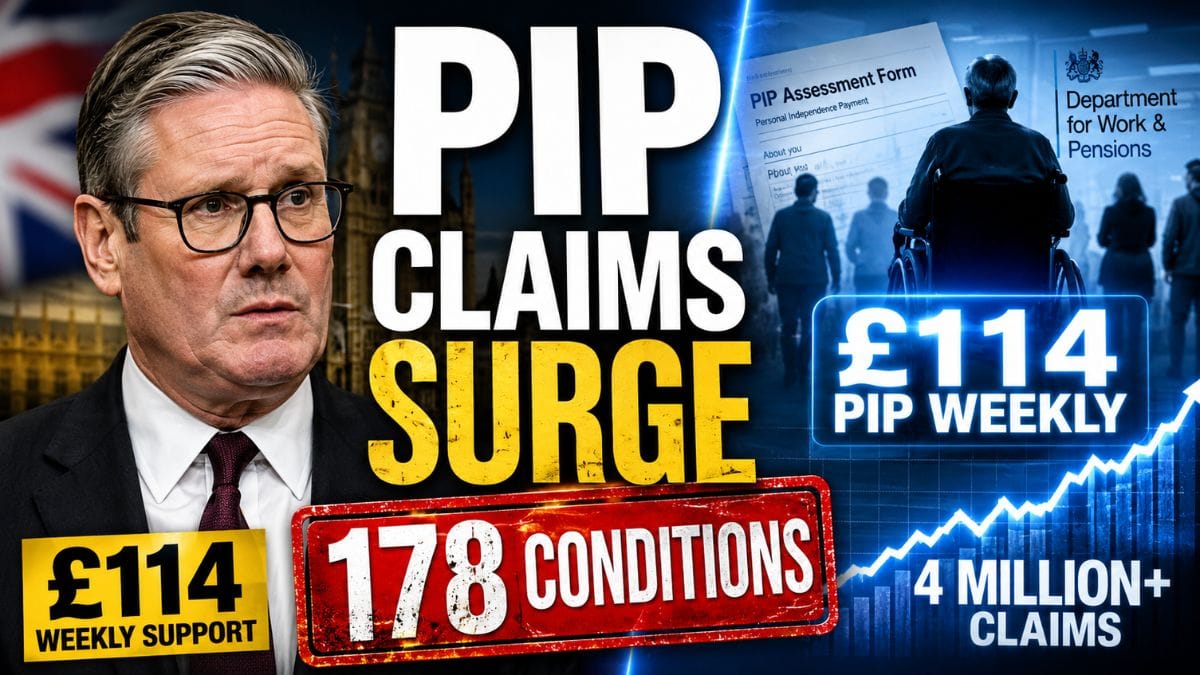
The Department for Work and Pensions (DWP) has released updated figures confirming that Personal Independence Payment (PIP) support in the UK now spans 178 recognised health condition categories. The data, published in April 2026 statistics, also shows that more than four million people are currently receiving the benefit, marking a continued rise in claims compared with earlier in the year.
PIP is designed to provide financial support to people living with long-term health conditions, disabilities, or progressive illnesses. It is not based on income or National Insurance contributions, and eligibility is determined by how a condition affects daily living and mobility rather than the diagnosis itself.
The latest figures show 4,010,098 PIP claimants as of April 2026, up from 3,926,015 in January. The increase reflects ongoing demand for disability-related support across a wide range of medical conditions, including both physical and mental health disorders.
The DWP confirms that there are 178 condition categories linked to PIP claims. These categories are used for statistical reporting and include a broad range of illnesses rather than acting as a strict eligibility checklist.
PIP is structured around two components:
- Daily living component, which supports help with everyday tasks such as cooking, washing, and managing medication
- Mobility component, which supports difficulties with getting around or planning journeys
Payment
PIP payments vary depending on the level of need assessed during a medical evaluation. The daily living component is paid at either a standard rate of £76.55 per week or an enhanced rate of £114.80 per week. The mobility component is paid at £30.20 per week for the standard rate or £80.10 per week for the enhanced rate.
When both components are awarded at higher levels, total weekly support can reach approximately £187, or around £748 per month.
| Component | Standard Rate | Enhanced Rate |
|---|---|---|
| Daily living | £76.55 | £114.80 |
| Mobility | £30.20 | £80.10 |
These payments are intended to offset additional costs associated with disability-related living needs.
Eligibility
Despite the list of 178 condition categories, PIP eligibility is not determined by diagnosis alone. Instead, assessments focus on how a condition impacts a person’s ability to carry out specific daily activities.
This means that individuals with the same condition may receive different outcomes depending on severity, symptoms, and functional limitations.
The system is also non-means-tested, meaning savings, employment status, or other benefits do not automatically affect eligibility.
Conditions
The DWP’s statistical breakdown shows claims distributed across a wide range of medical categories. Mental health conditions account for a significant proportion of claimants, including anxiety disorders, mood disorders, and stress-related conditions.
Physical health conditions such as musculoskeletal disorders, cardiovascular disease, and neurological conditions also represent large shares of claims. For example, osteoarthritis, specific back pain, and chronic pain syndromes are among the most commonly reported categories.
Other notable groups include:
- Autism spectrum disorders
- Learning disabilities
- Respiratory conditions such as COPD and asthma
- Neurological conditions including epilepsy and multiple sclerosis
- Cancer-related conditions across multiple types
The data highlights that PIP support covers a broad spectrum of long-term health impacts rather than being limited to a narrow set of diagnoses.
Trends
The rise in PIP claims reflects several long-term factors, including an ageing population, increased awareness of mental health conditions, and broader access to diagnostic services. Improvements in reporting and assessment processes may also contribute to higher recorded numbers.
While the list of 178 categories provides a statistical overview, it does not directly determine eligibility. Instead, it helps the government track the types of conditions associated with successful claims.
Context
PIP remains a key element of disability support in the UK welfare system. Its purpose is to help individuals manage additional costs associated with reduced independence, regardless of employment status or income level.
Because of the functional nature of assessments, eligibility decisions are based on daily living limitations rather than medical labels alone. This distinction is central to how the benefit operates in practice.
As claim volumes continue to rise, the DWP data provides a clearer picture of how widely the benefit is used across different health conditions and demographics.
The latest DWP figures confirm both the scale and diversity of Personal Independence Payment claims in the UK. With 178 condition categories and more than four million recipients, the data reflects a broad reliance on disability support across physical and mental health conditions. While the list outlines statistical groupings, eligibility continues to depend on individual assessments of how each condition affects daily life and mobility.
FAQs
How many conditions qualify for PIP?
DWP data lists 178 condition categories linked to claims.
How much is the highest PIP payment?
Up to £114.80 weekly for daily living plus mobility support.
Is PIP based on income?
No, it is not means-tested and depends on disability impact.
Do all people with the same condition get PIP?
No, eligibility depends on how the condition affects daily life.