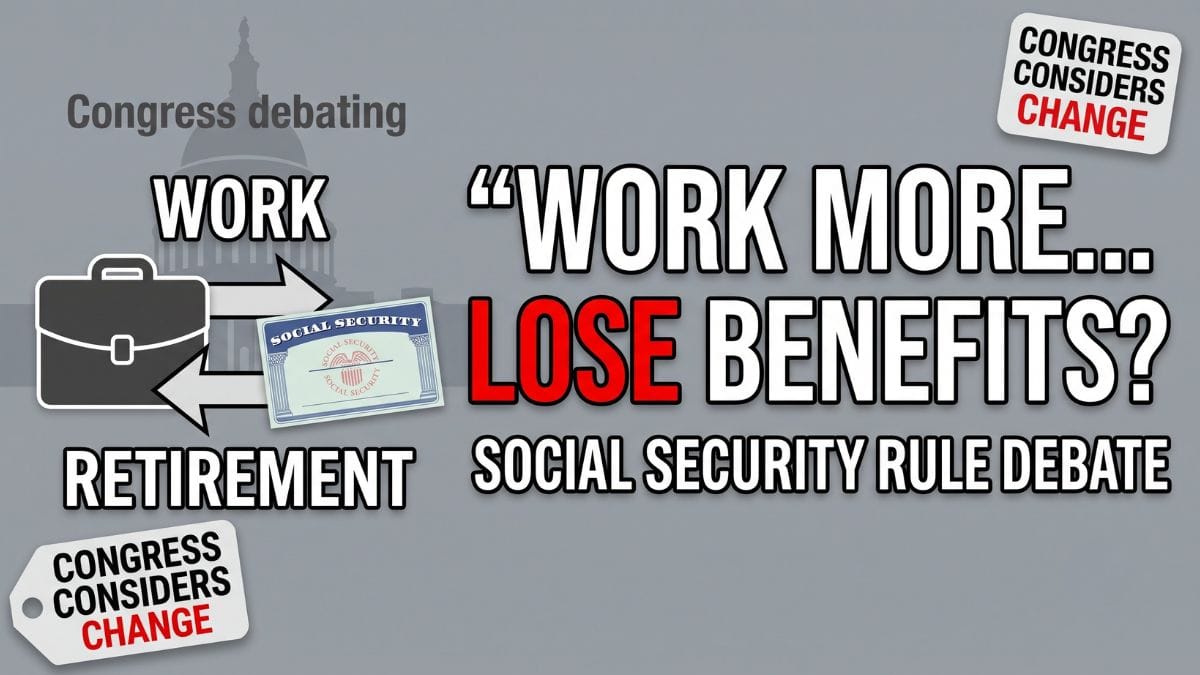
For many Americans, retirement no longer means a clean break from work. Rising living costs, longer life expectancy, and concerns about savings have pushed millions of older adults to remain employed while collecting Social Security benefits. This reality is now shaping a major policy debate in Washington, where lawmakers are considering whether to repeal a long-standing income rule tied to Social Security. Supporters argue the change would modernize the system, while critics caution it could weaken an already strained trust fund.
Shift
Over the past several decades, the traditional retirement model has steadily changed. Research from the Boston College Center for Retirement Research shows that 43% of Social Security beneficiaries combined employment income with retirement benefits at some point between 1992 and 2022. This trend suggests that Social Security is often used as a supplement rather than a sole source of income.
For many retirees, continued work has become a financial necessity. Part-time jobs, consulting roles, and extended careers help cover everyday expenses, healthcare costs, and inflation. This growing reliance on wages alongside benefits has placed renewed attention on how Social Security rules interact with modern work patterns.
Rule
One of the most debated provisions is the Retirement Earnings Test, commonly referred to as the RET. The rule applies to individuals who claim Social Security before reaching their Normal Retirement Age while continuing to work. If earnings exceed certain limits, part of their benefits is withheld.
For 2026, the Social Security Administration has set the following thresholds:
| Category | Earnings Limit | Withholding Rule |
|---|---|---|
| Below NRA | $24,480 | $1 withheld for every $2 over |
| Reaching NRA in 2026 | $65,160 | $1 withheld for every $3 over |
| After NRA | No limit | No withholding |
Once a beneficiary reaches their Normal Retirement Age, the earnings test no longer applies. At that point, wages of any amount can be earned without reducing monthly benefits.
Proposal
In April 2026, Representative Greg Murphy of North Carolina and Senator Rick Scott of Florida introduced the Senior Citizens’ Workplace Freedom Act. The bill proposes eliminating the Retirement Earnings Test entirely. Its stated goal is to allow older Americans to work without facing benefit reductions tied to their income.
Backers of the proposal say the current rule reflects outdated assumptions about retirement. Policy researchers such as Rachel Greszler from the Economic Policy Innovation Center argue that the RET can discourage continued participation in the labor force among older adults who are willing and able to work.
Appeal
From an individual perspective, repealing the RET could provide immediate financial relief. A beneficiary who claims Social Security early and continues working would be able to keep their full monthly benefit regardless of earnings. For households managing rising costs, that added income could make a meaningful difference.
Employers may also see advantages. Older workers often bring experience and stability, and removing income penalties could encourage more of them to remain employed, especially in sectors facing labor shortages.
Risk
However, the broader fiscal implications are a central concern. The Social Security Trust Fund is already under pressure due to demographic shifts, including an aging population and a smaller ratio of workers to beneficiaries. Current projections indicate that without changes, the system could face a 24% reduction in benefits by 2032.
Eliminating the Retirement Earnings Test would increase benefit payments in the near term. Analysts warn that this could accelerate the depletion of trust fund reserves, increasing the likelihood of sharper or earlier benefit reductions if no offsetting reforms are enacted.
Impact
The effects of such a change would extend beyond working retirees. While individuals who continue to earn wages might receive higher payments now, all beneficiaries could be affected later if the trust fund’s finances deteriorate further.
Non-working retirees, people with disabilities, and future beneficiaries would share the consequences of any system-wide shortfall. Younger workers paying payroll taxes today could ultimately face lower benefits than expected.
Dilemma
Lawmakers are therefore balancing two competing priorities. One is adapting Social Security rules to reflect modern work patterns among older Americans. The other is preserving the long-term financial stability of the program.
The debate highlights a broader challenge facing Social Security. Adjusting one rule in isolation may provide short-term relief for some, but it does not address the underlying funding gap. As Congress considers changes to the Retirement Earnings Test, the long-term health of the trust fund remains a central issue with implications for current and future retirees alike.
FAQs
What is the Retirement Earnings Test?
It withholds benefits if early claimers earn above set limits.
Who introduced the repeal proposal?
Rep. Greg Murphy and Sen. Rick Scott introduced the bill.
Does the RET apply after NRA?
No, earnings limits end after Normal Retirement Age.
Why is the Trust Fund under strain?
An aging population and funding gaps pressure the system.