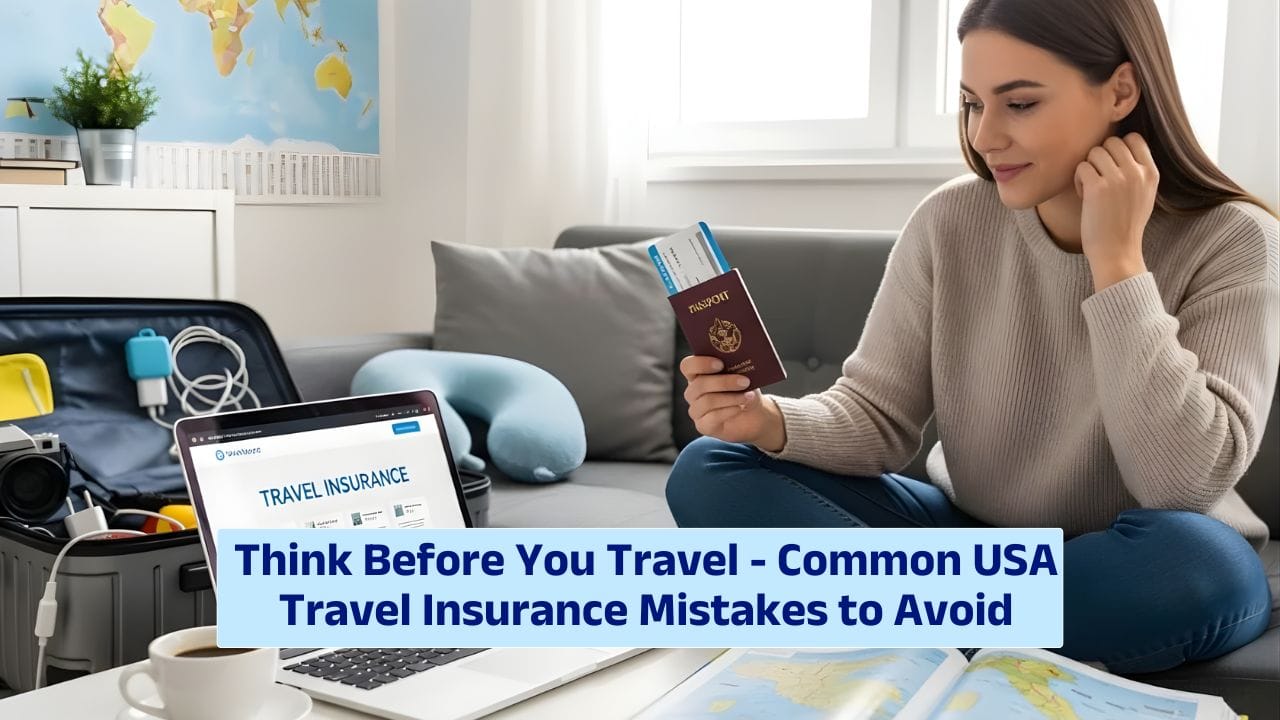
Planning a trip to the United States? Whether you’re visiting for a vacation, business, or study, travel insurance is a must-have. But just buying any policy isn’t enough—many travelers make simple yet costly mistakes that could leave them unprotected when it matters most.
In this guide, we’ll break down the most common travel insurance mistakes to avoid when heading to the USA, so you can enjoy peace of mind (and protect your wallet).
Underinsuring
One of the biggest mistakes? Buying the cheapest policy with low coverage limits. The U.S. has one of the highest healthcare costs in the world. A simple emergency room visit can cost thousands, and a hospital stay could wipe out your savings.
If your plan caps medical coverage at $10,000 or even $50,000, that may not be enough. For U.S. trips, aim for at least $100,000 in medical coverage, especially for longer stays. It’s better to be overprotected than underinsured.
Skipping Medical Coverage
Some travelers assume their home health insurance or credit card covers medical emergencies abroad. Bad idea.
Most domestic health plans won’t cover care outside your country, and credit card insurance (if available) is usually limited to trip cancellation or lost baggage. Always double-check what’s covered—and what’s not. If you don’t have emergency medical and evacuation benefits, get them.
Not Disclosing Pre-Existing Conditions
Here’s a sneaky one: not telling your insurer about existing medical issues. It might seem like a good way to keep premiums low, but if you fall sick due to a known condition, your claim can be denied.
Many insurers offer pre-existing condition waivers if you buy the policy soon after booking your trip (usually within 10–14 days). Be honest upfront—it could save you thousands later.
Buying Too Late
Leaving travel insurance as an afterthought? You’re not alone. But buying a policy too close to your departure—or worse, after something has already happened—limits your coverage.
Some benefits (like cancel-for-any-reason or pre-existing waivers) only apply if you purchase insurance within days of your first trip payment. Buy early to lock in maximum protection.
Ignoring the Fine Print
Travel insurance isn’t one-size-fits-all. Every policy has terms, exclusions, and conditions. Don’t just skim the summary—read the fine print.
For example, adventure sports, alcohol-related incidents, or pandemics may be excluded. Know exactly what your policy covers. If you’re planning activities like skiing, hiking, or scuba diving, make sure your plan includes hazardous sports coverage.
Overlapping Coverage
Think more insurance equals more protection? Not always.
Sometimes travelers buy multiple policies (like one from the airline and another from a third-party provider), thinking it increases coverage. In reality, it can cause claim delays or even cancellations due to duplicate coverage clauses.
Stick to one comprehensive policy that covers all your needs. And always review what your airline, credit card, or tour operator already provides before adding more.
Choosing the Wrong Provider
All travel insurance companies are not created equal. Choosing a provider without checking reviews, claim ratings, or customer service can cost you big.
Look for companies with strong reputations, 24/7 support, and good claim approval rates. Sites like Squaremouth or InsureMyTrip offer comparisons to help you choose wisely.
Ignoring Trip Cancellation Rules
Not all reasons for cancelling are covered. For example, cancelling because you changed your mind or your travel buddy bailed usually isn’t covered under standard cancellation.
To protect against unexpected changes, look for Cancel For Any Reason (CFAR) coverage. It costs more, but offers added flexibility—especially helpful for costly trips.
Overlooking Emergency Evacuation
If you’re traveling to remote areas of the U.S. (national parks, Alaska, etc.), you’ll want a policy that includes emergency evacuation and repatriation of remains.
These services can run tens of thousands of dollars and are often overlooked. Even if you’re going to popular areas, natural disasters or accidents could make evacuation necessary.
| Mistake | Why It Matters | Pro Tip |
|---|---|---|
| Underinsuring | U.S. healthcare is expensive | Minimum $100,000 medical cover |
| No medical coverage | Credit cards don’t cover health | Buy a medical-inclusive policy |
| Hiding pre-existing conditions | Claims may be denied | Get a pre-existing waiver |
| Buying late | Miss out on key benefits | Buy early, ideally within 14 days |
| Ignoring fine print | Exclusions can leave you exposed | Read full policy wording |
| Duplicate policies | Can cause claim issues | Choose one comprehensive plan |
| Wrong provider | Bad service = poor support in crisis | Check reviews & ratings |
| No CFAR option | Not all cancellations are covered | Upgrade if flexibility needed |
| No evacuation cover | Evacuation can be expensive | Ensure plan includes this |
Final Thoughts
Travel insurance isn’t just another checkbox—it’s your safety net. Avoiding these common mistakes can mean the difference between a smooth trip and a financial nightmare.
When planning your U.S. adventure, take the time to research, compare, and read the fine print. It may not be exciting, but it’s one of the smartest travel moves you can make.
FAQs
Do I need travel insurance for USA trips?
Yes, due to high U.S. healthcare costs, travel insurance is essential.
What is the ideal medical coverage for USA travel?
Aim for at least $100,000 in emergency medical coverage.
Is credit card insurance enough for USA trips?
Usually not. It often lacks full medical or evacuation coverage.
Can I buy travel insurance after booking?
Yes, but buy early for full benefits like cancellation and waivers.