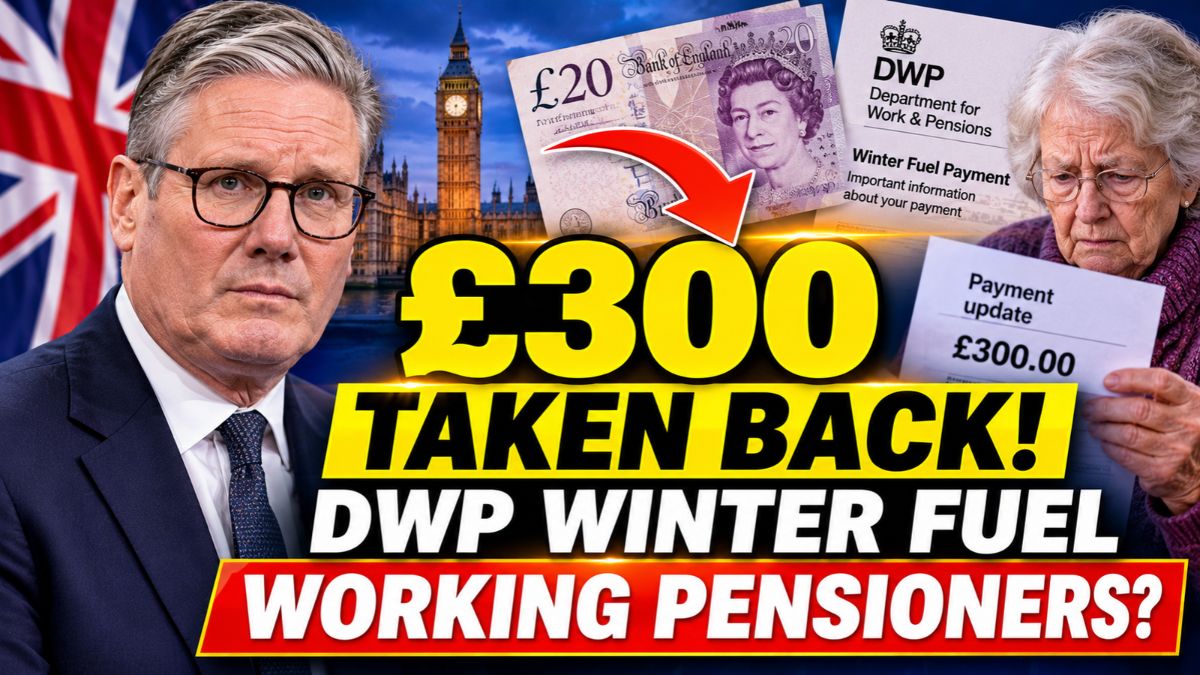
Millions of pensioners across England are beginning to receive their Winter Fuel Payments for winter 2026/27, with eligible households expected to receive between £100 and £300. The payments are intended to help older people manage heating costs during the colder months. However, not everyone who receives the money will necessarily be able to keep it.
One pensioner from Oxford, Kim Corbey, said she had been informed that her Winter Fuel Payment would be taken back because she was still working. Her experience highlights an important issue for pensioners who receive the payment while having other sources of income.
The Department for Work and Pensions (DWP) is distributing payments in stages throughout November and December. Most eligible pensioners do not need to submit an application because payments are normally made automatically. However, knowing the eligibility rules, payment arrangements, and possible recovery of payments is important for anyone expecting financial support this winter.
Payment
The Winter Fuel Payment is a government support scheme designed to help older people cover heating and energy expenses during winter.
For winter 2026/27, eligible households could receive between £100 and £300, depending on their age and household circumstances during the qualifying period.
People born on or before June 27, 1960, may qualify, subject to the applicable residence and other eligibility conditions.
Payments are being distributed in stages rather than on one nationwide payment date. Most eligible households in England should receive their money automatically during November or December.
The payment is generally transferred into the same bank account used for receiving a State Pension or other qualifying benefits.
Recovery
The case involving Kim Corbey has drawn attention to how Winter Fuel Payment eligibility can affect pensioners who continue working after reaching State Pension age.
Corbey told the Oxford Mail that she had been informed her payment was coming but would be recovered because she was still employed.
Her experience raises a wider question about whether pensioners with employment income can receive the full amount.
Importantly, continuing to work does not automatically make someone ineligible for Winter Fuel Payment. Under the income-related rules introduced for England and Wales, eligibility depends on factors including qualifying benefits and income.
Some pensioners may receive the payment initially but subsequently have it recovered through the tax system if their income exceeds the relevant threshold.
For the 2026/27 payment, pensioners should check the current official eligibility and income-recovery rules rather than assuming that employment alone means the payment will be taken back.
Eligibility
The payment is not available to every person who has reached State Pension age. Applicants must satisfy the relevant qualifying conditions during the specified qualifying week.
Age is one of the main requirements, but other circumstances can also affect eligibility.
These include:
- Being born on or before June 27, 1960.
- Meeting the applicable residence requirements.
- Satisfying the relevant eligibility conditions during the qualifying week.
- Meeting any applicable income-related rules.
The amount received can also depend on whether someone lives alone, shares a household with another eligible person, or lives with someone who receives certain benefits.
Pensioners should check the official GOV.UK Winter Fuel Payment guidance for the latest information about eligibility, payment amounts, and circumstances that may affect their entitlement.
Payments
Not everyone will receive their Winter Fuel Payment at the same time.
The DWP has confirmed that payments are being made throughout November and December. Therefore, pensioners who have not received their money in the middle of November should not automatically assume there is a problem.
Most eligible people should receive a letter explaining the amount they are due and the bank account into which the payment will be deposited.
The payment is usually made automatically, meaning most pensioners do not need to complete a separate application.
However, anyone who has not received a letter or payment by January 27, 2027, should contact the Winter Fuel Payment Centre to investigate the situation.
The government’s official payment guidance provides information about when to expect the money and what to do if a payment is missing.
Reactions
Pensioners have expressed different views about the financial support, particularly as household energy expenses continue to affect retirement budgets.
Margaret Watts said her payment was on the way but would quickly be spent because of increasing fuel costs.
Barbara Jones, meanwhile, said she had received her letter and welcomed the additional support, explaining that it would allow her to keep her heating on for longer during cold weather.
These responses reflect the importance of winter assistance for older households. For pensioners living on fixed incomes, even a relatively modest payment can help cover essential expenses.
However, the amount may not be sufficient to meet an entire winter’s heating costs, especially for people living in poorly insulated properties or homes that require more energy to maintain comfortable temperatures.
Savings
Energy expenses remain a significant concern for older households, particularly during periods of colder weather.
Gordon Wallis, an energy expert at Your NRG, said the Winter Fuel Payment could provide useful financial support but encouraged pensioners to consider ways to make their heating budgets last longer.
Simple home improvements can help reduce heat loss and improve energy efficiency.
For example, pensioners can consider:
- Closing curtains during the evening to reduce heat loss.
- Sealing gaps around doors and windows.
- Using draught excluders where appropriate.
- Keeping radiators clear of furniture.
- Maintaining heating systems regularly.
- Checking whether their property qualifies for energy-efficiency assistance.
These measures may help reduce unnecessary energy consumption without requiring households to compromise on essential heating.
Older people should also avoid switching off heating completely when temperatures become particularly low, especially if they have health conditions that make them more vulnerable to cold weather.



Support
Pensioners who believe they qualify but have not received their payment should first check their eligibility and look for correspondence from the DWP.
If the payment has not arrived by January 27, 2027, contacting the Winter Fuel Payment Centre is the recommended next step.
It is also important to understand that receiving a payment does not always mean the recipient will ultimately keep the full amount. Income-related recovery rules may apply in certain circumstances, so pensioners with employment income or other taxable income should review the relevant guidance.
The Winter Fuel Payment remains an important source of seasonal assistance for eligible older households. However, the experience of pensioners such as Kim Corbey shows why understanding the rules is just as important as knowing when the money will arrive. Checking eligibility, reviewing income circumstances, and planning heating expenses can help pensioners avoid unexpected financial difficulties during winter.