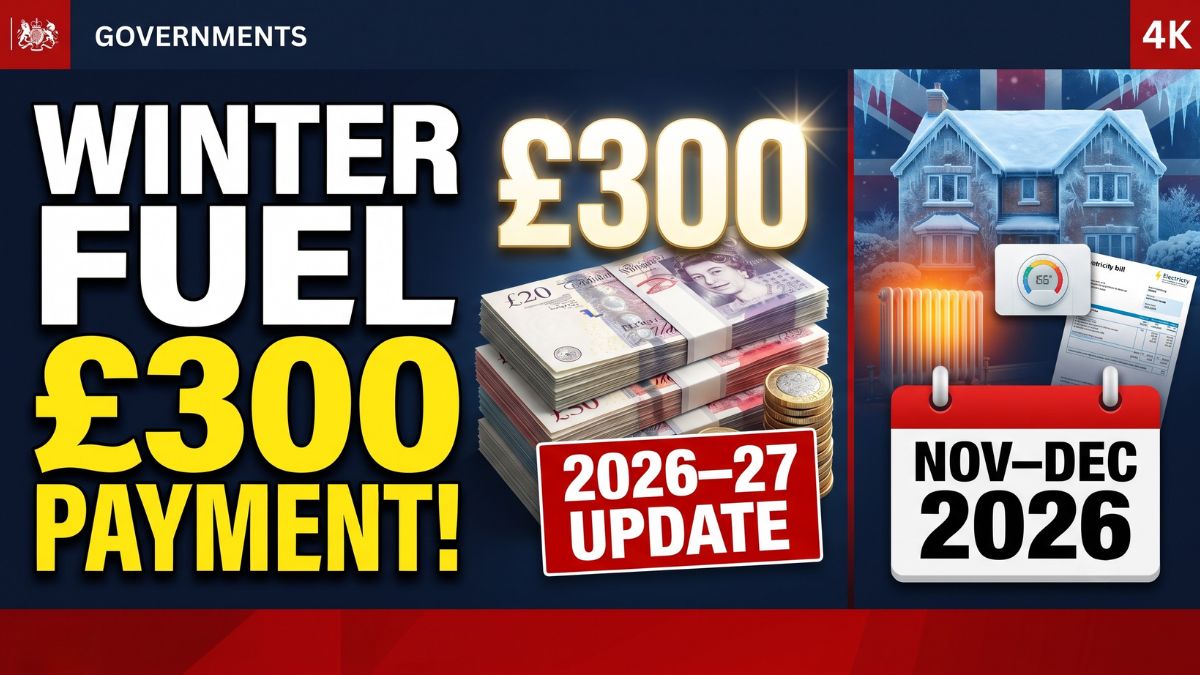
The UK Department for Work and Pensions (DWP) has outlined the arrangements for the 2026-27 Winter Fuel Payment, which helps eligible pensioners manage heating bills during the colder months. Depending on a person’s age, living arrangements and benefit status, the payment could range from £100 to £300.
For many older households, the payment can help cover part of the cost of heating, electricity and other essential winter expenses. Knowing when the money is expected, who qualifies and how the amount is calculated can help pensioners plan their budgets before temperatures fall.
The payment is generally made automatically to eligible recipients, with most payments expected during November and December 2026. However, the exact amount depends on individual circumstances during the qualifying week, which runs from September 21 to September 27, 2026.
Dates
The DWP typically issues Winter Fuel Payments during November and December. Eligible pensioners should receive a letter explaining their payment before the money arrives in their bank account.
Payments are generally sent to the same bank account used for regular benefits or pension payments. Recipients should check their bank statements and any correspondence from the DWP if they are unsure whether a payment has been processed.
The key dates for the 2026-27 payment are:
| Important detail | Date or period |
|---|---|
| Qualifying week | September 21-27, 2026 |
| Expected payment period | November-December 2026 |
| Date to check if payment is missing | January 27, 2027 |
| Payment amount | £100-£300, depending on circumstances |
If the payment has not arrived by January 27, 2027, eligible pensioners should contact the Winter Fuel Payment Centre or use the government’s official guidance to report a missing payment.
You can find the relevant information on the official GOV.UK Winter Fuel Payment page.
Eligibility
Eligibility for the Winter Fuel Payment depends on age, residence and other circumstances. For the 2026-27 payment, the information provided states that a person must have been born on or before June 27, 1960, to meet the age requirement.
The qualifying week is important because the DWP uses a person’s circumstances during this period to determine eligibility and the amount payable.
Living arrangements also matter. A pensioner living alone may receive a different amount from someone sharing a home with another eligible person. Whether either person receives certain means-tested benefits can further affect how the payment is allocated.
Eligible people generally do not need to submit a new claim if they already receive qualifying benefits or have previously received the payment automatically. However, individual circumstances can differ, so pensioners should check the official rules rather than assume that a previous payment guarantees eligibility in every situation.
Amounts
The Winter Fuel Payment can range from £100 to £300, depending on age and household circumstances. The amount is not the same for every pensioner because the DWP takes account of the ages of eligible people living together and whether certain benefits are received.
For people living alone, or those who live with someone who is not eligible for the payment, the stated amounts are:
| Date of birth | Potential payment |
|---|---|
| September 28, 1946, to June 27, 1960 | £200 |
| Before September 28, 1946 | £300 |
These figures illustrate the payment levels described for the 2026-27 scheme. Other rules apply to households in which more than one person qualifies.
A payment can help with winter energy expenses, but it is not necessarily intended to cover a household’s entire heating bill. Actual energy costs will depend on the property, heating system, weather and the amount of time spent at home.
Households
For pensioners who live with another eligible person, the calculation can be more complicated. The DWP considers the ages of both people and whether either person receives certain qualifying benefits.
If neither person receives the relevant benefits, the stated payment arrangements include the following amounts:
| Household circumstances | Potential payment |
|---|---|
| Both born between September 28, 1946, and June 27, 1960 | £100 |
| One born in that period and the other before September 28, 1946, with the younger person meeting the stated conditions | £100 |
| One born before September 28, 1946, and the other in the later qualifying period | £200 |
| Both born before September 28, 1946 | £150 |
The exact payment depends on the applicable household rules, so these categories should be checked against the official DWP guidance before drawing conclusions about an individual payment.
For couples who jointly claim certain qualifying benefits, one person may receive the payment on behalf of the household. The stated amounts are £200 when both partners were born between September 28, 1946, and June 27, 1960, and £300 when one or both were born before September 28, 1946.
Where someone receives a qualifying benefit individually rather than through a joint claim, the stated payment is £200 for those born in the later qualifying period and £300 for those born before September 28, 1946.
These arrangements are designed to account for household circumstances and avoid treating every person living at the same address in the same way.
Benefits
Receiving certain benefits can affect how the Winter Fuel Payment is calculated. The benefits identified in the scheme information include Pension Credit, Universal Credit and income-related Employment and Support Allowance (ESA).
A pensioner who receives one of these benefits may qualify under a different payment arrangement from someone who does not receive them. Joint claims can also affect whether a payment is made to one partner on behalf of both people.
Pensioners should not assume that receiving a particular benefit automatically means they will receive the maximum payment. Age, household circumstances and the specific benefit arrangement remain relevant.
Those who are uncertain about their entitlement should review their benefit details and consult the government’s guidance. Checking the rules early can help identify any information that may need to be updated before payments are issued.
Carehomes
People living in care homes may qualify for a different payment amount, depending on their age and circumstances.
Under the payment details provided, eligible care-home residents could receive £100 if they were born between September 28, 1946, and June 27, 1960, or £150 if they were born before September 28, 1946.
Care-home residents should check the specific eligibility conditions because residence and benefit status can affect entitlement. Not every person living in a care home will necessarily qualify.
The relevant rules are available through the official Winter Fuel Payment guidance on GOV.UK, which explains how different living arrangements can affect eligibility.
Missing
If a pensioner believes they qualify but has not received a letter or payment, the first step is to check their bank account and any correspondence from the DWP.
The department generally aims to make payments during November and December. If the money has not arrived by January 27, 2027, the recipient should contact the Winter Fuel Payment Centre or follow the instructions for reporting a missing payment.
It is useful to have personal details and information about any qualifying benefits available when making an enquiry. This can help the relevant team establish whether the payment has been issued or whether further checks are required.
Pensioners should use official government contact details and avoid sharing sensitive financial information with unverified callers or websites.
Planning
The Winter Fuel Payment can provide additional support for older households facing higher heating costs during winter. However, the amount varies, and pensioners should confirm their own eligibility rather than relying solely on general payment examples.
Those expecting a payment can plan around the usual November and December distribution period while keeping an eye on official correspondence. Anyone who has not received the money by January 27, 2027, should follow the DWP’s missing-payment process.
Knowing the qualifying week, age requirements and household payment rules can help pensioners establish what they may receive. The official GOV.UK guidance remains the best source for confirming eligibility and resolving questions about an individual claim.
FAQs
When will the 2026 Winter Fuel Payment arrive?
Most eligible payments are expected in November and December 2026.
How much is the Winter Fuel Payment?
The amount can range from £100 to £300, depending on circumstances.
What is the qualifying week for 2026?
The qualifying week runs from September 21 to September 27, 2026.
What if my Winter Fuel Payment does not arrive?
Contact the Winter Fuel Payment Centre if it is missing by January 27, 2027.