Social Security payments follow a regular monthly schedule, but not every beneficiary receives a payment on the same day. For most retirement, disability and survivor beneficiaries, the payment date depends on the day of the month they were born.
In October 2026, payments for most beneficiaries will be issued on the second, third and fourth Wednesdays of the month. SSI recipients and some people who began receiving Social Security before May 1997 follow different payment arrangements.
Knowing which schedule applies can help you determine when your benefit is due and what to check if a payment does not appear as expected.
Eligibility
Social Security retirement benefits are generally available to people who are at least 62 and have accumulated enough work credits. In many cases, that means earning 40 credits, which can represent roughly 10 years of work, although the exact requirements depend on a person’s circumstances.
Social Security also provides benefits to certain people with disabilities, as well as eligible family members and survivors. Spouses, former spouses, children and other qualifying family members may receive benefits based on another worker’s record.
The eligibility rules vary by benefit type. The Social Security Administration’s official benefits page provides information about retirement, disability, survivors and other Social Security programs.
Schedule
For most people who started receiving Social Security after April 1997, the monthly payment date is linked to their birth date.
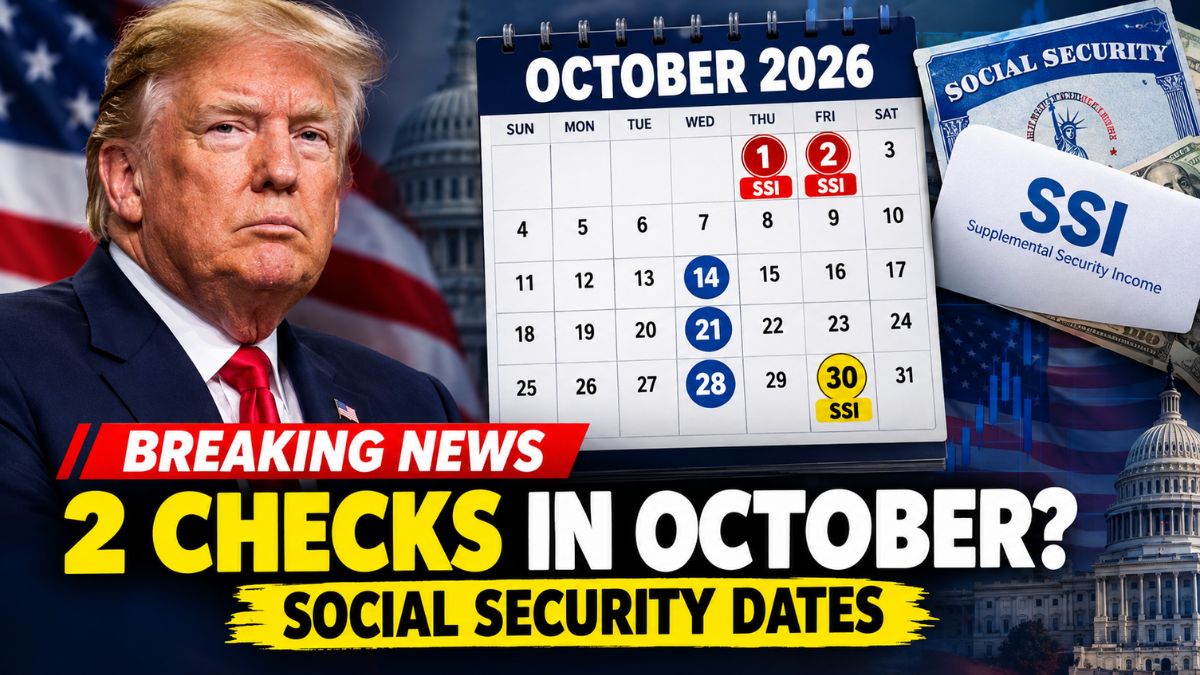
The October 2026 schedule is:
| Birthday | October 2026 payment date |
|---|---|
| 1st-10th | October 14 |
| 11th-20th | October 21 |
| 21st-31st | October 28 |
Beneficiaries born between the 1st and 10th generally receive their payment on the second Wednesday. Those born between the 11th and 20th generally receive theirs on the third Wednesday, while people born between the 21st and 31st generally receive their payment on the fourth Wednesday.
The SSA publishes a complete annual calendar in its official Social Security payment schedule.
Exceptions
The Wednesday schedule does not apply to every Social Security recipient.
People who started receiving Social Security before May 1997 generally follow an older payment arrangement. Their Social Security benefit is generally scheduled for the third day of the month. When that date falls on a weekend or federal holiday, the payment is generally moved to the preceding business day.
For October 2026, Oct. 3 falls on a Saturday. As a result, the payment for beneficiaries covered by that schedule is generally due on Friday, Oct. 2.
SSI follows another schedule. Supplemental Security Income is generally paid on the first day of the month. Because Oct. 1, 2026, falls on a Thursday, the October SSI payment is scheduled for Oct. 1.
People who receive both SSI and Social Security can have payments arriving on different dates, so it is important to identify which benefit a particular payment represents.
Electronic
Most federal benefit payments are delivered electronically rather than through traditional paper checks.
The federal government generally requires federal benefit payments, including Social Security and SSI, to be made electronically, with limited exceptions. Beneficiaries can generally receive their money through direct deposit or an eligible electronic payment option.
The SSA’s electronic payment information explains the available arrangements and how beneficiaries can manage their payment method.
Electronic payments can make the payment process more predictable, but the precise time a deposit becomes visible can vary by financial institution. A beneficiary may therefore see funds at a different time of day than another person whose payment has the same official payment date.
Delays
If someone you know has already received a Social Security payment but yours has not appeared, that does not automatically mean there is a problem. Beneficiaries are assigned different payment dates, so two people can receive their monthly benefits on different Wednesdays.
If your scheduled payment date has passed, the first step is to check with your bank or financial institution to determine whether there has been a posting delay.
It is also worth checking that the Social Security Administration has the correct bank account and personal information. Beneficiaries can review certain information through their online SSA account.
For unresolved payment issues, the SSA can be contacted at 800-772-1213. People who are deaf or hard of hearing can call 800-325-0778.
Account
A my Social Security account provides a personalized way to review information connected with your Social Security benefits.
Depending on your circumstances, the account can be used to review benefit information, check the status of an application, estimate future benefits, access tax documents and manage certain personal details.
The official my Social Security portal is available through the SSA website. Creating an account can also be useful for people who are not yet receiving benefits but want to review their Social Security information.



Applying
People who want to claim Social Security retirement benefits can generally apply online through the SSA or contact the agency for assistance. The application allows you to select when you want your benefits to begin, subject to the program’s eligibility and filing rules.
The timing of a first payment can differ from the regular monthly schedule. After an application is processed, the SSA sends information explaining whether the claim has been approved and when benefits are expected to begin.
For that reason, people approaching retirement should not assume that submitting an application immediately produces a payment. Processing time, the selected benefit start date and individual circumstances can all affect when the first benefit is issued.
The October schedule is therefore only part of the picture. For most current beneficiaries, the key dates are Oct. 14, Oct. 21 and Oct. 28, depending on their birthday. SSI recipients and people covered by older Social Security payment rules should use the applicable schedule instead. Checking the official SSA calendar and personal account can help beneficiaries distinguish a normal payment date from a genuine delay.