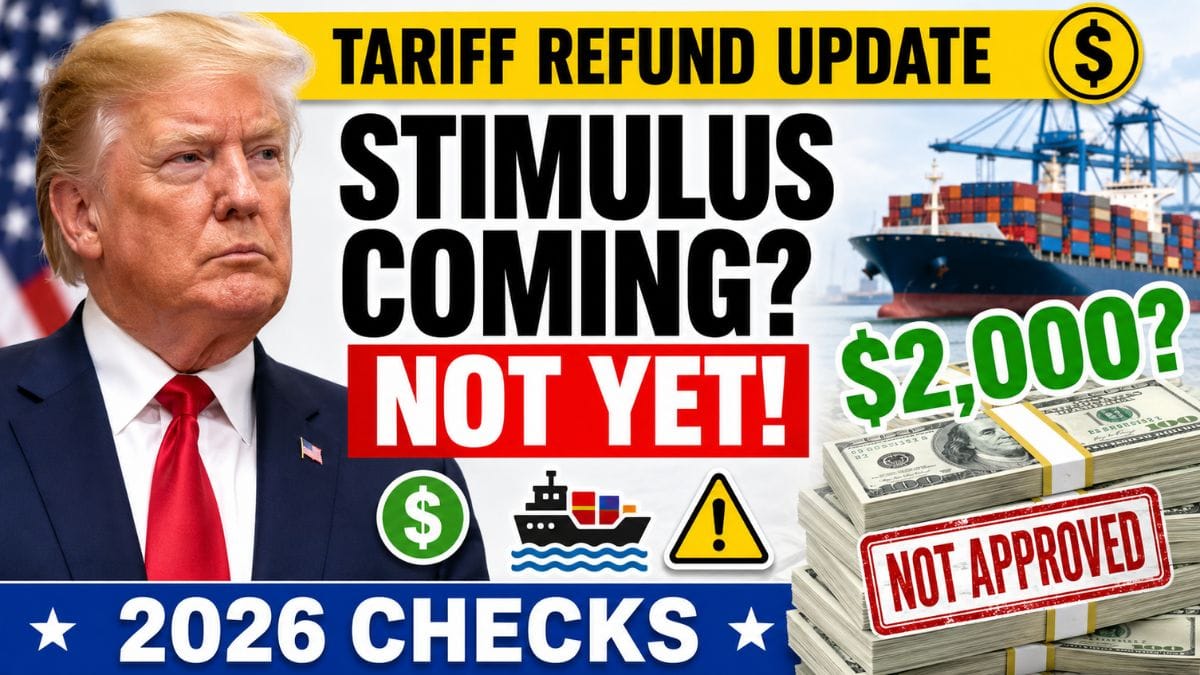
Questions about a possible stimulus check in 2026 are gaining attention as the federal government begins processing tariff refunds connected to import taxes collected in recent years. Some Americans have seen claims online about a $2,000 payment or household rebate, while others are hearing about companies returning tariff-related charges to customers.
At the center of the discussion is a court decision involving tariffs imposed under the International Emergency Economic Powers Act (IEEPA). While tariff refunds are now moving forward through the U.S. Customs and Border Protection (CBP) system, the current payments are mainly directed toward businesses and importers that originally paid the tariffs.
For consumers, the situation remains uncertain. Several proposals for direct household rebates exist, but none have been approved by Congress or implemented by the IRS.
Background
The current tariff refund process stems from a Supreme Court ruling issued in February 2026. The ruling determined that certain tariffs imposed under IEEPA were not legally valid. As a result, the U.S. Court of International Trade and CBP were directed to oversee the refund process for eligible claims.
To manage the process, CBP launched the Consolidated Administration and Processing of Entries system, commonly known as CAPE, on April 20, 2026. The first electronic refund payments are scheduled to begin on May 12, 2026.
These refunds involve businesses that paid import duties on goods entering the United States during the affected tariff periods.
Process
The refunds currently being issued are not direct payments to individual consumers. Instead, they are intended for importers, customs brokers, shipping companies, and businesses that submitted approved claims through CBP.
Only tariffs collected under IEEPA qualify for this refund process.
The table below outlines the current eligibility structure:
| Group | Eligible for Refunds |
|---|---|
| Importers | Yes |
| Customs brokers | Yes |
| Shipping and logistics firms | Yes |
| Individual consumers | No |
| General taxpayers | No |
This distinction is important because consumers may have indirectly paid higher prices caused by tariffs, but they were not the entities that directly paid the duties to the federal government.
Consumers
Many households experienced increased prices during the years tariffs were in effect. Imported products and materials often became more expensive, leading some companies to pass costs on to customers.
Products affected by tariff-related price increases included:
- Groceries
- Electronics
- Household appliances
- Building materials
- Vehicles and auto parts
- Fuel and energy products
Because of these higher prices, some lawmakers argue that consumers should receive a portion of the refunded tariff money.
However, there is currently no federal program that provides direct tariff refund payments to households.
Proposals
Several proposals have been introduced at the federal and state levels, though none have become law.
One of the most discussed measures is the American Consumer Tariff Rebate Act of 2026, introduced by Representative Henry Cuellar of Texas. The proposal would provide rebates of up to $2,040 per household.
According to Cuellar, tariffs functioned similarly to indirect taxes because businesses often transferred added costs to consumers through higher retail prices.
Other state leaders have also raised the issue of consumer refunds. Governors including Gavin Newsom of California, Maura Healey of Massachusetts, and JB Pritzker of Illinois have supported efforts calling for financial relief tied to tariff-related costs.
The table below summarizes the major proposals currently being discussed:
| Proposal | Status | Potential Payment |
|---|---|---|
| Trump tariff dividend proposal | Not approved | Around $2,000 |
| Consumer Tariff Rebate Act | Proposed in Congress | Up to $2,040 |
| State-level refund initiatives | Under discussion | Varies by state |
At this stage, none of these proposals have received congressional approval or IRS authorization.
Companies
Some companies have announced plans to voluntarily return tariff-related refunds to customers if they receive reimbursement from the federal government.
FedEx stated that if tariff refunds are issued to the company, it intends to return those amounts to shippers and customers who originally absorbed the added costs.
UPS also discussed tariff refunds during a recent investor call. Company executives said UPS had collected billions in tariff-related charges from customers and may issue refunds tied to those fees.
These company decisions are separate from any federal stimulus or rebate program. Refund eligibility, amounts, and timing would depend on each company’s own policies.
Politics
The debate surrounding tariff refunds has similarities to previous discussions about pandemic stimulus checks.
During the COVID-19 pandemic, the federal government issued three rounds of direct stimulus payments to qualifying Americans. Those programs were approved through congressional legislation and administered by the IRS.
The current tariff refund situation is different because the refunds are tied to import duties collected from businesses rather than direct household taxation.
Some political leaders support expanding refunds to consumers, arguing that households ultimately paid the economic cost of tariffs through higher prices. Others remain cautious about creating a broad rebate program without additional legislation and funding approval.
As of now, Congress has not passed a nationwide tariff rebate bill.
Timeline
The following timeline highlights the key developments in the tariff refund process:
| Date | Event |
|---|---|
| February 2026 | Supreme Court ruling issued |
| April 20, 2026 | CAPE refund system launched |
| May 12, 2026 | First refund wave begins |
Any future consumer payment program would likely require several additional steps, including:
- Congressional approval
- Federal funding authorization
- IRS implementation and distribution
None of these steps have been completed at this time.
Outlook
At present, Americans are not scheduled to receive a new federal stimulus check or automatic tariff refund payment in 2026. The ongoing refund process applies mainly to businesses and importers that directly paid tariffs under IEEPA.
Although lawmakers continue discussing consumer rebates and some companies have pledged to return recovered funds to customers, there is no approved national program for direct household payments. Consumers should rely on official government announcements and avoid assuming that online claims about automatic $2,000 checks are confirmed.
FAQs
Is a 2026 stimulus check approved?
No federal stimulus payment is approved yet.
Who qualifies for tariff refunds?
Importers and businesses with approved claims.
Can consumers receive tariff rebates?
No nationwide consumer rebate exists currently.
When do tariff refund payments begin?
The first payments begin on May 12, 2026.