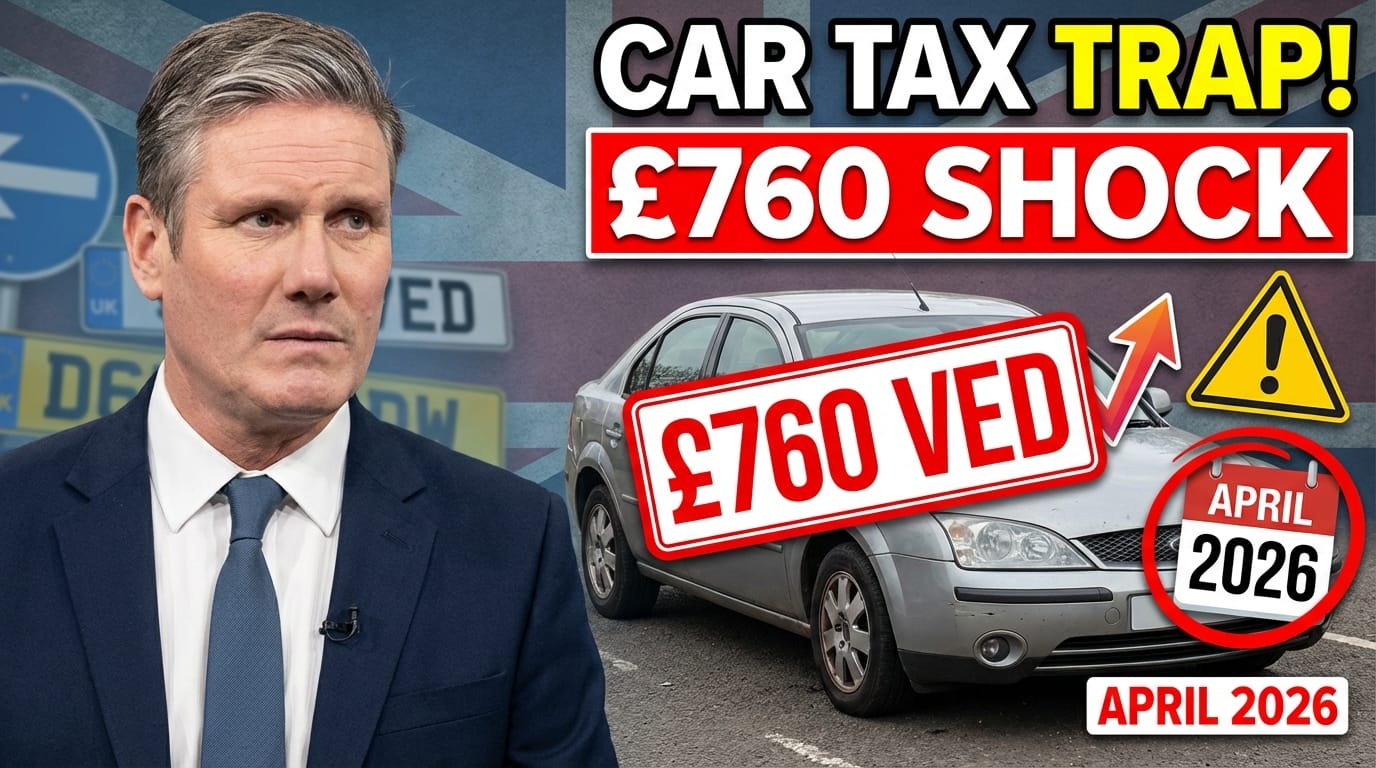
A growing petition is calling on the Government to address what campaigners describe as a Vehicle Excise Duty “tax trap” affecting thousands of cars built between the early 2000s and mid-2010s. With VED rates set to rise again in April 2026, support is increasing for a proposed 50 percent discount for vehicles aged 20 to 39 years.
The petition has surpassed 21,000 signatures, requiring the Treasury to issue a formal response. If it reaches 100,000 signatures, it will trigger a parliamentary debate.
The Trap
Under current rules, vehicles over 40 years old qualify for VED exemption on a rolling basis. From 1 April 2026, any vehicle built before 1 January 1986 will be tax exempt.
However, cars built roughly between 2001 and 2017 face emission-based taxation. Higher-emission vehicles fall into the most expensive bands, with rates rising again in April 2026.
| CO2 Emissions | Current Rate | April 2026 Rate |
|---|---|---|
| 201–225g/km | £430 | £445 |
| 226–255g/km | £735 | £760 |
| Over 255g/km | £750 | £790 |
Campaigners argue that vehicles emitting more than 225g/km are effectively being priced off the road, as annual tax bills can exceed the market value of the car itself.
Affected Models
The issue is not limited to high-end SUVs or sports cars. A number of mainstream models are affected.
| Model | Annual VED |
|---|---|
| Saab 900 Convertible | £735 |
| Land Rover Freelander 2 i6 | £760 |
| Audi TT 1.8T | £735 |
| Ford Galaxy 2.3 | £735 |
| Jaguar X-Type 2.0 Auto | £735 |
| Subaru Forester 2.5 XT | £735 |
| Volkswagen Golf R32 | £760 |
| Chrysler PT Cruiser | £735 |
| Vauxhall Zafira VXR | £735 |
| Ford Mondeo V6 | £735 |
Industry specialists warn that some of these cars are becoming virtually unsellable in the UK, as owners are reluctant to pay several hundred pounds annually for vehicles worth only a few thousand pounds.
Petition Proposal
The petition, launched by Heitor Mazzotti, calls for a 50 percent VED reduction for cars aged 20 to 39 years. The proposal aims to create a “Young-Timer” bracket to bridge the gap between modern cars and historic classics.
Supporters argue that:
- Manufacturing a new car creates significant carbon emissions
- Extending the life of existing vehicles reduces embedded carbon waste
- High VED rates encourage premature scrappage
Environmental analysis suggests that building a medium-sized new vehicle can generate around 17 tonnes of CO2e. Extending a car’s lifespan from 100,000 to 200,000 miles could reduce lifetime emissions per mile by up to 50 percent by spreading manufacturing emissions over greater usage.
Broader Tax Structure
Pre-2001 vehicles are taxed based on engine size rather than emissions.
| Engine Size | Annual VED |
|---|---|
| Up to 1,549cc | £229 |
| Over 1,549cc | £360 |
Vehicles registered between March 2001 and 23 March 2006 have their maximum rate capped at Band K, currently £430. Later registrations fall under higher emission-based bands.
From April 2026, additional changes include:
| CO2 Band | New Rate |
|---|---|
| 121–130g/km | £170 |
| 131–140g/km | £200 |
| 151–165g/km | £275 |
| 176–185g/km | £360 |
| 186–200g/km | £410 |
Lower-emission vehicles under 110g/km remain at £20 per year.
Industry Reaction
Dealers specialising in early-2000s vehicles report growing challenges.
Wayne Lamport of Stone Cold Classics in Kent said cars such as the Jaguar X-Type or Chrysler PT Cruiser are increasingly difficult to sell once buyers factor in annual tax costs exceeding £700.
He noted that within a few years, owners can spend more on VED than the vehicle’s market value.
Environmental Debate
Supporters of reform argue that scrapping functional vehicles contributes to a “disposable” car culture. They contend that maintaining and repairing existing cars supports the circular economy and reduces environmental impact.
Critics, however, maintain that emission-based taxation encourages cleaner vehicles and supports climate goals.
Outlook
With rates rising again in April 2026 and public backing growing, pressure is mounting on the Treasury to clarify its position. Whether the Government introduces a transition discount for 20–39-year-old vehicles remains uncertain.
For now, motorists owning higher-emission models built after 2001 face increasing annual costs, while campaigners push for a policy shift balancing environmental targets with vehicle preservation.