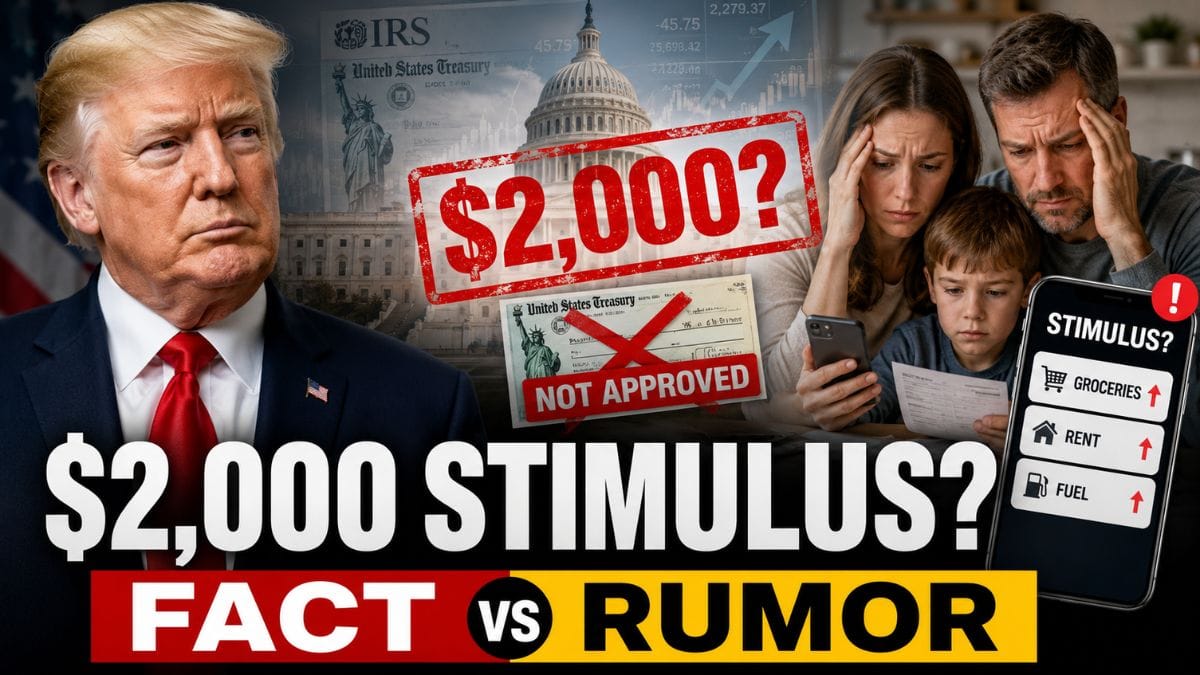
The idea of another stimulus check has started circulating again across headlines and social media, with claims of possible $2,000 or even $3,000 payments. For many households still dealing with higher grocery bills, rent, and fuel costs, these reports naturally attract attention. However, when separated from ongoing policy discussions, there is no approved federal stimulus program for 2026. Most references currently circulating are based on proposals rather than enacted legislation.
Stimulus
Discussion around $2,000 stimulus checks is largely a continuation of earlier pandemic-era policy expectations. During COVID-19, the federal government issued multiple rounds of direct payments as part of emergency economic relief. Those measures created a long-lasting reference point for households when new economic proposals are discussed.
At present, no similar emergency legislation exists. While some policymakers have raised the idea of new forms of direct relief, none of these discussions have advanced through Congress in a way that would establish a payment schedule or eligibility rules.
Tariffs
One of the main origins of the current $2,000 figure is tied to past proposals involving tariffs. At one stage, policymakers considered whether revenue collected from import tariffs could be redistributed to households in the form of direct payments, sometimes described as dividend-style rebates.
Early estimates associated with these discussions suggested payments around $2,000 for qualifying households. However, this approach has since been disrupted. A court ruling found that the broad tariff actions linked to the proposal were not legally valid under existing authority.
As a result, approximately $166 billion in tariff-related collections is now being redirected back to importers rather than being considered for household payments. Without that funding mechanism, the proposal has not progressed further.
States
Some state-level policymakers have continued to explore targeted relief ideas, particularly in response to inflation and higher consumer costs. In several states, officials have discussed whether rebates or limited financial assistance programs could be introduced.
These discussions vary by state and remain at the proposal stage. No broad, coordinated state-level stimulus program has been implemented to replace federal payments. Any potential measures would depend on state budgets and legislative approval processes.
IRS
The Internal Revenue Service has maintained a clear distinction between tax refunds and stimulus payments. Tax refunds are issued when taxpayers have overpaid their taxes during the year, while stimulus payments require separate authorization through federal legislation.
At this time, the IRS is processing standard tax returns and issuing refunds where applicable. Any legitimate stimulus program would be formally announced through official government communication channels. In the absence of such announcements, there are no active federal stimulus payments.
Rumors
Public interest in stimulus-related news tends to rise during periods of higher living costs. With continued attention on housing, food, and energy prices, discussions about potential financial relief often gain traction even when no formal program exists.
Another factor is the lingering familiarity of pandemic-era stimulus payments. Because those payments were issued in multiple rounds, newer policy discussions are sometimes interpreted as immediate or confirmed action, even when they are still under review.
In addition, policy proposals are frequently shared without full context, which can lead to confusion between early-stage ideas and approved programs.
Proposal
A separate proposal that has drawn attention involves legislation introduced by lawmakers including Bernie Sanders and Ro Khanna. The proposal suggests annual payments of up to $3,000 for eligible households, funded through a tax on extremely high-net-worth individuals.
The structure of the proposal includes a 5 percent annual tax on billionaire-level wealth, with eligibility for households earning up to $150,000 in certain versions of the plan. However, the proposal remains under consideration in Congress and has not been enacted into law.
Outlook
As of 2026, there are no confirmed federal stimulus payments scheduled. Current federal payments are limited to tax refunds and established tax credit programs administered through the IRS.
For any new stimulus initiative to take effect, it would require approval from both chambers of Congress, presidential authorization, and implementation by federal agencies. These steps typically involve extended negotiation and revision before any program is finalized.
Bottom line
Reports of $2,000 or $3,000 stimulus payments continue to circulate, but none of the associated proposals have been approved. The tariff-based proposal no longer has a funding pathway, and other legislative ideas remain under discussion without formal authorization.
At this stage, there is no active federal stimulus program for 2026. Any verified updates would be communicated through official government sources rather than informal reports or social media discussions.
FAQs
Are $2,000 stimulus checks approved for 2026?
No, there are no approved federal stimulus payments for 2026.
Where did the $2,000 stimulus claim originate?
It originated from earlier tariff refund discussions and policy proposals.
Will the IRS issue new stimulus payments?
The IRS only issues payments that are authorized through federal law.
Is the $3,000 annual payment proposal law?
No, it remains a proposal and has not been enacted.